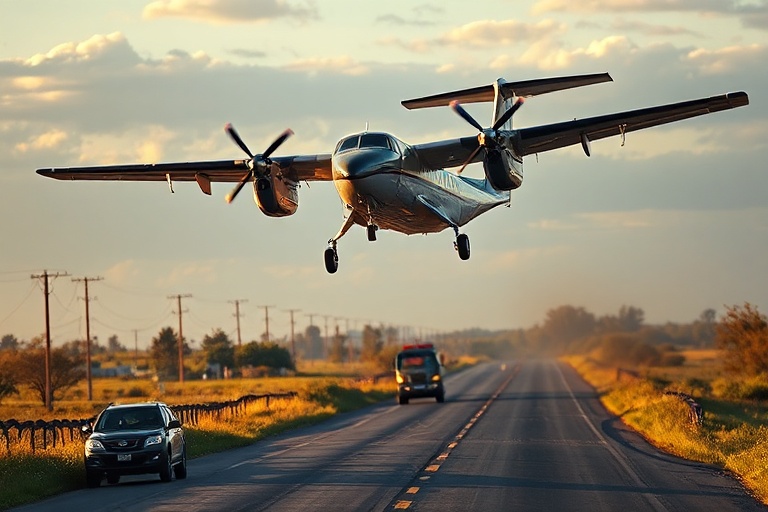
Understanding Emergency Landings: What Happens When Planes Can’t Fly
Air travel remains one of the safest forms of transportation, yet when emergencies arise, pilots must make split-second decisions that can mean the difference between a safe outcome and a tragic one. An emergency landing is not a routine event—it is a high-stakes maneuver executed under immense pressure, where preparation, skill, and luck often intersect.
The Federal Aviation Administration (FAA) defines an emergency landing as any situation where an aircraft cannot reach its planned destination due to a mechanical failure, medical crisis, fuel shortage, or other urgent concern. These events are rare—commercial aviation averages fewer than one emergency landing per million flights—but when they occur, they command global attention and scrutiny.
Types of Emergency Landings and Their Causes
Emergency landings vary widely in scope and severity. Some are precautionary, while others are critical responses to imminent danger. Understanding the distinctions helps clarify the nature of the situation pilots face.
Common types include:
- Precautionary landings: Made when a potential issue is detected early but hasn’t yet compromised safety. These may follow engine warnings, minor electrical faults, or cabin pressure anomalies.
- Forced landings: Occur when an aircraft must land immediately due to a critical failure, such as engine loss, fire, or structural damage. These demand immediate action with no opportunity for delay.
- Ditching: A controlled emergency water landing, typically in overwater flights where a runway is unreachable. Pilots train extensively for this rare scenario, using specialized procedures.
- Medical diversions: Triggered by onboard health emergencies, such as heart attacks or severe allergic reactions, requiring diversion to the nearest airport with medical facilities.
Aviation safety reports show that engine-related issues and cabin pressurization problems are among the most frequent causes of precautionary or forced landings. In 2023, the FAA recorded 42 emergency landings in U.S. airspace, with nearly half attributed to mechanical concerns.
The Pilot’s Playbook: How Decisions Are Made in the Cockpit
When an emergency arises, pilots follow a structured decision-making process grounded in training and protocol. This isn’t improvisation—it’s a carefully rehearsed sequence designed to minimize risk.
First comes the initial assessment. Pilots cross-check instrument readings, confirm the nature of the malfunction, and determine whether immediate action is required. If time permits, they consult with air traffic control (ATC) and review emergency checklists specific to the issue.
A critical step is communication. Pilots declare an emergency using the phrase “Pan-Pan” (urgent but not immediately life-threatening) or “Mayday” (imminent danger). This alerts ATC, who then prioritize the aircraft for landing clearance, reroute other traffic, and coordinate emergency response on the ground.
Another key element is fuel management. Pilots calculate fuel burn rates and identify the nearest suitable airport. In some cases, they may need to dump fuel to reduce weight before landing, a procedure that requires coordination with ATC and strict adherence to environmental regulations.
Finally, pilots execute the landing. Whether on a runway, a taxiway, or in extreme cases, a field, the goal remains the same: bring the aircraft to a stop with minimal impact on passengers and crew. Training in simulators—often hundreds of hours over a career—prepares pilots for these scenarios, but real-world conditions introduce variables that cannot be fully replicated.
Real-World Examples and Lessons from the Skies
History offers several high-profile examples of emergency landings that shaped aviation safety. One of the most analyzed was US Airways Flight 1549, the “Miracle on the Hudson,” in 2009. After striking a flock of geese, both engines failed, leaving Captain Chesley Sullenberger with no option but to ditch in the Hudson River. All 155 people on board survived—a testament to crew training, calm decision-making, and rapid response from rescue teams.
Another case, Qantas Flight 32 in 2010, experienced an uncontained engine failure over Singapore, damaging critical flight systems. Despite extensive damage, the crew managed to return to the airport and land safely after hours of troubleshooting. The incident led to design changes in the Airbus A380 engine and improved maintenance protocols.
These events underscore a vital truth: while technology advances, human judgment remains irreplaceable. Pilots are not just operators of machines—they are crisis managers, trained to act under pressure when systems fail.
Broader Implications: Safety Culture and Public Trust
Emergency landings have implications far beyond the immediate flight. They influence aviation regulations, airline policies, and public perception of air travel safety.
For airlines, such events can lead to financial penalties, reputational damage, and increased insurance costs. Regulatory bodies like the FAA and EASA often mandate inspections or fleet-wide modifications after serious incidents, affecting entire aircraft models.
Public trust is another critical factor. Air travel depends on confidence. When emergencies occur, transparency from airlines and regulators helps maintain that trust. Investigations led by agencies like the National Transportation Safety Board (NTSB) provide detailed reports that inform future safety improvements.
Moreover, emergency landings highlight the importance of continuous training. Pilots undergo recurrent simulator sessions, but real-world experience remains invaluable. Some airlines now incorporate more scenario-based training, including rare but plausible emergencies like dual-engine failure or rapid decompression.
The psychological impact on passengers and crew should not be underestimated. Survivors of emergency landings often report long-term stress, while pilots may experience post-incident evaluations or counseling. The aviation industry increasingly recognizes the need for mental health support in such high-pressure roles.
Looking ahead, advancements in technology may reduce the frequency of emergency landings. Modern aircraft like the Boeing 787 and Airbus A350 feature enhanced fault detection systems, fly-by-wire controls, and improved engine reliability. Still, no system is flawless, and human oversight remains essential.
Emergency landings remind us that aviation, despite its remarkable safety record, operates on the edge of uncertainty. Every flight is a balance of risk and reliability, and the decisions made in those critical moments define the boundaries of safety.
Key Takeaways
- Emergency landings are rare but high-stakes events that require immediate, structured action from pilots and coordination with air traffic control.
- Pilots follow established procedures, using checklists and communication protocols to manage crises effectively.
- Real-world examples like Flight 1549 and Flight 32 demonstrate the value of training, calm decision-making, and system redundancy.
- These events drive regulatory changes, influence airline policies, and reinforce the importance of transparency and mental health support in aviation.
- While technology improves safety, human judgment remains the cornerstone of emergency response in the skies.
In an industry where seconds matter, emergency landings are a reminder that safety is not automatic—it’s engineered, practiced, and, above all, respected.
For more on aviation safety and industry trends, visit our Technology and Travel sections.