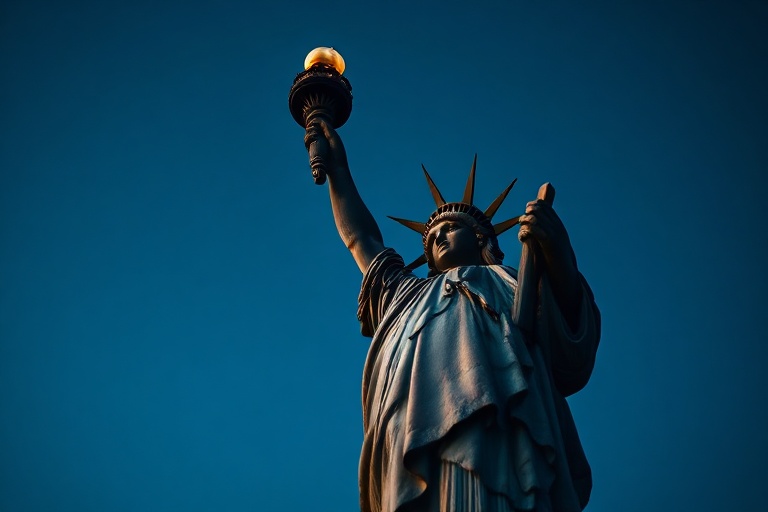
The concept of liberty stands as one of humanity’s most enduring and debated ideals. From ancient philosophers to modern constitutional scholars, the struggle to define and protect freedom has shaped civilizations. Liberty isn’t merely the absence of oppression—it’s the active presence of conditions that allow individuals to pursue their own visions of happiness while respecting the rights of others.
This tension between individual freedom and collective responsibility has played out across centuries, from the Magna Carta’s limitations on royal power to the Universal Declaration of Human Rights. The modern understanding of liberty continues to evolve, particularly as technology reshapes how we interact with authority and with one another.
Historical Foundations of Liberty
Liberty’s roots stretch back to classical antiquity, where thinkers like Aristotle and Cicero explored the relationship between freedom and civic responsibility. The Roman Republic’s concept of “libertas” encompassed both personal freedom and the right to participate in governance. This dual meaning would later influence Enlightenment philosophers who sought to reconcile individual rights with social order.
The Magna Carta of 1215 marked a pivotal moment in Western legal history, establishing that even kings were subject to the law. This principle of rule of law became fundamental to constitutional governance. The English Civil War and subsequent Glorious Revolution further cemented the idea that liberty required institutional protections against arbitrary power.
In America, the Revolutionary generation built upon these foundations while grappling with slavery’s contradiction to their stated ideals. The Constitution’s First Amendment protections for speech, press, and assembly represented an attempt to institutionalize liberty at the national level. Yet as Frederick Douglass and other abolitionists demonstrated, true liberty required constant vigilance against systemic oppression.
The Modern Tension: Individual vs. Collective Liberty
The 20th century brought new challenges to traditional notions of liberty. The rise of totalitarian regimes demonstrated how easily freedom could be crushed under the guise of collective good. Meanwhile, democratic societies struggled to balance individual rights with public health concerns, as seen in debates over vaccination mandates and mask requirements during the COVID-19 pandemic.
Philosophers like Isaiah Berlin distinguished between “negative liberty” (freedom from interference) and “positive liberty” (freedom to fulfill one’s potential). This distinction helps explain modern debates over issues like universal basic income, which some see as expanding positive liberty while others view it as government overreach that threatens negative liberty.
Technology has introduced new dimensions to this debate. Social media platforms, while empowering individuals to express themselves, have also created unprecedented surveillance capabilities. Governments and corporations now possess tools to monitor behavior that would have been unimaginable to previous generations. This has led to calls for new legal frameworks to protect digital privacy while preserving the benefits of technological connectivity.
Liberty in Practice: Constitutional Protections and Their Limits
Constitutional democracies around the world have developed different approaches to securing liberty. The United States’ Bill of Rights explicitly protects freedoms like speech, religion, and assembly, while also acknowledging that these rights are not absolute. The Supreme Court has repeatedly grappled with balancing individual liberties against public safety, as in cases involving hate speech or gun ownership.
European human rights frameworks take a different approach, with the European Convention on Human Rights emphasizing both rights and responsibilities. This reflects a continental tradition that views liberty as inherently social rather than purely individual. The difference manifests in areas like hate speech laws, where European nations often impose greater restrictions than the U.S.
Economic liberty presents another complex dimension. Free market advocates argue that liberty requires minimal government interference in economic affairs. Critics counter that unfettered capitalism can lead to concentrations of power that undermine political liberty. The debate continues in policies ranging from antitrust enforcement to healthcare regulations.
Key Constitutional Protections for Liberty
- First Amendment: Protects speech, press, religion, assembly, and petition
- Fourth Amendment: Guards against unreasonable searches and seizures
- Fifth Amendment: Provides due process protections and prohibits self-incrimination
- Fourteenth Amendment: Extends Bill of Rights protections to state governments
Liberty in the Digital Age: New Challenges and Opportunities
The internet promised to be a liberating force, giving individuals unprecedented access to information and each other. However, this new frontier has also created challenges that previous generations never faced. Social media algorithms can create filter bubbles that limit exposure to diverse viewpoints, effectively restricting intellectual liberty.
Artificial intelligence presents another frontier in the liberty debate. Algorithmic decision-making in areas like hiring, lending, and criminal justice can reinforce existing biases while claiming neutrality. The European Union’s General Data Protection Regulation represents an attempt to address these concerns by giving individuals more control over their digital lives.
Meanwhile, digital currencies like Bitcoin offer new possibilities for financial liberty while raising questions about regulation and consumer protection. The tension between innovation and stability in this space mirrors broader debates about how to preserve liberty in rapidly changing technological landscapes.
Technology’s Dual Role in Liberty
- Empowering: Social media enables marginalized voices to be heard
- Surveilling: Facial recognition and data collection threaten privacy
- Connecting: Digital platforms facilitate global collaboration
- Dividing: Algorithms can deepen social and political divisions
The challenge for modern societies is to harness technology’s liberating potential while mitigating its threats to freedom. This requires not just legal frameworks but also cultural norms that encourage responsible use of digital tools.
Conclusion: The Ongoing Struggle for Liberty
Liberty remains an unfinished project, constantly tested by new challenges and evolving understandings of what freedom requires. The COVID-19 pandemic demonstrated how quickly societies can restrict individual liberties in the name of public health, while also showing how people will resist what they perceive as unjust limitations on their freedom.
As we grapple with these issues, it’s worth remembering that liberty isn’t a static condition but an ongoing practice. It requires constant vigilance, thoughtful debate, and a willingness to question both authority and tradition. The health of a society can be measured not just by its economic output or military strength, but by how well it protects the freedoms of its most vulnerable members.
For those interested in exploring these topics further, Dave’s Locker’s culture section offers insights into how liberty manifests in various cultural expressions, while our politics coverage examines contemporary debates over freedom and governance.
Ultimately, liberty’s power lies in its ability to inspire both hope and struggle. It challenges us to create societies where each person has the space to pursue their dreams while contributing to the common good. In this sense, the quest for liberty is less about achieving a perfect state of freedom than about maintaining the conditions that allow the pursuit to continue.