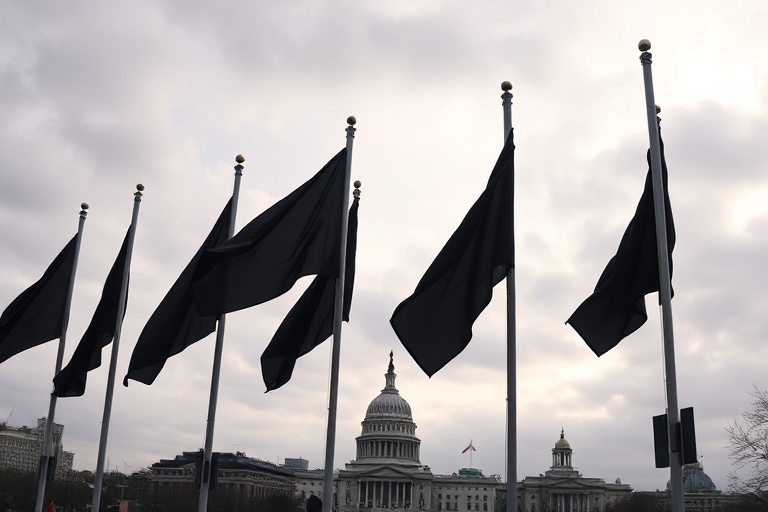
Flags flying at half-staff are a visual signal of national mourning, respect, or remembrance. This practice is deeply rooted in maritime tradition but has evolved into a solemn symbol across many nations, including the United States. When a flag is lowered to this position, it communicates collective grief or tribute without words.
The decision to lower flags is typically made by government leaders or authorities in response to significant events such as the death of a public figure, a tragic accident, or a national crisis. It’s a way for communities to pause and reflect together. But why exactly does this custom persist, and what do the rules say about when and how it should be observed?
The Origins of the Half-Staff Tradition
The custom of lowering flags to half-staff traces back to 17th-century naval practice. According to maritime tradition, when a ship entered port with its flag at half-mast, it signaled distress or mourning. This practice carried over into land-based ceremonies, especially in military contexts, where lowering the flag became a mark of honor for fallen comrades.
The term “half-staff” itself refers to the position on a flagpole where the flag is flown halfway between the top and bottom. In the U.S., the phrase was standardized as “half-staff” by the federal government in the mid-20th century, though “half-mast” is still commonly used, especially in naval and British contexts.
Today, the tradition serves as a unifying gesture during times of national reflection. It reminds citizens of shared values and the cost of public service, whether in government, emergency response, or the military. The act is not just symbolic—it’s a deliberate pause in daily life to honor those who have shaped the nation’s story.
Who Decides to Lower the Flags?
In the United States, the authority to order flags to half-staff typically rests with the President, state governors, or territory leaders. These proclamations are issued following specific criteria: the death of a current or former government official, a national tragedy, or a significant act of violence or disaster.
For example, after the September 11, 2001, terrorist attacks, President George W. Bush ordered flags to remain at half-staff for 30 days. Similarly, when Supreme Court Justice Ruth Bader Ginsburg passed away in 2020, flags across federal buildings were lowered in her honor. State governors often follow suit for local leaders or public servants who have died in the line of duty.
There are also federal guidelines. According to the U.S. Flag Code, flags should be lowered to half-staff from sunrise to sunset on the day of a person’s death, unless the proclamation specifies otherwise. The code also provides a schedule of standard days for mourning, such as Peace Officers Memorial Day and Pearl Harbor Remembrance Day.
- Presidential Order: Typically issued for national figures, such as former presidents, members of Congress, or Supreme Court justices.
- Governor’s Proclamation: Used for state officials, first responders, or local heroes who have died in service.
- Congressional Resolution: Occasionally, Congress may request a national day of mourning, as seen after the death of civil rights leader John Lewis in 2020.
- International Mourning: Flags may also be lowered in solidarity with other nations after major disasters or attacks.
While the practice is widespread, it is not legally enforced in most cases. However, respect for the tradition is widely observed, reflecting the nation’s collective respect for those being honored.
Recent Examples and Cultural Significance
In recent years, flags have been lowered multiple times in response to both national and global events. The COVID-19 pandemic led to widespread half-staff orders as communities mourned the loss of over a million Americans. These gestures underscored the human toll of the crisis and provided a moment of shared grief.
Another notable example was the lowering of flags following the mass shootings in Uvalde, Texas, in 2022 and Buffalo, New York, in 2021. In each case, the gesture served as a tribute to the victims and a call for reflection on gun violence and community safety.
Flags at half-staff also play a role in international diplomacy. When Queen Elizabeth II of the United Kingdom passed away in September 2022, flags across the U.S. were lowered in her honor, reflecting her decades-long service and global influence. Similarly, after the 2015 Paris terror attacks, flags were lowered in solidarity with France.
These moments highlight how the tradition transcends borders. It’s a language of mourning that connects people across cultures, reminding us of our shared humanity in the face of loss.
How to Observe Half-Staff Flags Respectfully
While the act of lowering a flag is straightforward, there are customs and guidelines to ensure the gesture is carried out with dignity. The U.S. Flag Code provides clear instructions on how to raise and lower the flag during periods of mourning:
- Raise the flag to the top of the pole briefly. This is known as “dipping” the flag and is a sign of respect before lowering it to half-staff.
- Lower the flag to a position one-half the distance between the top and bottom of the staff. This position should be maintained from sunrise to sunset on the day of the proclamation.
- On the day the mourning period ends, raise the flag briskly to the top of the staff. Pause briefly, then lower it slowly to close the day.
- Do not let the flag touch the ground. This is a fundamental rule of flag etiquette and applies at all times.
For individuals, observing a flag at half-staff is a personal act of respect. Many choose to pause for a moment of silence, reflect on the reasons for the mourning, or express gratitude to public servants who serve the community. Schools, businesses, and government buildings often hold brief ceremonies or moments of silence to mark the occasion.
It’s also important to stay informed about why flags are at half-staff. Local news outlets, government websites, and social media platforms typically announce proclamations as they are issued. This ensures that communities can participate meaningfully in the observance.
Looking Ahead: The Future of the Half-Staff Tradition
As society evolves, so too does the way we observe mourning and remembrance. While the half-staff flag remains a powerful symbol, some question whether its impact is fading in an era dominated by digital communication. Yet, the physical presence of a lowered flag in public spaces continues to draw attention and foster reflection in a way that social media posts cannot.
There is also growing discussion about expanding the tradition to include more voices. Advocates argue that flags should be lowered to honor victims of systemic injustices, environmental disasters, and public health crises that disproportionately affect marginalized communities. This would broaden the scope of the tradition and ensure it reflects the full diversity of national grief.
Ultimately, the half-staff flag is more than a visual cue—it’s a reminder of our shared history and the fragility of life. Whether honoring a leader, a community hero, or countless unnamed individuals, the act of lowering the flag invites us to pause, remember, and reaffirm our commitment to one another.
In a time when news cycles move rapidly and attention spans are short, the half-staff flag stands as a deliberate interruption—a call to look beyond the headlines and acknowledge the weight of loss. It’s a tradition worth preserving, not just as a formality, but as a living expression of empathy and respect.