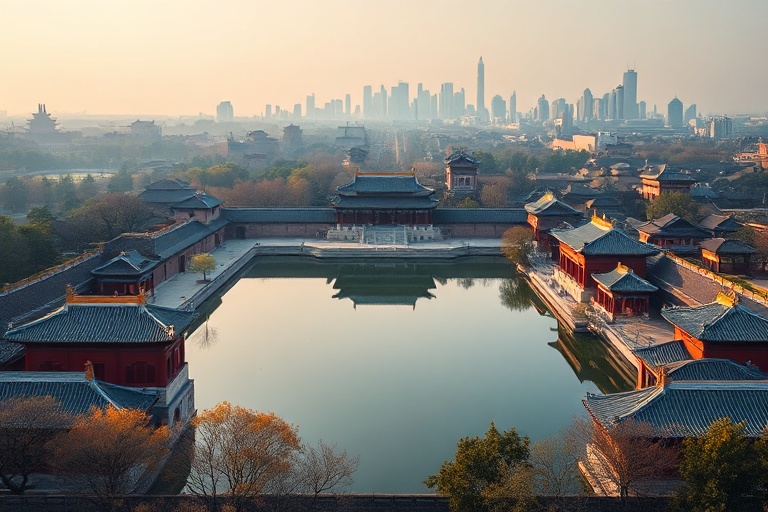
Few places in the world carry as much geopolitical weight as Zhongnanhai. Nestled in the heart of Beijing, this sprawling complex serves as the central command for China’s Communist Party leadership. While often shrouded in secrecy, its influence radiates across domestic policies and international relations alike.
The Historical Roots of Zhongnanhai
Originally constructed during the Ming Dynasty as the private retreat for imperial officials, Zhongnanhai later became a political hub during the early 20th century. After the founding of the People’s Republic of China in 1949, the site was repurposed to house the highest echelons of the Communist Party. Its name, meaning “Central and South Lakes,” reflects the serene waterways that once provided respite for emperors.
Unlike Western capitals where government buildings often stand apart from residential quarters, Zhongnanhai blends leadership quarters with administrative offices. This architectural choice isn’t merely aesthetic—it symbolizes the party’s philosophy of perpetual vigilance and centralized control. The site’s evolution mirrors China’s own journey from revolutionary fervor to global superpower status.
Key Features of the Complex
- Office Buildings: Multiple structures house the offices of the General Secretary, Premier, and other top officials.
- Residential Quarters: Senior leaders live within the compound, ensuring constant access to decision-making processes.
- Gardens and Lakes: The scenic environment contrasts sharply with the austerity often associated with political power.
- Security Perimeter: Strict access controls and surveillance reflect the compound’s critical importance.
Zhongnanhai’s Role in Modern Chinese Governance
Today, Zhongnanhai operates as the operational headquarters of the Chinese Communist Party (CCP). While the Politburo Standing Committee meets in the Great Hall of the People, the real power dynamics unfold behind the guarded gates of Zhongnanhai. Policy directives, leadership transitions, and strategic decisions all trace back to this location.
The compound’s layout itself reinforces hierarchy. The most senior officials occupy the innermost sections, while lower-ranking cadres work in peripheral buildings. This spatial arrangement isn’t accidental—it’s a physical manifestation of the party’s rigid pecking order. Even minor shifts in office assignments within Zhongnanhai can signal broader political currents.
Decision-Making Without Transparency
One of Zhongnanhai’s most striking characteristics is its opacity. Unlike democracies where legislative debates are televised or published, China’s top leadership operates in near-total secrecy. Leaks are rare, and foreign journalists face strict restrictions when attempting to cover the compound. This lack of transparency fuels speculation but also underscores the party’s determination to control its narrative.
Consider the 2022 leadership reshuffle. When Xi Jinping secured an unprecedented third term as General Secretary, the announcement came from Zhongnanhai. Yet the internal debates preceding that decision remain unknown to the public. This opacity isn’t just bureaucratic tradition—it’s a deliberate strategy to prevent factional challenges and maintain unified messaging.
The Global Implications of Zhongnanhai’s Policies
Zhongnanhai’s decisions don’t just shape China—they reshape the world. Trade policies announced from within its walls affect supply chains across Asia. Military posturing discussed in its meeting rooms influences security dynamics in the South China Sea. Even environmental regulations drafted here impact global climate agreements.
Take China’s Belt and Road Initiative, for example. While announced publicly by Xi Jinping in 2013, the strategic blueprint was likely refined in Zhongnanhai’s closed-door sessions. The initiative’s trillion-dollar investments in infrastructure across Eurasia demonstrate how decisions made in Beijing ripple outward, altering trade routes and political alliances.
Balancing Domestic Control with Global Ambitions
The tension between maintaining internal stability and projecting global influence is palpable within Zhongnanhai’s walls. Domestically, the leadership must suppress dissent while fostering economic growth. Internationally, it must navigate relationships with the United States, European Union, and developing nations—all while advancing its vision of a multipolar world order.
This balancing act often leads to contradictions. China promotes itself as a champion of free trade while imposing strict censorship laws. It advocates for non-interference in other nations’ affairs while aggressively pursuing its interests in the South China Sea. These dualities aren’t signs of inconsistency—they’re the calculated outcomes of debates held behind Zhongnanhai’s gates.
What Lies Ahead for Zhongnanhai?
The future of Zhongnanhai is intrinsically tied to China’s trajectory. As the country grapples with slowing economic growth, demographic challenges, and geopolitical tensions, the decisions made within its walls will determine whether China can sustain its rise. One scenario sees Zhongnanhai doubling down on state control, prioritizing stability over innovation. Another possibility involves gradual reforms as younger leaders ascend.
What remains certain is that Zhongnanhai will continue to be the epicenter of power in the world’s most populous nation. Its policies will shape everything from semiconductor manufacturing to climate agreements. For diplomats, business leaders, and analysts, understanding the signals emanating from Zhongnanhai isn’t just academic—it’s essential for navigating the 21st century.
Monitoring Zhongnanhai’s Influence
For those seeking to track China’s evolving priorities, several indicators warrant attention:
- Leadership Appointments: Changes in the Politburo Standing Committee often precede policy shifts.
- Official Visits: Trips by top officials to Zhongnanhai can signal imminent announcements.
- State Media Coverage: The frequency of mentions of Zhongnanhai in official outlets reflects leadership priorities.
- Economic Directives: New regulations or stimulus packages often originate from internal discussions in Zhongnanhai.
- Military Announcements: Defense policies and military exercises are frequently coordinated from within the compound.
“Zhongnanhai isn’t just a building—it’s the engine of China’s rise. Every policy, every crisis, every technological leap traces back to decisions made within its guarded walls.”
For deeper insights into China’s political landscape, explore our Politics and Analysis sections on Dave’s Locker. These categories provide ongoing coverage of the forces shaping global affairs.
Conclusion: The Unseen Hand Behind China’s Rise
Zhongnanhai remains one of the world’s most consequential yet least understood power centers. Its blend of historical grandeur and modern authoritarianism offers a window into China’s soul. Whether through economic reforms, military posturing, or technological innovation, the decisions made within its walls will define the 21st century.
The compound’s secrecy shouldn’t obscure its importance. Instead, it should remind us that power, in any form, is most effective when it operates behind closed doors. For the rest of the world, the challenge lies in anticipating Zhongnanhai’s next move—without ever seeing the full deck of cards it holds.