Bayern Munich and Köln: Football’s Contrasting Philosophies
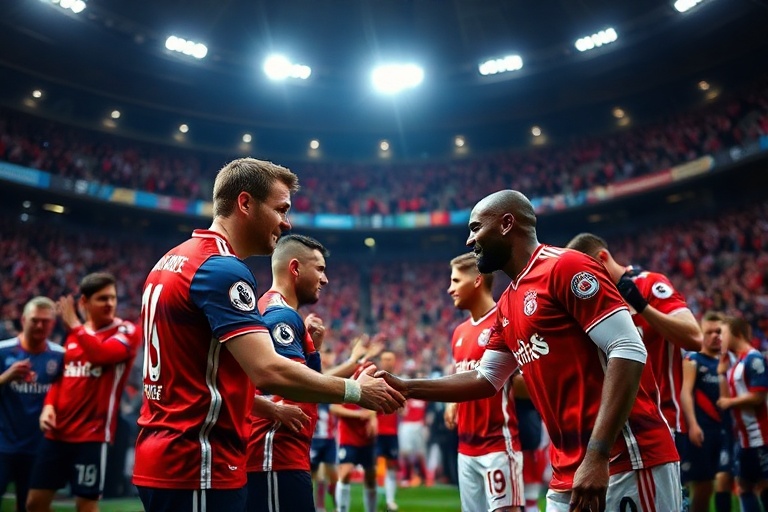
The matchup between Bayern Munich and 1. FC Köln isn’t just a Bundesliga fixture—it’s a collision of football philosophies, economic disparities, and cultural identities. The Bavarian giants, with their global brand and relentless trophy pedigree, face the Rhineland underdogs, whose resilience and fan culture have kept them afloat despite financial constraints.
Bayern’s dominance is a modern football phenomenon, rooted in the club’s ability to blend tradition with innovation. Their success isn’t just about winning; it’s about how they win—through data-driven transfers, youth development, and a near-permanent position at the top of European football. Köln, on the other hand, embodies the spirit of a club that punches above its weight, relying on passion, community, and a refusal to surrender, even when outgunned on paper.
The Economic Divide in German Football
The financial gap between the two clubs is stark. Bayern’s revenue in the 2022/23 season exceeded €850 million, making them one of the richest clubs in the world. Their commercial strategy—built on global sponsorships, merchandising, and media rights—ensures they can outspend rivals year after year. Köln, while financially stable, operates with a budget that’s a fraction of their opponent’s. Their revenue hovers around €200 million, a figure that reflects their regional focus rather than international ambitions.
This economic disparity isn’t unique to these two clubs but is a defining feature of modern football. The Bundesliga’s 50+1 rule, which grants fans voting rights, has prevented the extreme financialization seen in leagues like the Premier League. Yet, even within these constraints, Bayern has leveraged its brand to transcend local boundaries, while Köln remains a club deeply embedded in its city’s identity.
- Bayern Munich’s Revenue Streams: Broadcasting rights (€300M+), commercial deals (€400M+), matchday income (€50M+).
- Köln’s Revenue Streams: Broadcasting rights (€100M+), local sponsorships (€50M+), matchday income (€30M+).
The Cultural Identity of Köln vs. Bayern’s Global Ambition
Köln’s identity is inseparable from the city itself. The club’s fanbase is a microcosm of the region’s working-class roots, with a strong emphasis on supporter ownership and anti-commercialization movements. The Südstadion, Köln’s historic ground, is a fortress of noise and color, where fans sing for 90 minutes regardless of the result. This culture is a direct contrast to Bayern’s Allianz Arena, a sleek, corporate stadium that hosts fans from across the globe.
Bayern’s global appeal is undeniable. Their matches are broadcast in over 200 countries, and their player roster often reads like a who’s who of international football. The club’s ability to attract top talent—whether through free transfers or astronomical fees—reinforces their status as a footballing superpower. Köln, meanwhile, has built its squad through shrewd scouting and youth development, often uncovering hidden gems in the German lower leagues.
Tactical Approaches: Precision vs. Grit
On the pitch, the contrast between the two sides is just as pronounced. Bayern’s style is built on possession, high pressing, and positional play—a reflection of their commitment to technical excellence. Under managers like Pep Guardiola and now Thomas Tuchel, the Bavarians have perfected a brand of football that prioritizes aesthetics as much as results. Their midfielders are often midfield maestros, threading passes through opposition lines with surgical precision.
Köln, by contrast, plays with a directness that borders on the chaotic. Their approach is pragmatic, often relying on quick transitions and set-piece efficiency to grind out results. The team’s physicality and work rate are their trademarks, a throwback to the days when German football was defined by its intensity rather than its finesse. This tactical divide mirrors broader trends in European football, where clubs either chase the beautiful game or embrace the ugly efficiency of pragmatism.
Historical Context: A Rivalry Without the Bite
Unlike the heated derbies of Dortmund vs. Schalke or Hamburg’s rivalry with Werder Bremen, the Bayern vs. Köln matchup lacks historical animosity. The two clubs have rarely been direct competitors for titles, and their meetings often carry the weight of expectation rather than rivalry. Bayern’s dominance means Köln’s fans rarely approach these games with anything but optimism—even if their hopes are often dashed.
Yet, the psychological edge in these fixtures often belongs to Köln. Bayern’s players, despite their talent, sometimes struggle with the psychological pressure of being overwhelming favorites. Köln, meanwhile, thrives in these David vs. Goliath scenarios, relishing the opportunity to humiliate their richer counterparts on the pitch. This dynamic was evident in Köln’s 4-0 thrashing of Bayern in 2019, a result that sent shockwaves through German football and reminded the world that money doesn’t always buy dominance.
The Global Perspective: What This Clash Represents
From a global standpoint, the Bayern vs. Köln rivalry is a microcosm of football’s evolving landscape. Bayern represents the future—where clubs are global brands first and local institutions second. Köln embodies the past, where football is a community endeavor, rooted in tradition and resistance to commercialization. This clash of ideologies is playing out across Europe, as clubs grapple with the tension between growth and identity.
In leagues like La Liga, where Real Madrid and Barcelona dominate financially, or in France, where PSG’s wealth distorts competition, the Bundesliga’s balance is increasingly rare. The league’s 50+1 rule has preserved a sense of parity, but Bayern’s recent dominance threatens to erode that principle. Köln’s survival—and occasional triumphs—are a reminder that football’s soul still lies in the underdog stories.
Conclusion: More Than Just a Match
The Bayern vs. Köln fixture is more than a game; it’s a narrative of football’s duality. On one side, a club that has mastered the art of modern football, blending success with spectacle. On the other, a team that refuses to bow to the pressures of the financial arms race, instead banking on passion and resilience. These matches are a reminder that football’s beauty lies in its contradictions—where money and tradition, global ambition and local pride, collide in a spectacle that transcends sport.
For fans, these games are about witnessing history. For neutrals, they’re a study in contrasts. And for football’s purists, they’re a defense of what makes the game special: the idea that even in an era of financial disparity, passion and effort can still shake the foundations of the sport.
Explore more football insights on Dave’s Locker Sports.