Nestled between Glasgow and Edinburgh, Falkirk serves as a vital link between Scotland’s two largest cities. With a population of around 35,000, this historic town blends industrial heritage, cultural significance, and modern development into a compact yet vibrant community. Beyond its role as a crossroads, Falkirk boasts some of Scotland’s most iconic landmarks, including the Kelpies and the Antonine Wall. Its strategic location and rich history make it far more than just a stopover—it’s a destination worth exploring in its own right.
The Historic Heart of Falkirk
Falkirk’s origins stretch back to Roman times, when it marked the southern boundary of the Antonine Wall. Built around AD 142, this defensive fortification stretched across central Scotland, serving as a frontier between Roman Britain and the Caledonian tribes. Today, remnants of the wall—designated a UNESCO World Heritage Site—can still be seen near Falkirk, offering visitors a tangible connection to antiquity.
The town’s name itself reflects its historical importance. Derived from the Gaelic An Eaglais Bhreac, meaning “the speckled church,” Falkirk likely refers to an early Christian site marked by standing stones. By the medieval period, Falkirk had grown into a market town and a site of strategic battles, including the famous 1298 Battle of Falkirk, where William Wallace’s forces clashed with King Edward I of England. This legacy of conflict and resilience remains woven into the town’s identity.
Falkirk’s industrial transformation began in the 18th century with the construction of the Forth and Clyde Canal in 1790. The canal connected the Firth of Forth to the Firth of Clyde, enabling coal and iron transport and fueling Scotland’s Industrial Revolution. The town became a hub for manufacturing, particularly in steel and textiles, shaping its modern economy and urban landscape.
Iconic Landmarks and Cultural Treasures
Falkirk is best known for two monumental sculptures that define its skyline: the Kelpies. Standing at 30 meters tall, these horse-head statues represent shape-shifting water spirits from Scottish folklore. Created by artist Andy Scott and unveiled in 2013, the Kelpies have become Scotland’s most visited contemporary art installation, drawing over a million visitors annually. Their gleaming stainless steel surfaces reflect light in dramatic ways, especially at sunrise and sunset, transforming the site into a mesmerizing spectacle.
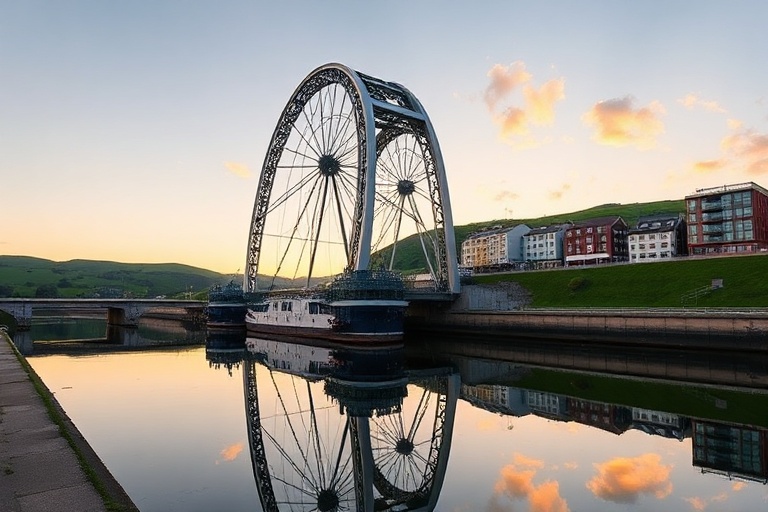
Another must-see is the Falkirk Wheel, the world’s only rotating boat lift. Opened in 2002, this engineering marvel connects the Forth and Clyde Canal with the Union Canal, allowing boats to traverse a 24-meter height difference in minutes. The Wheel’s design—a blend of elegance and functionality—has earned global acclaim and serves as a symbol of Scotland’s innovative spirit. Visitors can take a boat ride through the Wheel or explore the adjacent Helix Park, a 350-hectare green space perfect for cycling and walking.
For those interested in history, the Falkirk Museum and Archives offers a deep dive into local heritage. Housed in a former Victorian prison, the museum features exhibits on Roman artifacts, medieval battles, and the town’s industrial past. One highlight is the Antonine Wall display, which includes reconstructions of Roman forts and tools used by soldiers nearly 2,000 years ago.
Cultural life in Falkirk thrives at the Falkirk Stadium, home to both the Falkirk Football Club and the Scottish Rugby Union. The stadium, opened in 2004, has a capacity of 7,937 and hosts major sporting events and concerts. It’s a focal point for community gatherings and a testament to Falkirk’s role as a cultural hub in central Scotland.
Modern Falkirk: Economy, Education and Innovation
Today, Falkirk’s economy is diversifying beyond its industrial roots. While manufacturing and engineering remain important—companies like Alexander Dennis, a leading bus manufacturer, are based here—the town is also investing in clean energy and digital technology. The Advanced Manufacturing Innovation District Scotland (AMIDS), located nearby in Grangemouth, is attracting tech firms and startups, positioning Falkirk at the forefront of Scotland’s green industrial transition.
Education plays a key role in the town’s development. Falkirk College, part of Forth Valley College, offers vocational training in fields like construction, healthcare, and renewable energy. The college partners with local businesses to ensure students gain practical skills, helping to address skills gaps in the regional workforce. Meanwhile, Falkirk High School, one of Scotland’s top-performing state schools, reflects the town’s commitment to quality education.
Transport infrastructure continues to shape Falkirk’s future. The town is a major rail hub, with Falkirk High and Falkirk Grahamston stations providing direct links to Edinburgh, Glasgow, and beyond. The M8 and M9 motorways intersect nearby, offering easy access to Scotland’s central belt. Plans for enhanced public transport, including bus rapid transit routes, aim to reduce congestion and improve connectivity within the region.
Sustainability is increasingly a priority. Falkirk Council has committed to becoming a carbon-neutral town by 2045, with initiatives like LED streetlight upgrades, electric vehicle charging points, and community energy projects. The Helix Park solar farm, completed in 2021, generates enough electricity to power 1,000 homes, demonstrating Falkirk’s shift toward renewable energy.
Key Industries in Modern Falkirk
- Advanced Manufacturing: Home to firms specializing in buses, automotive components, and aerospace parts.
- Clean Energy: Growth in wind, solar, and hydrogen technologies, supported by regional investment.
- Logistics & Transport: Strategic location makes Falkirk a key distribution and freight hub.
- Tourism: The Kelpies and Falkirk Wheel attract over 1.5 million visitors each year.
- Food & Drink: Local producers of whisky, craft beer, and artisanal foods are gaining national recognition.
Living in Falkirk: Community and Quality of Life
Falkirk offers a balance of urban convenience and small-town charm. Housing options range from historic tenements in the town center to modern developments near the Kelpies. The average house price in Falkirk is around £180,000—significantly lower than in Edinburgh or Glasgow—making it an affordable alternative for commuters and families. Neighborhoods like Camelon and Laurieston retain strong community identities, with local shops, pubs, and parks fostering a sense of belonging.
Healthcare is accessible through the Forth Valley Royal Hospital, a modern facility serving the wider region. The hospital includes a dedicated emergency department and specialist services, ensuring residents receive timely medical care. Meanwhile, Falkirk’s parks and green spaces—such as Callendar Park, home to a 15th-century mansion and sprawling woodlands—provide ample opportunities for recreation and relaxation.
Cultural events throughout the year celebrate Falkirk’s heritage and creativity. The Falkirk Fringe Festival, held each August, showcases local artists, musicians, and performers in venues across the town. The Falkirk Wheel Marathon, one of Scotland’s most scenic races, draws runners from around the world. These events not only entertain but also strengthen community bonds and boost the local economy.
Despite its many strengths, Falkirk faces challenges common to post-industrial towns: regenerating vacant industrial sites, improving digital infrastructure, and ensuring inclusive economic growth. However, its strong civic leadership, strategic investments, and engaged population suggest a resilient future. Initiatives like the Falkirk Growth Deal, a £300 million investment from the UK and Scottish governments, aim to accelerate development in sectors like advanced manufacturing and tourism.
Why Falkirk Matters in Scotland’s Future
Falkirk is more than a geographical midpoint between Scotland’s two largest cities—it’s a town in transition, reclaiming its identity while honoring its past. Its blend of ancient history and cutting-edge innovation reflects a broader Scottish narrative: one of reinvention and renewal. The success of the Kelpies and the Falkirk Wheel shows how creativity can transform a place’s reputation, turning industrial scars into cultural landmarks.
As Scotland pursues its net-zero ambitions, Falkirk’s role in clean energy and advanced manufacturing will only grow. Its central location and skilled workforce make it an ideal location for businesses seeking both innovation and accessibility. Meanwhile, its cultural attractions and community spirit ensure it remains a place where people want to live, work, and visit.
For travelers, Falkirk offers a compact yet rich experience—where a morning walk along the Antonine Wall can be followed by an afternoon boat ride on the Falkirk Wheel. For investors, it presents opportunities in sectors aligned with Scotland’s green and digital future. And for residents, it provides a high quality of life with easy access to both urban centers and natural landscapes.
In an era of rapid change, Falkirk stands as a reminder that history and progress are not opposing forces, but partners in shaping a better future. Whether you’re drawn by its ancient ruins, its modern marvels, or its vibrant community, Falkirk invites you to slow down and discover what makes it truly special.
To explore more about Scotland’s cultural landmarks, visit our Culture page. For insights into sustainable travel and heritage tourism, check out our Travel section.