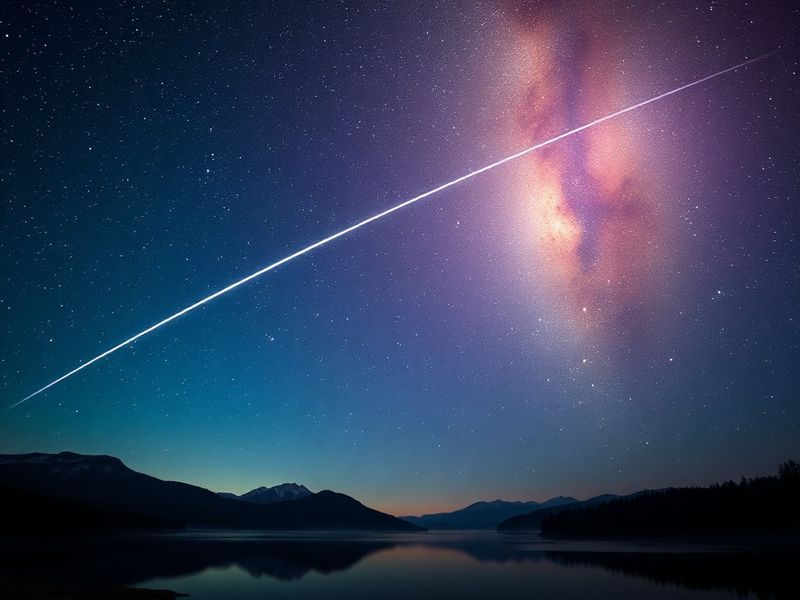
Lyrids Meteor Shower: A Guide to April’s Celestial Fireworks
“`html
The Lyrids Meteor Shower: A Global Spectacle of Celestial Fireworks
The Lyrids meteor shower is one of the oldest known celestial events, with records dating back nearly 2,700 years. Ancient Chinese astronomers first documented the phenomenon in 687 BCE, describing it as a “rain of stars.” Today, stargazers around the world still anticipate this annual event, which typically peaks in late April. Unlike more intense meteor showers, the Lyrids offer a modest but reliable display, making them accessible to both seasoned astronomers and casual observers.
The shower originates from the debris trail of Comet Thatcher (C/1861 G1), a long-period comet that orbits the sun once every 415 years. As Earth passes through the comet’s dusty wake, tiny particles—some no larger than a grain of sand—enter our atmosphere at speeds of up to 30 miles per second. This friction creates the luminous streaks we recognize as shooting stars. While the Lyrids may produce only 10 to 20 meteors per hour under ideal conditions, their occasional bright fireballs and persistent trains of ionized gas make them a memorable sight.
The Science Behind the Lyrids: Where Do They Come From?
The Lyrids are classified as a medium-strength meteor shower, but their longevity in human records sets them apart. The radiant—the point in the sky from which meteors appear to originate—lies near the constellation Lyra, close to the bright star Vega. This positioning is why the shower bears the name “Lyrids.” However, the meteors themselves can appear anywhere in the sky, so observers don’t need to focus solely on Lyra to enjoy the show.
Comet Thatcher, the shower’s parent body, was discovered in 1861 by amateur astronomer A.E. Thatcher. Unlike short-period comets such as Halley’s, Thatcher follows an elongated orbit that takes it far beyond the outer planets. Its last close approach to the sun occurred in 1861, and it won’t return until the year 2276. Despite its rarity, the comet leaves behind a trail of debris that Earth intersects every April, providing an annual reminder of its existence.
For astronomers, the Lyrids serve as a benchmark for meteor shower activity. By studying their frequency and brightness, researchers can refine models of cometary behavior and atmospheric entry dynamics. Citizen science projects, such as those organized by the American Meteor Society, encourage the public to report sightings, contributing valuable data to these efforts.
A Global Phenomenon: How Different Cultures Have Interpreted the Lyrids
The Lyrids have inspired myths, legends, and cultural traditions across civilizations. In ancient Greece, the shower was associated with the story of Orpheus, the musician whose lyre (the constellation Lyra) was placed in the sky after his death. Some Native American tribes viewed meteor showers as messages from the spirit world, while in medieval Europe, they were sometimes interpreted as omens of change or upheaval.
In China, historical records from the Han Dynasty describe the Lyrids as a “star shower” that foretold significant events. One account from 15 BCE mentions that “countless stars flew in the northwest,” possibly correlating with the shower’s peak. Similarly, Korean astronomers documented the Lyrids in royal chronicles, noting their appearance as early as the 10th century.
Today, the Lyrids continue to captivate diverse audiences. In Japan, the shower coincides with the cherry blossom season, blending natural beauty with celestial wonder. Meanwhile, in the Southern Hemisphere, where Lyra appears lower in the sky, observers in Australia and New Zealand often combine the Lyrids with the annual ANZAC Day commemorations, creating a poignant contrast between earthly remembrance and cosmic spectacle.
Cultural Celebrations Tied to the Lyrids
- Ancient Greece: Linked to the myth of Orpheus and the constellation Lyra.
- China: Recorded in imperial annals as a celestial event with potential prophetic significance.
- Japan: Often observed during hanami (cherry blossom viewing) season, adding a layer of seasonal beauty.
- Native American traditions: Viewed as spiritual messages or ancestral connections.
Viewing the Lyrids: Tips for the Best Experience
Unlike solar eclipses or planetary transits, meteor showers require no specialized equipment to enjoy. However, a few key strategies can enhance the experience. First, timing is crucial. The Lyrids typically peak between April 21 and 23, but activity can vary. Consulting resources like timeanddate.com can help pinpoint the optimal night for your location.
Light pollution is the greatest enemy of meteor-watching. Urban areas with bright streetlights and buildings can obscure all but the brightest meteors. For the best results, travel to a dark-sky site certified by the International Dark-Sky Association. National parks, remote countryside, and designated stargazing areas offer ideal conditions. Allow at least 30 minutes for your eyes to adjust to the darkness, and avoid looking at phones or other light sources.
Comfort is another factor. Meteor showers demand patience, so bring a reclining chair or blanket, warm clothing, and perhaps a thermos of hot drinks. The Lyrids are visible from both hemispheres, but observers in the Northern Hemisphere generally have a better view due to Lyra’s higher position in the sky. Southern Hemisphere viewers should look toward the northern horizon for the best chance of spotting meteors.
Equipment and Preparation Checklist
- Dark Sky Location: Use the IDA’s Dark Sky Finder to locate a suitable site.
- Red Flashlight: Preserves night vision while providing illumination.
- Star Map or App: Helps identify the radiant in Lyra (e.g., SkyView Lite, Stellarium).
- Warm Clothing: Nights can be chilly, even in spring.
- Hot Beverages: A thermos of coffee, tea, or hot chocolate adds comfort.
- Comfortable Seating: A reclining chair or ground pad prevents neck strain.
The Lyrids in the Modern Era: Science, Tourism, and Preservation
The Lyrids may not command the same attention as the Perseids or Geminids, but they play a unique role in modern astronomy. Their predictability makes them a favorite among amateur astronomers, who use them to practice meteor photography and counting techniques. Organizations like the International Meteor Organization (IMO) compile global observations to refine our understanding of cometary debris streams.
Tourism tied to meteor showers has grown in recent years, with destinations like Meteor Crater in Arizona and the Aoraki Mackenzie Dark Sky Reserve in New Zealand capitalizing on celestial events. The Lyrids, while not as intense as the Perseids, still attract travelers seeking remote and immersive experiences. In 2023, for example, astro-tourism operators in Chile and Namibia reported increased bookings during the Lyrids peak, thanks to clear skies and minimal light pollution.
Preserving dark skies is critical for both scientific research and cultural appreciation. The rise of satellite constellations, such as SpaceX’s Starlink, threatens to disrupt meteor observations by leaving streaks across long-exposure photographs. Advocacy groups are pushing for stricter regulations on light pollution and satellite visibility, ensuring that future generations can continue to marvel at events like the Lyrids.
“The Lyrids remind us that the universe is still full of surprises, even in an age of advanced technology. They connect us to ancient observers while inspiring new generations to look up.” — Dr. Maria Mitchell, Astronomer and Historian
Conclusion: Why the Lyrids Matter
The Lyrids meteor shower is more than just a fleeting celestial event; it is a bridge between past and present. For millennia, humans have gazed at these streaks of light, weaving stories and scientific inquiry around them. In an era dominated by digital distractions, the Lyrids offer a rare opportunity to disconnect and reconnect with the natural world.
Whether you’re an astronomer tracking meteor counts, a traveler seeking a night under the stars, or simply someone who appreciates the beauty of the cosmos, the Lyrids provide a moment of wonder. As light pollution continues to encroach on our skies, events like these become even more precious. So mark your calendar for late April, find a dark spot, and take the time to watch a few shooting stars streak across the heavens.
After all, the universe is still writing its story—and the Lyrids are one of its most enduring chapters.