Chicago vs Montréal: How Two Cities Define Urban Diversity
Chicago and Montréal, separated by nearly 800 miles and a language barrier, share more than just North American geography. Both cities pulse with distinct cultural identities, economic engines, and global reputations that transcend their national borders. While Chicago wears its industrial heritage and architectural grandeur on its sleeve, Montréal thrives as a bilingual crossroads where European charm meets North American grit. These differences aren’t just superficial; they shape everything from local industries to nightlife, food scenes to civic pride.
To understand their global significance, we must look beyond stereotypes and examine how each city’s unique blend of history, demographics, and ambition positions them as essential nodes in the 21st-century urban landscape.
Cultural Identity: A Tale of Two Languages and Lifestyles
Montréal’s bilingual identity is its defining feature. French isn’t just the language of government and education—it’s a living, breathing force that colors daily life. Street signs, menus, and conversations shift seamlessly between languages, creating a linguistic fluidity rare in North America. This duality extends to the city’s cultural calendar, where the world-renowned Just for Laughs festival shares the stage with FrancoFolies, one of the largest French-language music festivals globally.
Chicago, by contrast, embraces a more monolithic linguistic identity, though its cultural diversity is no less profound. More than 200 languages are spoken in its neighborhoods, and its music and arts scenes reflect a patchwork of global influences. From the blues roots of Muddy Waters to the house music pioneers of the 1980s, Chicago’s contributions to American culture are deeply rooted in its African American, Latino, and immigrant communities. The city’s annual Taste of Chicago festival, for instance, isn’t just about food—it’s a celebration of the city’s multicultural fabric, featuring everything from deep-dish pizza to tamales to jerk chicken.
- Montréal’s cultural identity thrives on bilingualism, blending European traditions with North American energy.
- Chicago’s cultural identity is defined by its immigrant communities, creating a mosaic of traditions within a predominantly English-speaking framework.
- Both cities prioritize public art and festivals, but Montréal leans into its francophone roots while Chicago celebrates its role as a cultural melting pot.
Economic Engines: From Manufacturing to Tech Hubs
Chicago’s economy has long been anchored in transportation, manufacturing, and finance. As the birthplace of the railroad and home to the world’s busiest airport, the city remains a critical logistics hub. Its financial district, centered in the Loop, hosts major firms and the historic Chicago Mercantile Exchange. Yet, like many Rust Belt cities, Chicago has faced challenges adapting to the post-industrial era. Today, it’s reinventing itself as a leader in biotech and tech startups, particularly in areas like AI and data analytics.
Montréal, meanwhile, has carved out a niche in aerospace, gaming, and artificial intelligence. The city is home to the headquarters of Bombardier Aerospace and a thriving video game industry, with Ubisoft and Warner Bros. Games operating major studios. Montréal’s universities, including McGill and Université de Montréal, are powerhouses in AI research, attracting global talent. The city’s government actively supports innovation through initiatives like the Québec Artificial Intelligence Institute, positioning it as a key player in the tech revolution.
- Chicago’s economic pillars:
- Transportation and logistics (O’Hare, rail networks)
- Finance and trading (CME Group, major banks)
- Growing tech scene in biotech and AI
- Montréal’s economic pillars:
- Aerospace industry (Bombardier, CAE)
- Gaming and digital media (Ubisoft, Warner Bros.)
- AI research (MILA, IVADO)
Urban Living: Architecture, Cost of Living, and Quality of Life
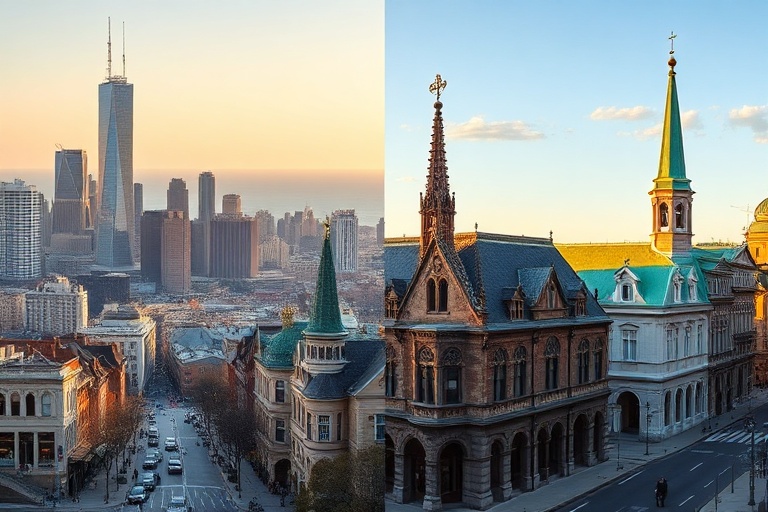
Chicago’s architecture is a testament to its ambition. The skyline, dominated by the Willis Tower and John Hancock Center, showcases the bold, geometric forms of the International Style. The city’s grid system and lakefront parks offer a sense of order and accessibility. Yet, Chicago’s cost of living remains high, particularly in neighborhoods like Lincoln Park and the West Loop, where gentrification has driven up prices. The median home value hovers around $350,000, though disparities between affluent and struggling areas are stark.
Montréal’s architecture tells a different story. The city’s historic districts, like Old Montréal, feature cobblestone streets and 17th-century buildings, while modern developments like the Quartier des Spectacles blend contemporary design with cultural spaces. The cost of living is significantly lower than in Chicago, with median home prices closer to $400,000 but offering more space for the money. However, Montréal’s winters are legendary, with temperatures often plunging below freezing for months—an annual test of resilience for residents.
Quality of life in both cities reflects their priorities. Chicagoans enjoy a vast lakefront park system and world-class museums like the Art Institute, but contend with issues like gun violence and underfunded public schools. Montréal excels in walkability, public transit, and healthcare, but faces challenges with housing shortages in its most desirable areas. Each city offers a trade-off: Chicago’s energy comes with grit, while Montréal’s charm is tempered by its climate and bureaucratic hurdles.
Global Influence: Why These Cities Matter Beyond Their Borders
Chicago and Montréal punch above their weight in global conversations. Chicago’s role as a transportation and financial hub gives it outsized influence in logistics and trade. Its universities, including the University of Chicago and Northwestern, are among the top research institutions in the world, particularly in economics and social sciences. The city’s culinary scene, from Al’s Beef to Michelin-starred restaurants, has redefined American dining, while its music legacy continues to inspire artists worldwide.
Montréal’s influence is equally significant but distinct. As the largest French-speaking city in North America, it serves as a cultural and linguistic bridge between Europe and the Americas. Its film industry, centered around the Fantasia and Montreal World Film Festival, has launched international careers. Montréal’s tech sector, bolstered by government investment, positions it as a leader in AI ethics and innovation. The city also plays a key role in climate action, hosting major conferences and implementing progressive environmental policies.
Both cities demonstrate how urban centers can thrive by leveraging their unique assets. Chicago’s resilience in the face of economic shifts and social challenges is a case study in reinvention. Montréal’s ability to balance tradition with modernity, allure with accessibility, makes it a model for other bilingual cities. Their global impact isn’t just about size or wealth—it’s about how they define what a city can be in the 21st century.
Lessons for Other Cities
The contrasts between Chicago and Montréal offer valuable lessons for urban planners and policymakers. For cities seeking to reinvent themselves, Chicago’s story highlights the importance of investing in innovation and education to diversify economic bases. For those looking to balance cultural preservation with growth, Montréal’s approach to bilingualism and arts funding provides a roadmap.
Both cities remind us that urban success isn’t just about economic metrics or tourist attractions. It’s about fostering environments where people can thrive—whether that means world-class universities, vibrant arts scenes, or inclusive public spaces. In an era where cities are increasingly competing for talent and investment, Chicago and Montréal prove that authenticity and adaptability are just as critical as infrastructure.
As the world becomes more interconnected, these two cities will continue to serve as vital nodes in global networks of culture, technology, and commerce. Their ability to evolve while staying true to their roots ensures they remain indispensable to the global urban fabric.