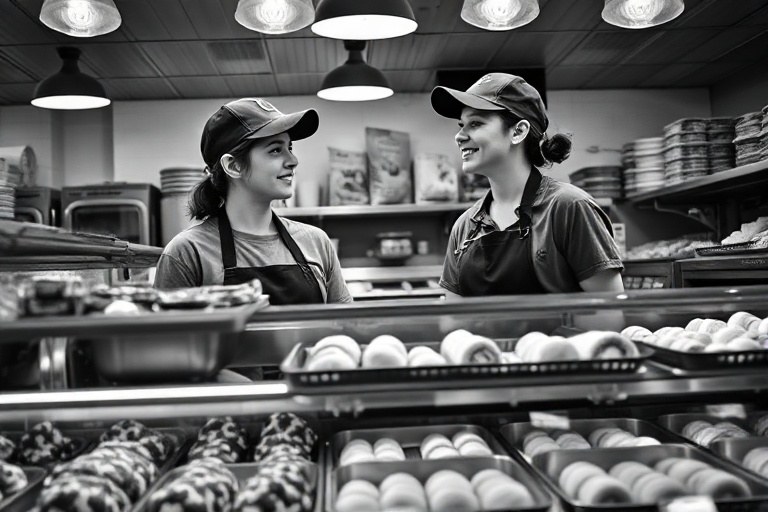
In the concrete jungles of America’s biggest cities, a subculture thrives in the most unexpected places: the local deli. Deli boys, often overlooked in mainstream narratives, have carved out a unique identity that blends hustle, community, and unshakable style. These characters—whether they’re behind the counter or frequenting the same spot daily—embody a spirit of resilience and adaptability that resonates far beyond the deli counter.
Their world operates on a rhythm all its own. From the crack of dawn when the first coffee is poured to the late-night rush when the last hero is assembled, deli boys are the unsung architects of urban life. Their influence stretches from the food they serve to the conversations they host, shaping the social fabric of neighborhoods in ways few industries can.
The Origins of the Deli Boy Archetype
The deli boy isn’t a new phenomenon, but his cultural footprint has expanded dramatically over the past few decades. Historically, delis emerged in immigrant-heavy neighborhoods as hubs for food, gossip, and commerce. Jewish delis in New York, for example, became cultural landmarks where stories were shared over pastrami sandwiches and black coffee. These spaces weren’t just places to eat; they were informal meeting grounds where ideas circulated freely.
As cities evolved, so did the role of the deli boy. No longer confined to traditional delicatessens, the archetype expanded to include the bodega workers in Brooklyn, the corner store owners in Chicago, and the late-night grill operators in Los Angeles. Each iteration brought its own flavor, but the core remained consistent: a blend of service, street smarts, and an uncanny ability to read a room.
What defines a deli boy today? It’s less about the sandwiches he makes and more about the ecosystem he sustains. He’s the guy who knows everyone’s order before they walk in the door. He’s the mediator in disputes over the last slice of pizza. He’s the keeper of neighborhood lore, from which local band is playing this weekend to which apartment building finally fixed its leaky roof. In an era of digital detachment, the deli boy offers something rare: human connection.
The Rituals and Rules of Deli Life
Deli culture operates on an unspoken code, a set of rituals that newcomers must learn quickly or risk being labeled an outsider. These rules vary by location but share common threads across cities.
- Know Your Regulars: A deli boy’s reputation hinges on remembering faces and orders. Forgetting a customer’s usual coffee—black with two sugars—is a cardinal sin.
- Master the Art of the Side Hustle: Many deli boys juggle multiple roles. The guy behind the counter might also be a DJ, a rideshare driver, or a freelance photographer. The deli is his base, but his ambitions stretch far beyond it.
- Handle the Chaos with Grace: Rush hour is controlled chaos. A deli boy must balance orders, complaints, and the occasional unexpected drama—like the time the health inspector walked in unannounced.
- Guard the Secrets: The deli is a vault of local secrets. Who’s dating whom, who’s about to get evicted, who’s secretly a musician—none of it leaves the deli’s four walls.
- Embrace the Grind: The hours are long, the pay is modest, but the rewards are in the community. A deli boy doesn’t just work for a paycheck; he works for respect.
These rituals aren’t just quirks; they’re survival strategies. In a gig economy where loyalty is a relic, deli boys prove that consistency still matters. Their daily grind fosters trust, turning a simple transaction into a relationship. This is why delis remain relevant even as corporate chains dominate the food landscape.
The Deli Boy as Cultural Ambassador
The deli boy’s influence extends beyond the counter. He’s a cultural ambassador, bridging gaps between communities that might otherwise never interact. In New York City, for example, delis in Harlem cater to a predominantly Black clientele, while those in Midtown serve a more international crowd. Yet, the space remains neutral ground where everyone is welcome.
This role is particularly vital in gentrifying neighborhoods. As new residents move in, they often seek out the deli’s authenticity, hoping to absorb a slice of the neighborhood’s soul. The deli boy, in turn, becomes a guide to the area’s history and hidden gems. He might point a newcomer to the best bodega cat (yes, they’re a thing) or warn them about the landlord who’s notorious for raising rents.
Delis also serve as informal news outlets. Before social media, they were the original Twitter feeds—where breaking news spread faster than any newspaper could print it. Today, while the internet dominates, delis still hold a monopoly on hyper-local, unfiltered information. If you want to know what’s really happening in the neighborhood, ask the deli boy.
The Future of the Deli Boy
The deli boy’s world is under threat from rising rents, corporate consolidation, and the relentless march of gentrification. Many iconic delis have shuttered their doors, replaced by luxury condos or soulless chain restaurants. Yet, the spirit of the deli boy persists. In cities like Philadelphia and Detroit, new generations are reviving the tradition, blending old-school values with modern creativity.
Some delis are adapting by embracing technology without losing their soul. Instagram accounts showcase their most photogenic dishes. Delivery apps bring their food to a broader audience. Yet, the core experience remains unchanged: a place where you can sit for hours, debate the merits of a pastrami sandwich, and feel like part of something bigger.
The deli boy’s legacy is one of resilience. He’s a reminder that in a fast-paced, digital world, human connection still matters. His story is one of hustle, heart, and the quiet power of community. As long as there are cities—and people who need a place to belong—the deli boy will endure.
A Final Thought
Next time you walk into a deli, take a moment to appreciate the person behind the counter. He might not be a celebrity or a tech mogul, but he’s a vital part of the city’s heartbeat. The deli boy doesn’t just serve food; he serves up a slice of urban life, and that’s something no algorithm can replicate.
For those looking to dive deeper into the world of delis and urban culture, check out our Food and Culture sections for more stories that explore the people and places shaping our cities.