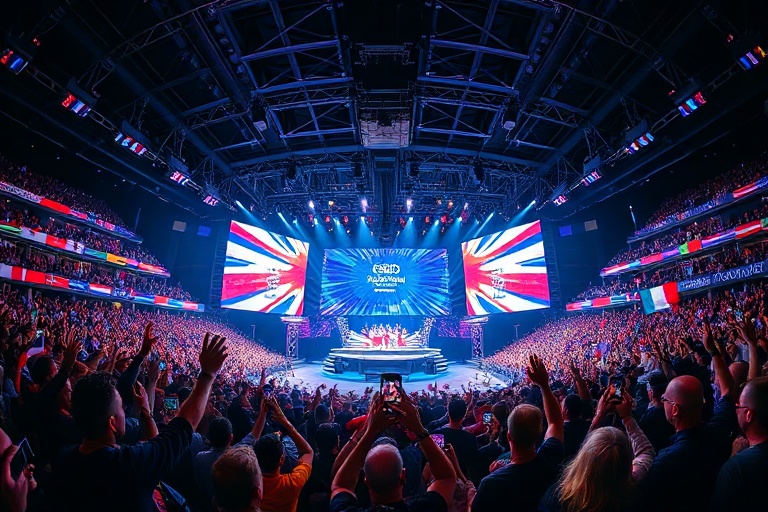
How Eurovision Voting Works and Why It Matters Beyond Music
How Eurovision Voting Shapes Global Pop Culture
The Eurovision Song Contest is more than a musical competition—it’s a cultural exchange where nations vote not just on talent, but on diplomacy, identity, and shared history. The voting system, often debated for its subjectivity, plays a crucial role in determining which songs cross borders and which fade into obscurity. Each year, millions of viewers tune in not only for performances but also to see how their country’s jury and public votes interact with the rest of Europe and beyond.
Voting at Eurovision operates on a 50/50 split between professional juries and public televoting. This dual system was introduced in 2009 to balance artistic merit with fan engagement. While juries assess technical skill, stage presence, and originality, the televote reflects the emotional connection audiences feel toward a song. The result is a dynamic blend of expert opinion and grassroots popularity, though it often sparks controversy when results defy expectations.
One of the most fascinating aspects of Eurovision voting is its cultural undercurrents. Neighboring countries frequently exchange points, creating blocs that reflect historical, linguistic, or political ties. For example, Nordic and Baltic nations often support each other, while countries in the Balkans form similar alliances. These voting patterns reveal deeper regional affinities that transcend music alone.
The Psychology Behind the Televote
Televoting isn’t just about musical taste—it’s about identity. When viewers cast their votes, they’re not only judging a song; they’re affirming a connection to a performer’s background, language, or cultural narrative. This explains why diaspora communities often sway a country’s vote toward their ancestral homeland. For instance, Turkey has historically received strong support from Germany due to its large Turkish immigrant population.
Studies suggest that emotional resonance plays a bigger role in televoting than technical quality. A catchy chorus or a relatable lyric can outweigh a technically flawless but emotionally distant performance. This is why ballads and upbeat pop anthems tend to dominate the scoreboard, while avant-garde or experimental acts struggle to secure widespread public votes.
Another factor is the “halo effect,” where a country’s political or economic influence subtly impacts its Eurovision standing. Larger nations like Germany, France, and Italy often receive fewer points from smaller countries wary of cultural dominance, while smaller nations benefit from solidarity voting. This creates an intricate web of reciprocity that keeps the contest unpredictable year after year.
Jury Voting: The Gatekeepers of Credibility
Professional juries, composed of music industry experts, provide a counterbalance to the emotional sway of televoting. Their role is to evaluate performances based on vocal ability, stagecraft, songwriting, and overall artistic vision. Yet their scores are not without bias. Industry connections, personal tastes, and even national pride can influence their decisions.
A notable example is the 2016 contest, where Ukraine’s Jamala won with a politically charged song, “1944,” which critics argued leveraged historical trauma for votes. While the televote overwhelmingly supported her, the jury scores were more divided, reflecting the tension between artistic merit and geopolitical messaging.
To mitigate bias, Eurovision has implemented stricter rules, such as barring jury members from voting for their own country. Still, controversies persist. In 2013, Azerbaijan’s entry was accused of buying votes, prompting the European Broadcasting Union (EBU) to tighten regulations around delegation conduct and voting transparency.
Beyond Europe: The Rise of Global Eurovision
While Eurovision remains a European institution, its reach has expanded to include countries like Australia, Israel, and even the United States, which participates as a guest entrant. This globalization has introduced new voting dynamics, particularly as non-European nations integrate into the scoring system. Australia, for example, often receives high scores from European juries, but its televote results are more unpredictable due to its smaller local fanbase.
The EBU has also experimented with hybrid voting formats, such as the “Big Five” rule, where the UK, France, Germany, Italy, and Spain automatically qualify for the final due to their financial contributions. This system ensures these nations remain influential in the contest, though it has drawn criticism for privileging wealthier countries.
Another innovation is the introduction of a sixth public vote, which allows online viewers worldwide to participate. This move reflects Eurovision’s growing digital audience, particularly in countries where traditional broadcast viewership is declining. It also opens the door for viral moments, such as when a song like Finland’s “Dark Side” in 2022 gained unexpected traction on TikTok, propelling it to a top-five finish.
Controversies and Reforms
Eurovision’s voting system has faced repeated scrutiny, with accusations of bloc voting, political manipulation, and even rigging. To address these concerns, the EBU has introduced safeguards like anonymous juries and real-time vote monitoring. Yet some argue these measures are insufficient. In 2022, Ukraine’s victory with “Stefania” by Kalush Orchestra was widely celebrated, but questions lingered about whether geopolitical sympathy played a role in its success.
Another persistent issue is the “cultural adjacency” effect, where countries with similar musical traditions influence each other’s votes. For instance, Scandinavian nations often score highly in the Baltic states, while Balkan countries frequently support each other. While this isn’t inherently unfair, it can marginalize more innovative or less regionally aligned acts.
Eurovision’s leadership continues to explore reforms, including the potential for a fully digital voting system to reduce human bias. However, any changes must balance fairness with the contest’s cherished unpredictability. After all, part of Eurovision’s magic lies in its ability to surprise, inspire, and occasionally confound.
Conclusion: More Than Just Points
Eurovision voting is a microcosm of global cultural exchange, where music, politics, and identity intersect. Whether through the heartfelt televote or the calculated jury score, every point tells a story—about borders, belonging, and the stories we choose to amplify. As the contest evolves, so too will the debates around its fairness and relevance. Yet one thing remains constant: Eurovision’s power to bring the world together, if only for one night a year.
For those interested in the broader cultural impact of music competitions, Entertainment offers deeper analysis into how festivals and awards shape global trends. Meanwhile, Music explores the evolving role of songwriting in an ever-changing industry.
- Jury Voting: Evaluates performances based on technical skill and artistic merit.
- Televoting: Reflects public sentiment, often driven by emotional connection and cultural ties.
- Bloc Voting: Neighboring or culturally aligned countries exchange points.
- Global Expansion: Non-European countries like Australia and Israel now participate.
- Reforms: Ongoing efforts to reduce bias and increase transparency.