Nakba Day: A Global Remembrance of Palestinian Displacement
What Is Nakba Day?
Each May 15, Nakba Day is observed by Palestinians and their supporters worldwide to commemorate the displacement and expulsion of approximately 700,000 Palestinians during the 1948 Arab-Israeli War. The term Nakba translates from Arabic as “catastrophe,” reflecting the profound loss of homes, land, and community that followed Israel’s establishment. The day is marked by protests, vigils, and educational events that highlight the ongoing consequences of that historical moment.
While rooted in a specific historical event, Nakba Day has evolved into a symbol of Palestinian identity and resistance. It transcends borders, drawing global attention to issues of displacement, statelessness, and the right of return. The observance also intersects with broader debates about colonialism, human rights, and self-determination in the Middle East and beyond.
Historical Roots and the 1948 War
The origins of Nakba Day trace back to November 1947, when the United Nations approved a partition plan to create separate Jewish and Arab states in British-mandated Palestine. Jewish leaders accepted the plan; Arab leaders rejected it, viewing it as unjust. Violence escalated immediately, and by May 1948, full-scale war erupted as neighboring Arab states intervened following Israel’s declaration of independence.
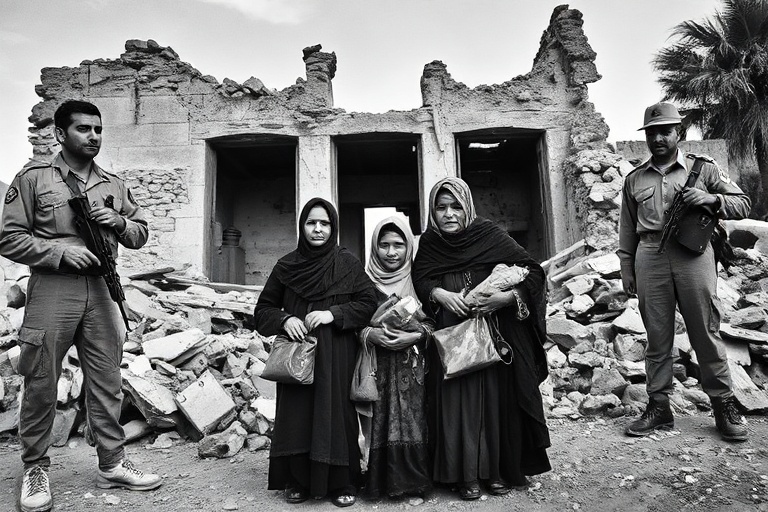
During the war, hundreds of Palestinian villages were destroyed or depopulated. Some residents fled in fear; others were forcibly expelled by Zionist militias. The newly formed Israeli military, known as the Israel Defense Forces, played a central role in what Palestinians remember as a coordinated campaign of displacement. By the time the war ended in 1949, Israel controlled 78% of historic Palestine, while the West Bank and Gaza fell under Jordanian and Egyptian control, respectively.
For decades, Israel did not acknowledge the Palestinian narrative of the Nakba. It wasn’t until 2011 that a law was passed requiring the Nakba to be addressed in Israel’s school curriculum—though critics argue the treatment remains minimal and often dismissive. Meanwhile, in Palestinian communities, oral histories, memoirs, and commemorations have kept the memory alive across generations.
Global Observances and Cultural Expression
Nakba Day is observed far beyond Palestine’s borders. In cities like London, Berlin, New York, and Johannesburg, marches, art exhibits, and film screenings draw diverse crowds. These events often feature traditional Palestinian embroidery, known as tatreez, and music such as dabke, both of which serve as powerful cultural markers of resilience.
Artists and writers have also used the occasion to create works that challenge dominant historical narratives. For example, the 2003 film Paradise Now and the 2019 novel The Parisian by Andrew Sean Greer explore themes of displacement and belonging, resonating with audiences who see parallels in other global conflicts.
- Protests and Marches: Large demonstrations often occur near the Israeli border, sometimes turning violent, especially in the West Bank and Gaza.
- Social Media Campaigns: Hashtags like #NakbaDay and #RightOfReturn trend annually, amplifying Palestinian voices online.
- Educational Events: Universities host lectures, film screenings, and teach-ins to discuss the historical and legal dimensions of the Nakba.
- Cultural Festivals: Events like the Palestine Book Awards and the Edinburgh Palestine Film Festival integrate Nakba remembrance into broader cultural programming.
These observances serve not only to remember the past but to assert a continuing presence and demand justice. They also highlight the role of diaspora communities in preserving Palestinian heritage and advocating for political rights.
Political Dimensions and International Reactions
The annual commemoration of Nakba Day has become a flashpoint in international politics. Israel frequently condemns what it sees as attempts to delegitimize its existence, often restricting Palestinian gatherings in Jerusalem and the West Bank. In 2018, Israel passed a controversial law allowing the denial of entry to foreign activists who advocate for the Palestinian right of return—a move widely criticized by human rights organizations.
Meanwhile, countries like Ireland, Spain, and Norway have increasingly recognized Palestinian statehood in recent years, often citing historical injustices like the Nakba as part of their rationale. The European Parliament has also called for greater protection of Palestinian rights, particularly in relation to home demolitions and settlement expansion in the West Bank.
In the United States, support for Nakba commemorations has grown among younger generations and progressive lawmakers. A 2021 poll found that nearly half of Americans aged 18–29 believe the U.S. should play a more neutral role in the Israeli-Palestinian conflict, reflecting shifting attitudes toward the Palestinian narrative.
Yet, the topic remains deeply polarizing. Pro-Israel advocacy groups often frame Nakba commemorations as anti-Semitic or as attempts to erase Jewish history. Supporters of Palestinian rights counter that acknowledging the Nakba is essential to any just resolution of the conflict.
Why Nakba Day Matters Today
More than seven decades after the events of 1948, Nakba Day remains a living memory—and a living struggle. It is not just about the past; it is about the present and future of millions of Palestinians who live under occupation, in refugee camps, or in diaspora. The right of return, enshrined in UN Resolution 194, continues to be a central demand of the Palestinian people, even as it is routinely dismissed by Israeli officials.
The observance of Nakba Day also serves as a reminder of how history is remembered—or selectively forgotten—in global politics. While Israel celebrates its independence as a triumph of resilience, Palestinians mourn a loss that has shaped their identity for generations. This dual narrative is not a clash of equal perspectives but a reflection of unequal power dynamics.
As the conflict continues to evolve, Nakba Day offers a lens through which to examine issues of justice, memory, and reconciliation. It challenges observers to consider not only what happened in 1948 but why it still matters today. Whether through art, protest, or diplomacy, the commemoration ensures that the voices of the displaced are not silenced.
For those seeking deeper understanding, organizations such as Amnesty International and the Institute for Middle East Understanding offer detailed resources on the historical, legal, and humanitarian aspects of the Nakba. Their work underscores the importance of informed dialogue in addressing one of the most enduring conflicts of the modern era.
Ultimately, Nakba Day is not just a date on a calendar. It is a call to remember, to reflect, and to act—toward a future where justice and coexistence can coexist.