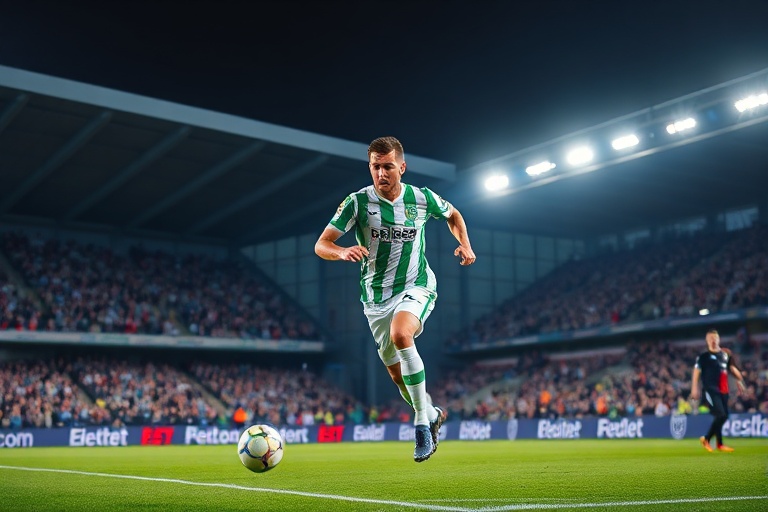
Football in Poland is not just a sport; it is a cultural battleground where tradition, ambition, and rivalry collide. At the heart of this narrative is the clash between Radomiak Radom and Lech Poznań, two clubs whose encounters transcend the pitch. These matches are more than fixtures—they are a reflection of Poland’s evolving football landscape, where underdogs challenge established powerhouses and ambition clashes with legacy.
The Historical Context: From Obscurity to Relevance
Lech Poznań, a club founded in 1922, stands as one of Poland’s most decorated teams. With seven Ekstraklasa titles and a rich history in European competitions, the club represents the pinnacle of Polish football tradition. Poznań’s status as a cultural hub in western Poland further cements its role as a symbol of regional pride.
Radomiak Radom, on the other hand, has spent much of its history in the shadows. Despite being founded in 1910, the club only recently re-emerged as a force in the Ekstraklasa after years of financial struggles and lower-league obscurity. Their promotion in 2020 marked a turning point—not just for the club, but for Polish football as a whole.
The contrast between the two clubs is striking. Lech Poznań embodies consistency and historical prestige, while Radomiak represents the unpredictable rise of smaller clubs fueled by modern ambition. Their meetings are no longer one-sided affairs; they are competitive, tactical battles where passion often outweighs pedigree.
Tactical Evolution: How Radomiak Challenges Tradition
The rise of Radomiak has forced a reevaluation of traditional football strategies in Poland. Unlike Lech Poznań, which often relies on structured, possession-based football, Radomiak thrives on high pressing, quick transitions, and defensive solidity. Their approach mirrors the tactics employed by smaller clubs in top European leagues, proving that innovation can triumph over tradition.
In recent seasons, Radomiak’s defensive organization has frustrated even the most experienced Ekstraklasa teams. Their ability to absorb pressure and exploit counterattacking opportunities has made them a formidable opponent. Lech Poznań, accustomed to dominating possession, has found itself increasingly vulnerable to Radomiak’s disciplined defensive lines.
This tactical shift has broader implications for Polish football. Younger players now see alternative pathways to success beyond joining traditional powerhouses. Clubs like Radomiak provide a platform for development, proving that success is not solely dependent on financial muscle but also on smart recruitment and tactical intelligence.
Key Factors in Radomiak’s Resurgence
- Smart Recruitment: Radomiak has prioritized signing players with high work rates and tactical awareness rather than relying on expensive stars.
- Strong Youth Development: Investments in academy facilities have produced players who understand the club’s identity.
- Defensive Rigidity: A well-drilled backline and disciplined midfield have neutralized stronger opponents.
- Mental Resilience: The team’s ability to grind out results in tight matches has been a defining trait.
Broader Implications: The Future of Polish Football
The Radomiak vs. Lech Poznań rivalry is more than a local derby—it is a microcosm of Polish football’s changing dynamics. The Ekstraklasa, once dominated by a handful of clubs, is becoming more competitive. Financial fair play regulations and improved youth academies have leveled the playing field, allowing smaller clubs to challenge the traditional elite.
Lech Poznań’s struggles in recent seasons—despite their history—highlight the fragility of relying solely on tradition. The club has faced criticism for inconsistent performances and an over-reliance on aging players. Meanwhile, Radomiak’s rise serves as a reminder that clubs with clear identities and modern structures can thrive.
This shift has financial implications as well. Broadcasting revenue and sponsorship deals are becoming more evenly distributed, reducing the financial gap between top and mid-table clubs. If this trend continues, Poland could produce more competitive teams in European competitions, challenging the dominance of clubs from Western Europe.
What’s Next for Both Clubs?
For Lech Poznań, the challenge is clear: adapt or risk further decline. The club must invest in youth development while maintaining its competitive edge. A return to European football would provide a much-needed boost, both financially and in terms of prestige.
Radomiak, on the other hand, must prove that their success is not a fluke. Consistency in the Ekstraklasa and progress in domestic cup competitions would solidify their status as a legitimate contender. Their next step could be European football—a realistic goal given their current trajectory.
The rivalry between these two clubs is far from over. Each match is a statement, a battle for pride, and a glimpse into the future of Polish football. As the Ekstraklasa continues to evolve, encounters like Radomiak vs. Lech Poznań will shape its identity for years to come.
Final Thoughts
The story of Radomiak and Lech Poznań is a testament to the unpredictability of football. It proves that success is not dictated by history alone but by adaptability, ambition, and innovation. As Polish football continues to grow, this rivalry will remain a defining narrative—one where the underdog’s rise and the giant’s struggle create a compelling spectacle.