Street Fighter Movie: From Arcade Classic to Cult Film Legacy
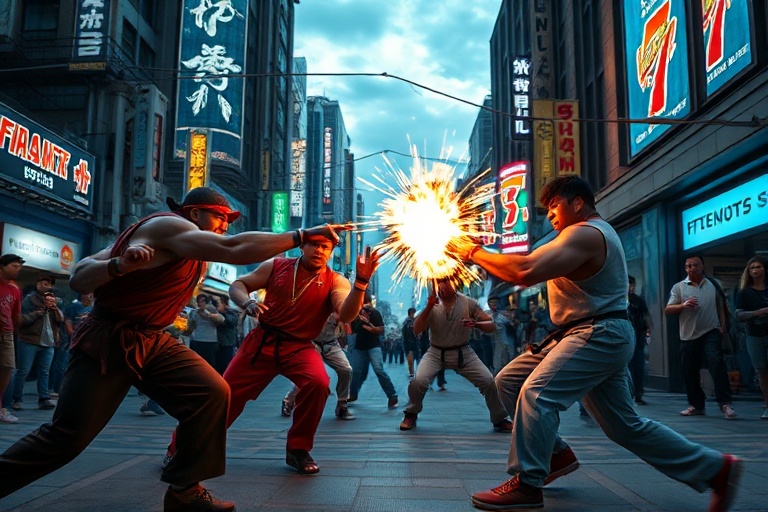
The Street Fighter movie arrived in theaters in 1994, a time when video game adaptations were rare and often met with skepticism. Directed by Steven E. de Souza and starring Jean-Claude Van Damme as Guile and Raúl Juliá as M. Bison, the film attempted to translate the fast-paced, high-energy world of the arcade hit into live-action cinema. While it wasn’t a critical darling upon release, it quickly developed a devoted fanbase—and today, it’s remembered as a nostalgic artifact of ’90s pop culture.
Decades later, the franchise has returned to the spotlight with renewed conversations about video game movies. From the divisive Super Mario Bros. (1993) to the more recent successes like Sonic the Hedgehog (2020), filmmakers have struggled to balance faithfulness to the source material with cinematic appeal. The Street Fighter movie occupies a unique space in this conversation: flawed, campy, and undeniably entertaining.
The Origins of a Gaming Icon and Its Hollywood Ambitions
Street Fighter, created by Capcom in 1987, was one of the most influential fighting games of its era. With its memorable characters—from the heroic Ryu and Ken to the villainous M. Bison—and precise combat mechanics, it carved out a permanent place in gaming history. By the early ’90s, Hollywood took notice. The success of films like Mortal Kombat (1995) and Mega Man’s animated adaptation hinted at a market for video game-inspired entertainment.
The 1994 film arrived at a pivotal moment. CGI was still in its infancy, practical effects dominated action sequences, and studios were eager to capitalize on the gaming boom. Jean-Claude Van Damme, then at the height of his action-star fame, was cast as Guile, the stoic military commander leading the charge against M. Bison’s Shadaloo organization. Raúl Juliá’s portrayal of the flamboyant and menacing Bison became the film’s standout performance, earning posthumous praise and cementing his legacy in the role.
Despite its ambitions, the film faced significant challenges. Budget constraints limited the scope of its action sequences, and the script often prioritized spectacle over narrative coherence. Yet, these very flaws contributed to its cult status. Fans embraced its over-the-top tone, cheesy one-liners, and unapologetic commitment to the spirit of the game.
Key Moments That Defined the Film’s Legacy
The Street Fighter movie is remembered for several defining moments that have since become iconic in their own right. These scenes capture the film’s unique blend of action, humor, and unintentional absurdity:
- “Guile, you magnificent bastard!” – A line delivered by Charlie Nash (Chris Klein) that has since become a meme and a rallying cry among fans.
- M. Bison’s throne room monologue – Raúl Juliá’s performance as the flamboyant villain remains one of the most memorable aspects of the film.
- The final battle on the oil rig – A chaotic, effects-driven climax that, while flawed, embodies the film’s high-energy spirit.
- Fei Long’s homage to Bruce Lee – A playful nod to martial arts cinema that resonated with both gamers and film buffs.
Why the Street Fighter Movie Still Matters Today
The Street Fighter movie’s endurance speaks to broader trends in video game adaptations. While modern films like the Sonic the Hedgehog reboot or the upcoming Fighting EX Layer film benefit from advanced CGI and a more sophisticated understanding of source material, the 1994 version occupies a different niche. It’s not a faithful adaptation—nor does it try to be. Instead, it’s a celebration of the era that birthed it: a time when video games were exploding in popularity, and Hollywood was still figuring out how to translate their energy to the big screen.
Its legacy also highlights the importance of casting. Raúl Juliá’s performance as M. Bison transcended the material, turning a cartoonish villain into a multidimensional character. Jean-Claude Van Damme’s physicality brought a sense of gravitas to Guile, even if the script didn’t always match his intensity. These performances helped elevate the film beyond its budgetary limitations.
Moreover, the Street Fighter movie reflects the cultural moment in which it was made. The early ’90s were a time of excess in cinema, with action films embracing exaggerated villains, over-the-top fight scenes, and a healthy dose of camp. The film fits neatly into that tradition, even as it draws from the world of gaming—a medium that was still finding its voice in mainstream entertainment.
The Broader Implications for Video Game Movies
The success—and cult status—of the Street Fighter movie raises questions about what makes a video game adaptation work. Unlike comic book films, which have a decades-long history and a built-in fanbase, video game movies often struggle to find an audience. The challenge lies in balancing the expectations of gamers, who crave faithfulness to the source material, with the demands of general audiences, who prioritize cinematic storytelling.
Several factors contribute to the success of a video game adaptation:
- Character depth and casting – A compelling villain or protagonist can elevate an otherwise flawed film. Raúl Juliá’s M. Bison proved that a video game character could become iconic in live-action form.
- Tone and style – The best adaptations embrace the spirit of the game rather than attempting a literal translation. The Street Fighter movie’s campy, action-packed tone aligned perfectly with the arcade original.
- Fan engagement – Cult classics thrive when they foster a sense of community. The Street Fighter movie’s quotable lines and memorable scenes have kept it alive in fan discussions, memes, and retrospectives.
- Timing and cultural relevance – The film’s release in 1994 coincided with the peak of arcade gaming’s popularity. It tapped into a moment when audiences were hungry for video game-inspired entertainment.
Today, filmmakers have more tools at their disposal. CGI allows for faithful recreations of game worlds, while motion-capture technology can preserve the essence of iconic characters. Yet, the Street Fighter movie remains a reminder that technical perfection isn’t everything. Sometimes, it’s the imperfections—the cheesy dialogue, the over-the-top action, the unapologetic commitment to the source—that make a film unforgettable.
A Lasting Legacy
More than three decades after its release, the Street Fighter movie endures as a nostalgic relic of a bygone era. It’s a film that was panned by critics and adored by fans, a movie that stumbled in its execution but soared in its ambition. Its continued relevance speaks to the power of gaming culture and Hollywood’s ongoing fascination with translating interactive experiences into linear narratives.
For gamers who grew up with Ryu and Ken, the film represents a bridge between the arcade and the silver screen. For film enthusiasts, it’s a fascinating artifact of ’90s cinema. And for pop culture observers, it’s a reminder that sometimes, the most memorable stories aren’t the ones that play it safe—but the ones that embrace their flaws and run with them.
The Street Fighter movie may never be hailed as a cinematic masterpiece, but its legacy is undeniable. It’s a testament to the enduring appeal of the franchise, the power of strong performances, and the magic that happens when a film commits wholeheartedly to its own absurdity.