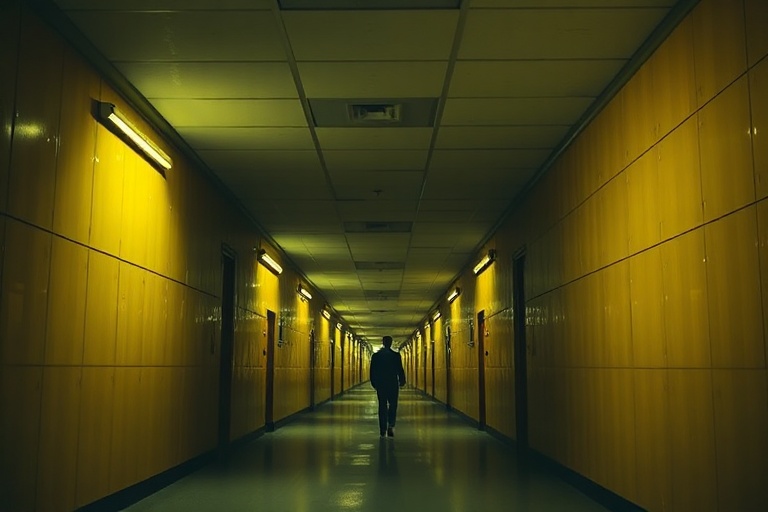
The Backrooms Movie: How Internet Horror Became a Cinematic Reality
The Backrooms is more than just a creepypasta legend—it has evolved into a full-fledged cultural entity, and its recent adaptation into a feature-length film has only amplified its reach. What began as a simple 4chan post in 2018 has grown into a sprawling multimedia franchise, captivating horror enthusiasts, filmmakers, and digital artists alike. The upcoming Backrooms movie promises to bring this eerie, liminal space to life in a way that static images and text-based stories never could.
This isn’t just another found-footage or psychological horror flick. The Backrooms taps into something primal: the fear of the unknown, the dread of being lost in an endless, shifting maze. As the film inches closer to release, it’s worth examining how this internet-born horror concept became a cinematic milestone—and what it means for the future of horror storytelling.
The Origins of the Backrooms: From Forum Post to Global Phenomenon
The Backrooms mythos traces its roots to a 2018 post on the imageboard 4chan. The anonymous user described a reality “where the walls are slightly too clean and the fluorescent lights are slightly too yellow,” a place where one could “noclip” out of reality and into something far more unsettling. The post included six levels of the Backrooms, each more horrifying than the last, from the mundane to the outright nightmarish.
What made the Backrooms different from other creepypastas was its simplicity and relatability. Unlike sprawling, complex lore like that of SCP Foundation, the Backrooms could be summed up in a few paragraphs. Yet, it resonated deeply because of its universality: anyone could imagine themselves accidentally slipping into that fluorescent purgatory. The concept spread rapidly across platforms like Reddit, YouTube, and TikTok, with users contributing their own levels, stories, and even lore expansions.
The Backrooms became a digital sandbox where horror fans could collaborate, create, and share. Fan-made games, animations, and even VR experiences emerged, each adding new layers to the mythos. The idea of an endless maze of empty offices and flickering lights became a metaphor for modern alienation—a place where people could get lost in the digital ether, both literally and metaphorically.
Key Milestones in the Backrooms Evolution
- 2018: Original 4chan post introduces the concept of the Backrooms.
- 2019-2020: YouTube and Reddit communities expand the lore with new levels, entities, and stories.
- 2021: Indie game developers begin creating Backrooms-inspired titles, including first-person explorers and survival horror games.
- 2022: Major horror YouTubers and streamers, like Kane Pixels and Liminal Horror, produce viral Backrooms content, bringing the mythos to mainstream audiences.
- 2023: Announcement of the official Backrooms movie, helmed by director Jeremy Saulnier (Green Room, Hold the Dark).
The Backrooms Movie: What to Expect from the Cinematic Adaptation
News of a Backrooms movie sent shockwaves through horror fandoms. Directed by Jeremy Saulnier, known for his gritty, atmospheric horror-thrillers, the film promises a visceral and unsettling experience. Saulnier’s signature style—tight framing, naturalistic performances, and a focus on dread over jump scares—seems tailor-made for the Backrooms’ oppressive, liminal horror.
While details remain scarce, early reports suggest the film will follow a group of people who find themselves trapped in the Backrooms after a catastrophic event. The narrative will explore their struggle to survive while confronting the unknown entities that lurk within the maze-like corridors. The Backrooms’ lack of clear rules or explanations makes it a challenging setting for filmmakers, but also a blank canvas for psychological horror.
The movie’s production has been shrouded in secrecy, with Saulnier emphasizing authenticity over CGI spectacle. In interviews, he has described the Backrooms as “a place where architecture itself is the antagonist.” This approach aligns with the source material, where the environment is as much a threat as any monster. Fans can expect long, unbroken takes, eerie sound design, and a sense of creeping paranoia that builds to an unbearable tension.
Why the Backrooms Resonate in the Digital Age
The Backrooms’ success isn’t just a fluke of internet culture—it reflects broader anxieties about modernity, isolation, and the blurred lines between reality and simulation. In an era where people spend more time online than ever, the idea of being trapped in a digital void feels eerily prescient. The Backrooms are both a literal and metaphorical space: a place where the internet’s infinite corridors collapse into something inescapable.
Psychologists have noted that liminal spaces—those transitional areas between one place and another—often evoke strong emotional responses. Airports, parking garages, and empty office buildings can feel unsettling because they exist in a state of “in-betweenness.” The Backrooms amplify this effect by removing all context: no doors lead out, no windows offer sunlight, and the fluorescent lights never flicker out. It’s a space designed to disorient, to make the viewer question their own perception of reality.
Moreover, the Backrooms tap into the collective fear of losing control. In a world where algorithms dictate our paths, where social media feeds trap us in echo chambers, the idea of being lost in an endless maze feels like a dark mirror of our digital lives. The entities that inhabit the Backrooms—often described as “hounds,” “skin-stealers,” or “smilers”—serve as manifestations of that loss of control. They are unpredictable, unknowable, and always watching.
This theme of surveillance and powerlessness resonates deeply in an age of data privacy scandals, deepfake technology, and AI-generated content. The Backrooms aren’t just a horror setting; they’re a cautionary tale about the digital landscapes we’ve built for ourselves.
The Future of Horror: What the Backrooms Movie Could Mean for the Genre
The Backrooms movie isn’t just another horror flick—it’s a potential turning point for the genre. Horror has always been a reflection of societal fears, and the Backrooms represent a new kind of horror for the 21st century: one rooted in digital anxiety rather than supernatural or slasher tropes. If the film succeeds, it could pave the way for more liminal horror, more collaborative storytelling, and more horror that thrives on ambiguity rather than clear-cut narratives.
Already, we’re seeing a surge in Backrooms-inspired content. Indie filmmakers are experimenting with low-budget liminal horror, while game developers continue to push the boundaries of what it means to feel trapped. The Backrooms have become a cultural shorthand for the uncanny, a way to describe anything that feels “off” or unsettling in the digital realm.
But the Backrooms’ influence extends beyond horror. The concept has inspired art installations, music, and even philosophical discussions about the nature of reality. Some theorists have drawn parallels between the Backrooms and concepts like the “Bardo” in Tibetan Buddhism—a transitional state between life and death—or the “Mandela Effect,” where people collectively misremember events. In this light, the Backrooms are less a horror story and more a modern myth, a way for people to process the disorientation of living in a hyper-connected world.
The Backrooms movie, then, is more than a film. It’s a cultural artifact, a snapshot of where horror is headed in the digital age. Whether it succeeds as a standalone horror film or becomes part of a larger multimedia franchise, its impact is already being felt. And if the Backrooms teach us anything, it’s that the most terrifying places aren’t always haunted houses or graveyards—sometimes, they’re the spaces between our screens.
Conclusion: A New Era for Liminal Horror
The Backrooms have come a long way from that humble 4chan post. What started as a simple thought experiment has grown into a phenomenon that challenges our perceptions of horror, reality, and digital existence. The upcoming movie is a testament to the power of internet-born storytelling, proving that the most compelling myths aren’t always crafted by professionals—they’re built collaboratively, one post, one video, one level at a time.
As we wait for the film’s release, one thing is clear: the Backrooms aren’t going anywhere. They’ll continue to evolve, to inspire, and to haunt our collective imagination. And in a world where the line between online and offline life grows blurrier every day, perhaps the Backrooms are the perfect horror for our time—a place where we can confront our fears of being lost, both literally and in the endless corridors of the digital world.
For fans of the genre, this is an exciting moment. For everyone else? Well, maybe it’s best not to think too hard about what happens if you noclip out of reality.
“The Backrooms aren’t just a setting—they’re a state of mind. And once you’re in, it’s hard to find your way out.”