Reggio Emilia: The Global Impact of a Revolutionary Education Approach
The Reggio Emilia Approach: A Global Movement in Early Childhood Education
The Reggio Emilia approach stands as one of the most influential yet often misunderstood educational philosophies in the world today. Originating in a small Italian town after World War II, this child-centered methodology has evolved into a global movement that challenges traditional notions of early learning. Unlike conventional systems that prioritize rote memorization and standardized testing, Reggio Emilia values creativity, collaboration, and the natural development of young minds.
Its principles have inspired educators across continents, from bustling urban centers in Asia to remote communities in South America. The approach’s emphasis on project-based learning and the “hundred languages of children”—a concept celebrating diverse forms of expression—has made it a touchstone for progressive education worldwide. Yet, its global adoption has also sparked debates about cultural adaptation and institutional feasibility.
The Origins and Philosophy Behind Reggio Emilia
Reggio Emilia traces its roots to the aftermath of World War II in the Emilia-Romagna region of Italy. In 1945, a group of parents and teachers in the town of Reggio Emilia began building schools with recycled materials, driven by a desire to create a new society through education. Loris Malaguzzi, a psychologist and educator, became the movement’s guiding force, coining the phrase “the hundred languages of children” to describe how young learners express ideas through art, movement, and dialogue.
The philosophy rests on several core tenets:
- Child as Competent and Capable: Children are viewed as active constructors of knowledge, not passive recipients of information.
- Emergent Curriculum: Learning is driven by children’s interests, with projects evolving organically over time.
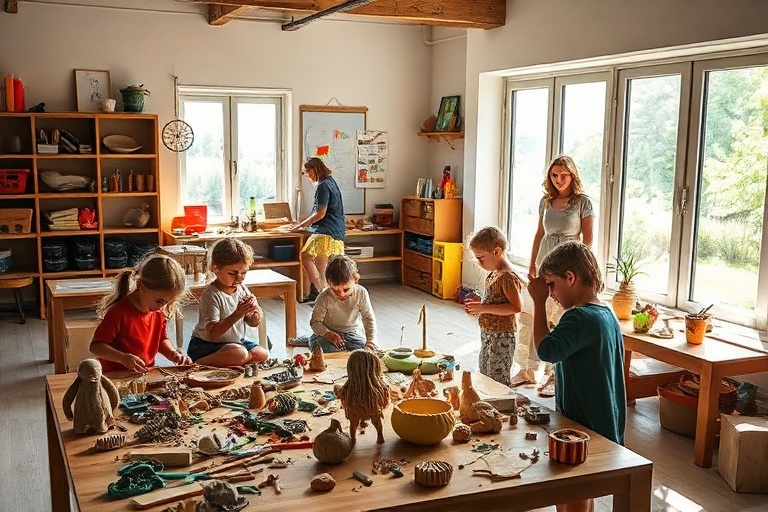
- The Role of the Environment: Classrooms are designed as “third teachers,” filled with natural light, open spaces, and carefully curated materials.
- Documentation as Advocacy: Teachers meticulously record children’s learning processes through photos, notes, and displays to communicate progress to families and communities.
This holistic framework contrasts sharply with rigid, test-driven systems. In Italy, Reggio Emilia schools operate under municipal supervision, ensuring accessibility for all children. Globally, however, the approach has faced scrutiny over its scalability and cost, particularly in underfunded educational systems.
Reggio Emilia’s Global Influence and Adaptations
The philosophy’s appeal lies in its flexibility. While the original schools in Reggio Emilia remain a model, variations have emerged worldwide. In the United States, the approach gained traction in the 1980s and 1990s, with institutions like the Education Development Center (EDC) in Massachusetts pioneering its implementation. Today, Reggio-inspired programs operate in urban centers like New York and Los Angeles, often blending with local cultural practices.
In Scandinavian countries, elements of Reggio Emilia have merged with the Nordic tradition of “forest schools,” emphasizing outdoor learning and sensory exploration. Meanwhile, in Asia, schools in countries like South Korea and China have adopted the approach’s project-based methods, though often with adaptations to fit Confucian educational values that prioritize structured discipline.
Critics argue that Reggio Emilia’s emphasis on child-led learning can clash with cultural expectations. For instance, in some Latin American contexts, parents may prefer more teacher-directed instruction. Yet, proponents highlight successful adaptations, such as Brazil’s “Escola da Ponte,” which blends Reggio principles with Paulo Freire’s critical pedagogy to empower marginalized communities.
The Role of Teachers and Families in Reggio Emilia
Central to the Reggio Emilia approach is the relationship between teachers, children, and families. Teachers act as co-learners, guiding rather than directing, and often engage in deep reflection on their practices. Professional development is ongoing, with educators frequently collaborating to refine their methods.
Families are not passive observers but active participants in the learning process. Schools host regular meetings, exhibitions, and workshops to involve parents in their children’s education. This partnership fosters a sense of community and reinforces the idea that learning extends beyond the classroom.
In some global contexts, however, this collaboration can be challenging. In cultures where parental involvement is limited by work schedules or socioeconomic barriers, Reggio-inspired programs must find creative ways to bridge the gap. For example, schools in Finland have integrated digital platforms to keep families informed about their children’s projects, demonstrating how technology can enhance engagement.
Challenges and Criticisms of the Reggio Emilia Model
Despite its widespread acclaim, the Reggio Emilia approach is not without controversy. One of the most common criticisms is its high cost. The approach requires well-trained teachers, high-quality materials, and spacious environments, making it inaccessible for many communities. In public school systems, where budgets are tight, replicating the model can feel impossible.
Another challenge is the misconception that Reggio Emilia is a “free-for-all” where children do as they please. In reality, the approach demands meticulous planning and structure. Teachers must carefully observe children’s interests and design projects that align with educational goals. This balance between freedom and guidance is often misunderstood.
Additionally, some educators question whether the approach can truly thrive outside of its Italian context. The cultural emphasis on community collaboration and artistic expression may not resonate equally in all societies. As a result, many schools opt to blend Reggio principles with other methodologies, creating hybrid models that better suit their local needs.
Looking Ahead: The Future of Reggio Emilia
As education continues to evolve, the Reggio Emilia approach remains a beacon for those advocating for child-centered, creative learning. Its principles have influenced policies in countries like New Zealand and Australia, where early childhood education is increasingly prioritized. Even in corporate settings, businesses are drawing inspiration from Reggio’s emphasis on innovation and interdisciplinary thinking.
For educators and parents interested in exploring Reggio-inspired methods, resources like the Reggio Children Foundation offer training and research opportunities. While the approach may not be a one-size-fits-all solution, its global impact underscores the importance of reimagining education in ways that honor children’s innate curiosity and potential.
The Reggio Emilia approach reminds us that learning is not confined to textbooks or standardized tests. It is a dynamic, collaborative process that thrives when nurtured with care and creativity. As the world becomes more interconnected, the lessons from Reggio Emilia may well shape the future of education across cultures and continents.