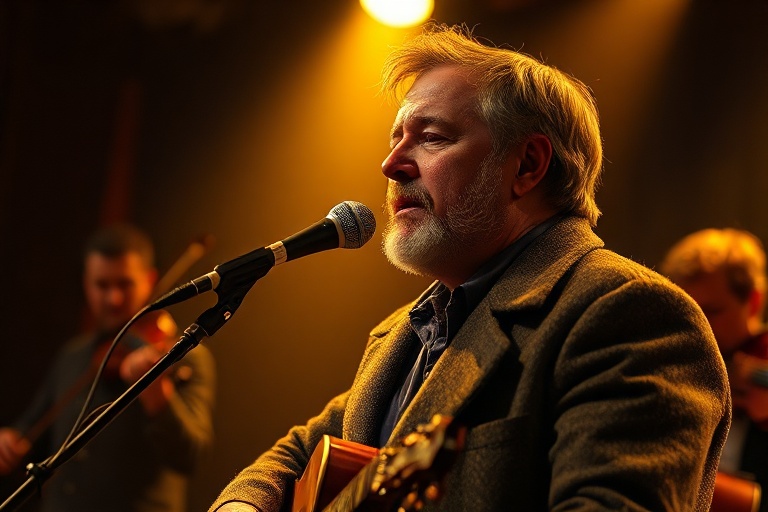
For over four decades, Tommy Fleming has stood as one of Ireland’s most distinctive and enduring vocalists, weaving the soul of Irish ballads into the fabric of contemporary folk music. With a voice that carries the warmth of a fireside storyteller and the precision of a seasoned performer, Fleming has carved a legacy that transcends generational and cultural boundaries. His work has not only preserved the essence of Irish song but also reimagined it for modern audiences, earning him a revered place in the global folk scene.
The Early Years: A Foundation in Song and Struggle
Born in the small town of Monasterevin, County Kildare, in 1958, Tommy Fleming’s connection to music was evident from an early age. Raised in a working-class family, he grew up surrounded by the sounds of traditional Irish music—whether in the pubs of his hometown or the gatherings of extended family. His father, a laborer, and his mother, a homemaker, nurtured a home filled with songs, though theirs was not a household of professional musicians. Fleming’s introduction to performance came through school plays and local talent shows, where his natural stage presence and powerful voice began to turn heads.
By his late teens, Fleming had immersed himself in the thriving folk scene of 1970s Ireland. He was particularly drawn to the raw emotional power of ballads, a genre that would become his signature. His early influences included legends like Luke Kelly of The Dubliners and Christy Moore, whose ability to blend tradition with contemporary relevance left a lasting impression. Fleming’s first public performances were in small venues and fleadh cheoils, where he honed his craft and developed the distinctive phrasing that would later define his recordings.
The Rise to Prominence: Albums and Collaborations
Fleming’s breakthrough came in the 1990s, a period that saw him transition from local acclaim to national recognition. His 1993 debut album, Sailing On, established him as a formidable talent in the Irish folk scene. The album featured a mix of traditional ballads and original compositions, all delivered with a vocal clarity that set him apart from his peers. Tracks like “The Fields of Athenry” and “The Town I Loved So Well” showcased his ability to convey both the sorrow and the defiance inherent in Irish song.
Throughout the 1990s and early 2000s, Fleming expanded his reach through collaborations with other prominent artists and ensembles. His work with the Irish tenor Ronan Tynan on the 2005 album Heartland brought a new dimension to his artistry, blending folk and classical influences. The album was a commercial success and introduced Fleming to audiences beyond the traditional folk circuit. He also toured extensively with groups like The Chieftains, further cementing his reputation as a versatile and respected performer.
One of Fleming’s most notable achievements during this period was his involvement in the Celtic Thunder phenomenon. While not a core member of the original ensemble, his guest appearances on the group’s early tours and recordings helped bridge the gap between traditional folk and the modern Celtic music revival. His participation in Celtic Thunder’s 2008 tour, in particular, introduced his music to thousands of new fans across North America and Europe.
Musical Style and Legacy: The Fleming Sound
Tommy Fleming’s musical style is rooted in the unadorned beauty of Irish balladry, but it is his interpretive skill that elevates his performances. Unlike some artists who rely on technical virtuosity, Fleming’s strength lies in his ability to convey emotion through subtle vocal inflections and a deep understanding of narrative. His voice, rich and resonant, carries the weight of history, whether he is singing a lament for lost love or a rallying cry for freedom.
His discography reflects a commitment to authenticity, with albums like The Quiet Land (2007) and Voices and Echoes (2012) offering a blend of classic and contemporary material. Fleming’s original compositions, such as “The Quiet Land of Erin,” demonstrate his talent for crafting new songs that feel as timeless as the traditional tunes he reveres. His arrangements are often minimalist, allowing the lyrics and melody to take center stage—a choice that underscores his respect for the material.
Fleming’s influence extends beyond his recordings. He has been a mentor to younger artists, hosting workshops and masterclasses that emphasize the importance of preserving Irish musical traditions. His commitment to education is evident in his work with organizations like Comhaltas Ceoltóirí Éireann, where he has served as a judge and performer, helping to nurture the next generation of Irish musicians.
Cultural Impact and Recent Work
Over the years, Tommy Fleming has become more than just a musician; he is a cultural ambassador for Ireland. His performances at prestigious venues such as Dublin’s National Concert Hall and New York’s Lincoln Center have cemented his status as a global representative of Irish song. Fleming’s ability to connect with audiences of all ages and backgrounds speaks to the universal appeal of his music. Whether performing in a small village hall or a grand concert hall, he brings the same level of passion and authenticity to every show.
In recent years, Fleming has continued to evolve as an artist. His 2019 album Reflections marked a reflective turn, with a focus on introspective and nostalgic themes. The album received critical acclaim for its lyrical depth and musical maturity, further solidifying his place as a elder statesman of Irish folk music. Fleming has also embraced digital platforms, releasing live sessions and acoustic performances online to reach younger audiences who may not have encountered his music through traditional channels.
Despite his decades-long career, Fleming shows no signs of slowing down. He remains a sought-after performer, frequently headlining festivals and cultural events across Ireland and beyond. His recent collaborations with younger artists, such as the 2022 single “The Parting Glass” with the band We Banjo 3, demonstrate his willingness to adapt and stay relevant in a rapidly changing musical landscape.
A Lasting Influence
Tommy Fleming’s contributions to Irish music are immeasurable. He has not only preserved the tradition of Irish balladry but has also expanded its possibilities, introducing it to new audiences while staying true to its roots. His work serves as a reminder of the power of music to connect us to our past and to each other. For those who have followed his career from its humble beginnings to its current heights, Fleming’s music remains a source of comfort, inspiration, and pride.
As Ireland continues to celebrate its rich cultural heritage, artists like Tommy Fleming play a vital role in keeping that legacy alive. His music is more than just a collection of songs—it is a living testament to the spirit of a nation, told through the universal language of melody and verse. Whether you are a lifelong fan or a newcomer to Irish folk music, Fleming’s recordings and performances offer an experience that is both deeply personal and profoundly communal.
For those interested in exploring more of Ireland’s musical legends, visit our Music category to discover other artists who have shaped the genre. To learn more about the history of Irish ballads, check out our Culture section, where traditional music is celebrated alongside other aspects of Ireland’s vibrant heritage.