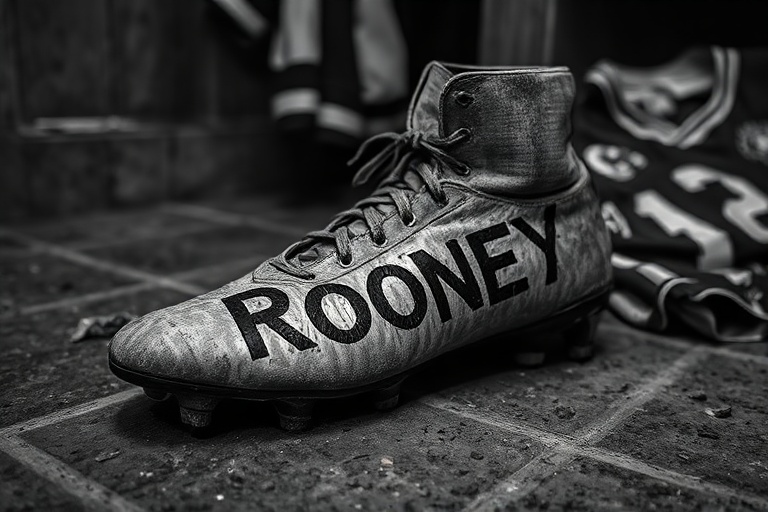
The Origins of a Global Football Legacy
The name Rooney carries weight in football stadiums across continents. Wayne Rooney, born in 1985 in Croxteth, Liverpool, rose from modest beginnings to become one of the most recognizable figures in the sport. His journey began at Everton, where his raw talent quickly caught the attention of scouts. By 2002, at just 16, he made his professional debut, becoming the second-youngest player in Premier League history at the time.
Rooney’s impact wasn’t confined to England. His move to Manchester United in 2004 for £25.6 million marked a turning point not just for the club but for English football’s global appeal. Under Sir Alex Ferguson, Rooney developed into a complete forward—equally adept at scoring goals, creating chances, and driving his team forward. His 2004–05 Premier League debut season saw him score 11 goals in 33 appearances, a performance that silenced early critics who questioned his price tag.
Internationally, Rooney’s influence extended beyond club football. He became England’s all-time top scorer in 2015, surpassing legendary figures like Bobby Charlton. His 53 international goals reflect not just skill but longevity and consistency at the highest level. Rooney’s career spanned 17 years with Manchester United and 14 years with the England national team, a longevity that speaks to his adaptability and physical resilience.
A Cultural Phenomenon Beyond the Pitch
Rooney’s significance transcends statistics and trophies. He became a cultural figure in an era when footballers increasingly stepped into the spotlight as global influencers. His charisma, combined with a working-class background, made him relatable to fans worldwide. In the early 2000s, social media was still emerging, but Rooney’s personality shone through interviews and public appearances, earning him a reputation as one of football’s most authentic voices.
His presence in popular culture grew through collaborations with brands like Nike, Coca-Cola, and Ford. These partnerships were not just commercial ventures; they reflected Rooney’s crossover appeal. He starred in global advertising campaigns that reached audiences in Asia, Africa, and the Americas, helping to globalize the Premier League’s brand.
Rooney also became a symbol of football’s shift toward player-driven narratives. Unlike earlier generations, where managers and clubs dominated the discourse, Rooney’s personal story—his family, his humor, and even his controversies—became part of the narrative. This evolution mirrored broader changes in sports media, where athletes increasingly shaped their own public personas.
The Rooney Effect: Inspiring a Generation
Rooney’s career inspired countless young players, particularly in regions where football is deeply embedded in the social fabric. In Southeast Asia, Africa, and South America, he became a role model for aspiring athletes who saw in him a player who balanced discipline with authenticity. Football academies in Nigeria, Ghana, and Indonesia incorporated Rooney’s playing style and mentality into their training programs.
His influence extended to the business of football as well. After retiring in 2021, Rooney transitioned into management, taking charge of Derby County in 2020. Though his tenure was short-lived, it underscored the growing trend of former stars moving into leadership roles. His approach to management—emphasizing development and tactical flexibility—reflected lessons learned during his playing career.
- Inspiration in Underserved Markets: Rooney’s journey resonated in countries where football talent often goes untapped due to limited resources.
- Commercial Legacy: His brand deals helped normalize athlete endorsements in regions where sports marketing was still developing.
- Mentorship Role: Through his foundation and public appearances, Rooney engaged with youth programs globally, promoting football as a tool for education and social mobility.
Rooney in the Modern Football Landscape
Today, Rooney’s legacy is often measured against the current generation of footballers. While modern players like Erling Haaland and Jude Bellingham dominate headlines with viral moments, Rooney’s career stands out for its consistency and longevity. His ability to reinvent himself—from a dynamic young forward to a deeper-lying playmaker—shows a footballing intelligence that’s often overlooked in an era obsessed with highlight reels.
From a global perspective, Rooney’s career highlights the shifting dynamics of football’s power structures. The Premier League’s rise to global dominance in the 2000s was partly fueled by players like Rooney, who embodied the league’s intensity and entertainment value. His performances helped attract international audiences, turning matches into must-watch events across time zones.
Rooney’s retirement in 2021 marked the end of an era, but his influence persists. Clubs worldwide still study his playing style, and his post-retirement ventures into media and management keep him relevant. His appointment as a club executive at Derby County in 2023 further cemented his role as a bridge between the old and new eras of football.
The Business of Rooney: A Model for Athlete Branding
Rooney’s commercial success offers lessons in athlete branding. Unlike some modern players who prioritize social media virality, Rooney focused on authenticity and long-term partnerships. His collaborations with brands like Nike were built on shared values—hard work, resilience, and humility. This approach ensured his endorsements felt genuine rather than transactional.
In an era where athletes are increasingly seen as content creators, Rooney’s career serves as a reminder of the power of understated influence. His brand deals were less about viral moments and more about sustained relevance. This strategy helped him maintain a positive public image even amid the controversies that inevitably arise in a 20-year career.
Moreover, Rooney’s transition into media—through punditry and commentary—shows how former athletes can leverage their expertise to stay connected to the game. His insightful analysis on platforms like Sports platforms has earned him respect beyond his playing days, proving that football intelligence is a transferable skill.
Conclusion: The Enduring Legacy of Wayne Rooney
Wayne Rooney’s career encapsulates the evolution of modern football. From his early days in Liverpool to his global stardom, he navigated the pressures of fame with a rare blend of talent and authenticity. His influence extended far beyond the pitch, shaping how football is consumed, marketed, and perceived worldwide.
Rooney’s story is one of perseverance, adaptability, and quiet leadership. In an era where footballers are often judged by their social media following or viral moments, Rooney’s legacy is built on substance. His ability to inspire generations of players, both on and off the field, ensures his place in football history.
As football continues to evolve, Rooney’s career offers valuable insights. For aspiring athletes, his journey demonstrates the importance of authenticity and long-term thinking. For clubs and brands, it highlights the enduring power of genuine storytelling in sports marketing. And for fans, Rooney remains a reminder of a time when football was as much about character as it was about skill.