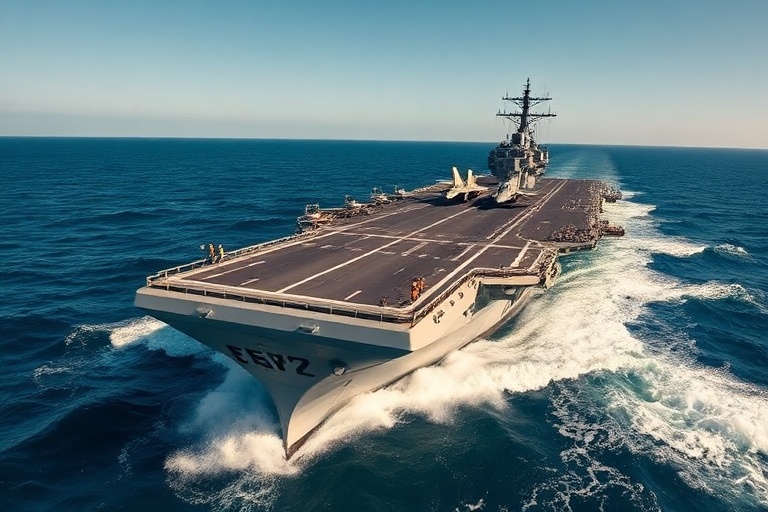
The aircraft carrier stands as one of the most complex and strategically vital machines ever built by human hands. More than a ship, it is a mobile airbase, a command center, and a symbol of national power projected across thousands of miles of open ocean. These floating behemoths are the cornerstones of modern naval fleets, enabling nations to project force without relying on foreign bases or overland supply lines.
The Evolution of the Aircraft Carrier: From Experimental Platforms to Global Players
The concept of launching and recovering aircraft from ships dates back to the early 20th century. The first true carrier, HMS Argus, entered service with the British Royal Navy in 1918, featuring a flat flight deck that ran the length of the vessel. This innovation transformed naval warfare by allowing planes to take off and land without the need for catapults or recovery gear—something earlier seaplane tenders couldn’t provide.
Following World War I, the United States, Japan, and the United Kingdom raced to develop larger and more capable carriers. The 1920s and 1930s saw the introduction of armored flight decks, enclosed hangars, and more powerful aircraft. The USS Lexington and USS Saratoga, converted from battlecruisers, became the first U.S. fleet carriers. Meanwhile, Japan launched the Akagi and Kaga, setting the stage for the carrier duels of World War II.
World War II cemented the aircraft carrier’s dominance in naval warfare. The Japanese attack on Pearl Harbor in 1941 demonstrated how carriers could cripple an enemy fleet without a single ship-to-ship engagement. The Battle of Midway, fought entirely by air power launched from carriers, marked the turning point in the Pacific Theater. By the war’s end, it was clear: the age of the battleship had ended, and the age of the aircraft carrier had begun.
Milestones in Carrier Development
- 1918: HMS Argus commissions as the first true flush-deck carrier.
- 1922: The Washington Naval Treaty limits carrier tonnage, spurring innovation in design.
- 1941: The attack on Pearl Harbor underscores the vulnerability of battleship fleets.
- 1950s: The introduction of jet aircraft forces carriers to adopt angled flight decks and steam catapults.
- 1975: The U.S. Navy commissions the USS Nimitz, the first of its class of nuclear-powered supercarriers.
How an Aircraft Carrier Works: Engineering on an Oceanic Scale
An aircraft carrier is a marvel of engineering, combining the functions of a ship, an airport, a power plant, and a city. At its heart is the flight deck, a 300-meter-long runway that must accommodate takeoffs, landings, and aircraft storage simultaneously. Modern carriers use an angled flight deck, which allows planes to land without risking collisions with aircraft preparing for takeoff.
Beneath the deck lies a labyrinth of hangars, maintenance bays, fuel storage, and ordnance magazines. The hangar deck, often two or three stories high, serves as the primary workspace for aircraft assembly and repair. Below that, the machinery spaces house gas turbines, diesel engines, or nuclear reactors—depending on the carrier’s design. Nuclear-powered carriers, like the U.S. Nimitz class, can operate for over 20 years without refueling, giving them unmatched endurance.
The carrier’s defensive systems are equally sophisticated. Modern vessels integrate radar, missile defense systems, and electronic warfare suites to detect and neutralize threats. The Aegis Combat System, used on U.S. and allied carriers, coordinates sensors and weapons across the battle group, turning a carrier strike group into a layered defense network.
Key Components of a Modern Aircraft Carrier
- Flight Deck: Angled runway with arresting wires and catapults for launching and recovering aircraft.
- Island: The command center housing navigation, radar, and communication systems.
- Hangar Deck: Storage and maintenance area for up to 60 aircraft.
- Propulsion System: Nuclear or conventional engines providing speeds in excess of 30 knots.
- Armament: Close-in weapon systems (CIWS), missiles, and electronic countermeasures for defense.
The Geopolitical Role of Aircraft Carriers: Power Projection Without Compromise
Aircraft carriers are not merely weapons; they are instruments of foreign policy. Their ability to operate in international waters without requiring host-nation support makes them ideal for crisis response, deterrence, and power projection. The United States maintains 11 carrier strike groups, each capable of projecting power across the globe. These groups typically include a carrier, guided missile cruisers, destroyers, and a submarine—forming a self-sustaining naval task force.
Other nations have recognized the strategic value of carriers. China’s Type 003 carrier, launched in 2021, signals Beijing’s ambition to become a blue-water navy capable of challenging U.S. dominance in the Pacific. Meanwhile, the UK’s Queen Elizabeth class carriers, commissioned in 2017 and 2019, demonstrate London’s commitment to maintaining a global naval presence despite budget constraints.
The presence of a carrier in a region often serves as a deterrent. During the 2022 Russian invasion of Ukraine, the U.S. deployed the USS Harry S. Truman to the Mediterranean, signaling NATO’s resolve without direct confrontation. Similarly, when tensions rise in the South China Sea, U.S. and allied carriers conduct freedom-of-navigation operations to assert international law over Beijing’s territorial claims.
“A carrier strike group is a floating sovereign territory. It carries its own laws, its own air force, and its own deterrence. That level of autonomy is unmatched in modern warfare.”
— Retired U.S. Navy Admiral James Stavridis
The Future of Aircraft Carriers: Challenges and Innovations
The dominance of the aircraft carrier is not guaranteed. Rising anti-access/area-denial (A2/AD) systems, such as hypersonic missiles and long-range bombers, threaten to keep carriers at arm’s length from contested zones. The U.S. Navy’s Ford-class carriers, successors to the Nimitz class, incorporate advanced technologies like electromagnetic aircraft launch systems (EMALS) and improved radar cross-sections to counter these threats.
Meanwhile, unmanned aerial vehicles (UAVs) are reshaping carrier operations. The U.S. Navy’s MQ-25 Stingray drone, designed to extend the range of carrier-based fighters, marks a shift toward unmanned systems. These platforms can conduct surveillance, refueling, and even strike missions without risking pilot lives. Some analysts suggest that future carriers may operate as motherships for swarms of drones, reducing the need for large, expensive manned aircraft.
Environmental concerns also loom large. Nuclear-powered carriers produce no greenhouse gas emissions during operation, but their construction and decommissioning pose challenges. The U.S. Navy is exploring hybrid-electric propulsion and alternative fuels to reduce its carbon footprint. Meanwhile, rising sea levels and increased storm activity threaten the long-term viability of coastal naval bases.
Emerging Trends in Carrier Technology
- Electromagnetic Aircraft Launch Systems (EMALS): Replaces steam catapults with linear induction motors for smoother, more efficient launches.
- Unmanned Aerial Vehicles (UAVs): Drones like the MQ-25 extend operational range and reduce risk to pilots.
- Directed Energy Weapons: Lasers and railguns are being tested for missile defense and offensive strike capabilities.
- Modular Designs: Future carriers may feature interchangeable mission pods to adapt to changing threats.
Despite these challenges, the aircraft carrier remains indispensable. No other platform offers the same combination of mobility, firepower, and presence. As nations continue to invest in carrier technology, these floating fortresses will remain at the heart of naval strategy for decades to come.
Conclusion: The Indispensable Giant
Aircraft carriers are more than ships—they are the physical manifestation of a nation’s ability to project power and protect its interests anywhere in the world. From the early experiments of the 1920s to the nuclear-powered giants of today, their evolution reflects the changing nature of warfare and diplomacy. As technology advances and geopolitical tensions rise, carriers will continue to adapt, ensuring their place as the backbone of naval fleets for generations.
For defense analysts, military enthusiasts, and policymakers, understanding the aircraft carrier is essential. It is a symbol of both engineering brilliance and strategic foresight—a machine that has shaped the course of history and will continue to do so for the foreseeable future.
To learn more about naval technology and military innovations, visit Dave’s Locker Technology and Dave’s Locker Analysis for in-depth coverage.