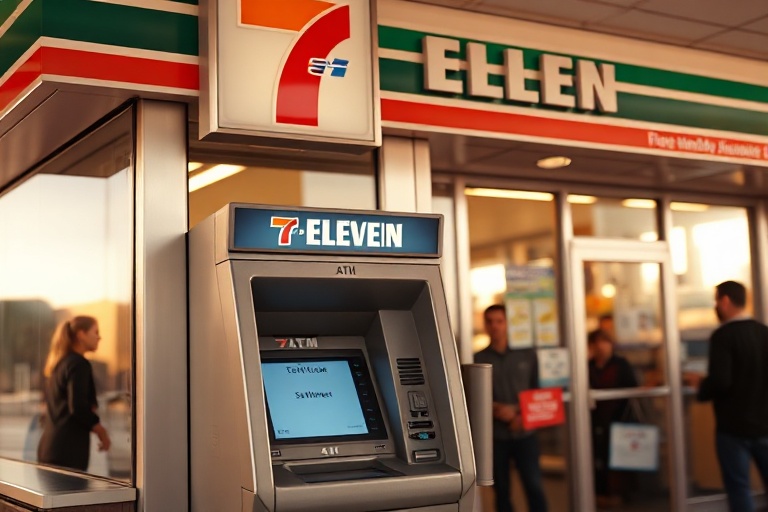
Global Banking Meets Convenience Culture: The Unlikely Alliance
The recent settlement between Bank of America and 7-Eleven represents more than just a financial agreement. It reflects the growing intersection of traditional banking and the convenience economy—a sector that has reshaped consumer behavior worldwide. As financial institutions seek new ways to engage customers, partnerships with ubiquitous retail chains like 7-Eleven offer a compelling solution.
This collaboration is not an isolated incident. Similar partnerships have emerged in regions like Southeast Asia, where banks have integrated with local convenience stores to provide cash services. In Thailand, for example, nearly 80% of financial transactions now occur through convenience store networks. The Bank of America and 7-Eleven deal signals a broader trend: the blending of financial services with everyday retail experiences.
The Origins of the Dispute
The settlement stems from allegations that Bank of America overcharged customers for cashing checks at 7-Eleven locations. While the exact amount paid by the bank remains undisclosed, the case highlights the complexities of third-party financial services. Customers often assume that a branded location—like a 7-Eleven—guarantees transparent pricing, but financial regulations can blur those expectations.
In the United States, the Consumer Financial Protection Bureau (CFPB) has increasingly scrutinized such practices. The agency found that while 7-Eleven stores act as agents for banks, they are not always bound by the same fee disclosure rules as the banks themselves. This loophole has led to consumer confusion, particularly among unbanked or underbanked populations who rely on check-cashing services for liquidity.
Cultural and Economic Implications
The convenience store industry has evolved into a financial lifeline for millions. In urban centers from Tokyo to New York, these stores serve as mini-banks, offering everything from bill payments to prepaid debit cards. The Bank of America settlement underscores how deeply financial services have embedded themselves into retail culture.
Consider the case of Mexico, where OXXO stores—a 7-Eleven competitor—process more financial transactions than many traditional banks. Such models demonstrate how convenience stores can democratize access to banking, especially in regions where physical bank branches are scarce. However, they also raise concerns about transparency and consumer protection.
- Accessibility: Convenience stores reduce the need for customers to travel to bank branches, which is particularly beneficial in rural or underserved areas.
- Fees: Without strict regulations, third-party service providers may charge higher fees, disproportionately affecting low-income customers.
- Trust: Consumers often trust recognizable brands like 7-Eleven more than lesser-known financial institutions, creating an opportunity for banks to leverage that trust.
Regulatory and Industry Reactions
The settlement has drawn attention from regulators and industry analysts alike. The CFPB has signaled plans to expand oversight of third-party financial service providers, including convenience stores. Meanwhile, banking industry groups argue that such partnerships are essential for expanding financial inclusion.
Globally, the response has been mixed. In Europe, where open banking regulations are stricter, partnerships between banks and retailers are subject to rigorous scrutiny. The UK’s Financial Conduct Authority (FCA), for instance, requires clear fee disclosures for all financial services, regardless of the provider. This approach contrasts with the U.S., where regulations can lag behind market practices.
What This Means for Consumers
For customers, the settlement serves as a reminder to scrutinize fees associated with financial services, even at trusted locations. While convenience stores offer undeniable benefits—like extended hours and no-appointment policies—they are not immune to the pitfalls of opaque pricing. Consumers should always ask about fees upfront, whether they’re cashing a check or paying a bill.
The deal also raises questions about the future of banking. As traditional banks face declining foot traffic, collaborations with retailers could become the norm. However, these partnerships must prioritize transparency to avoid eroding consumer trust. The Bank of America and 7-Eleven settlement could set a precedent for how such agreements are structured moving forward.
Looking Ahead: The Future of Retail Banking
The convergence of banking and retail is likely to accelerate. Innovations like embedded finance—where financial services are integrated directly into non-financial platforms—are already gaining traction. For example, ride-sharing apps now offer in-app banking features, and e-commerce giants are exploring digital wallets.
In this evolving landscape, convenience stores will play an increasingly critical role. Their ability to blend financial services with everyday errands makes them ideal partners for banks. However, the success of these collaborations will depend on regulatory clarity and consumer education. Without these safeguards, the convenience of retail banking could come at a hidden cost.
As the global economy continues to digitize, the lessons from the Bank of America and 7-Eleven settlement will resonate far beyond U.S. borders. Countries with developing financial ecosystems, such as those in Africa and Latin America, are already adopting similar models. The challenge will be ensuring that these systems remain fair, transparent, and accessible to all.
For more insights into how financial trends are shaping consumer behavior, explore our Business and Finance categories.