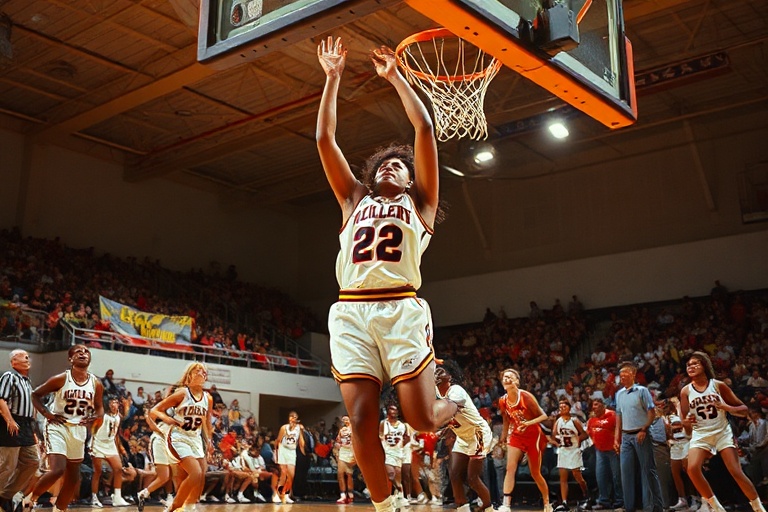
cheryl miller
Cheryl Miller: A Pioneer Whose Legacy Transcends Basketball
Cheryl Miller reshaped the game of basketball long before women’s sports received the global recognition they deserve today. Born in 1964 in Riverside, California, she emerged as a prodigy whose dominance on the court set new standards for athleticism, leadership, and cultural influence. Over four decades after her final high school game, her name remains synonymous with excellence, not just in sports, but in the broader narrative of American culture.
From Riverside to the World Stage
Miller’s rise began in the backyard courts of Riverside, where her older brothers, Reggie and Darrell, honed their skills. She played alongside them, developing a competitive edge that would define her career. By the time she entered Riverside Polytechnic High School in 1978, she was already a sensation—averaging 37.5 points and 14.5 rebounds per game as a freshman. Her dominance was not just statistical; it was transformative. Miller led her team to a 132–4 record over four years, capturing four consecutive state championships and earning the title of National High School Player of the Year three times.
Her high school success was a precursor to an even greater stage. At the University of Southern California (USC), Miller continued to rewrite the record books. As a freshman in 1982, she became the first woman to dunk in a college game—a moment that predated the viral dunk videos of today by nearly 40 years. Over four seasons, she averaged 22.3 points and 9.5 rebounds, earning three All-American honors and leading USC to two national championships (1983 and 1984). Her jersey, #31, was later retired by the university, a rare honor for any athlete.
The 1984 Olympic Gold and Global Influence
Miller’s international breakthrough came at the 1984 Los Angeles Olympics, where she starred on the U.S. women’s basketball team. Playing alongside legends like Lynette Woodard and Anne Donovan, she helped secure the gold medal in front of a home crowd. The Olympics amplified her visibility, turning her into a household name in the United States and beyond. Her signature no-look passes, clutch shooting, and defensive tenacity captivated audiences, proving that women’s basketball could be as thrilling as the men’s game.
Yet Miller’s impact extended far beyond the court. In an era when female athletes often struggled for media coverage, she became one of the few women to appear on the cover of Sports Illustrated—twice. Her presence challenged stereotypes about women in sports, particularly in a country where basketball was (and still is) overwhelmingly male-dominated. She represented a shift toward recognizing women’s sports as legitimate entertainment, paving the way for future stars like Lisa Leslie, Diana Taurasi, and Candace Parker.
A Career Cut Short and a Transition to Influence
Miller’s professional career began with the Women’s Professional Basketball League (WBL), where she played for the Los Angeles Lakers (yes, the NBA team) and the Dallas Diamonds. However, the league folded in 1981, leaving her without a clear path to continue playing at the highest level. In 1986, she attempted to join the NBA’s Sacramento Kings during a preseason training camp—a bold move that underscored her relentless drive. Though she didn’t make the roster, the gesture highlighted her refusal to accept limitations based on gender.
After retiring from competitive play, Miller shifted her focus to coaching and broadcasting. She became an assistant coach at USC in 1986, helping guide the team to another national championship in 1989. Her coaching tenure was brief but impactful, demonstrating her ability to develop talent and instill discipline. In the 1990s, she transitioned to sports commentary, working as a analyst for ESPN and later as a studio host for NBA and WNBA games. Her insights brought a player’s perspective to the broadcast booth, offering viewers a deeper understanding of the game.
Cultural Impact Beyond the Hardwood
Miller’s influence is perhaps most visible in the cultural shifts she helped inspire. In the 1980s, women’s sports were often sidelined in favor of men’s leagues, and female athletes were rarely celebrated in mainstream media. Miller’s visibility changed that. She became a role model for young girls, proving that women could excel in a sport traditionally dominated by men. Her success also intersected with broader social movements, including Title IX, the 1972 legislation that mandated equal opportunities for women in education and sports. Miller’s career embodied the progress spurred by Title IX, even as she faced its limitations firsthand.
Her impact is evident in the generations of athletes who followed in her footsteps. Players like Candace Parker have cited Miller as an inspiration, and her influence can be seen in the WNBA’s emphasis on skill, athleticism, and marketability. Miller’s legacy also extends to fashion and style. Known for her signature high-top fade haircut and bold fashion choices, she challenged the conventional image of a female athlete, blending toughness with charisma.
Life After Basketball: Mentorship and Advocacy
In 1997, Miller left broadcasting to focus on family and personal growth. She became a mother and later a mentor, working with young athletes through clinics and camps. Her post-sports career reflects a quieter but equally important aspect of her legacy: using her platform to uplift others. While she avoided the spotlight in her later years, her influence remained undiminished. In 1995, she was inducted into the Naismith Memorial Basketball Hall of Fame, cementing her place among the sport’s all-time greats.
Miller’s life story also intersects with broader conversations about race and gender in sports. As an African American woman, she navigated a landscape where opportunities for women of color were scarce. Her success was not just athletic but symbolic, challenging the intersectional barriers she faced. Today, her story serves as a reminder of how representation shapes cultural narratives. When young Black girls pick up a basketball, they see not just a player, but a pioneer who broke barriers on and off the court.
The Miller Effect: How One Athlete Changed the Game
To understand Cheryl Miller’s legacy, it’s worth considering what women’s basketball might look like without her. Before Miller, the game was often viewed as a slower, less athletic version of the men’s game. She changed that perception by playing with speed, power, and precision. Her ability to dominate in the post, hit three-pointers, and control the tempo redefined what was possible for a female athlete.
Her influence can be measured in the numbers, but it’s also visible in the intangibles. Consider the following ways her career reshaped the sport:
- Elevated Visibility: Miller’s appearances in mainstream media helped bring women’s basketball into living rooms across America. Her presence on Sports Illustrated covers and in NBA broadcasts made her a household name.
- Redefined Athleticism: She proved that women could play with the same intensity and skill as men, challenging outdated stereotypes about female athletes.
- Paved the Way for Professional Leagues: Though the WBL folded, Miller’s participation in the league helped legitimize the idea of professional women’s basketball, paving the way for the WNBA’s launch in 1996.
- Mentorship and Leadership: Through coaching and clinics, she invested in the next generation of players, ensuring her influence extended far beyond her playing days.
Today, the WNBA’s most decorated players owe a debt to Miller’s trailblazing career. Players like Diana Taurasi and Maya Moore have credited her as an inspiration, and her impact is evident in the league’s emphasis on skill, marketability, and cultural relevance.
Cheryl Miller’s Enduring Legacy
Cheryl Miller’s career may have spanned less than a decade, but her impact has lasted for generations. She was more than a basketball player; she was a cultural icon whose influence transcended sports. In an era when women’s sports were often an afterthought, she demanded attention—and got it. Her story is one of perseverance, innovation, and breaking barriers, a reminder that progress is often led by those willing to defy expectations.
As the women’s basketball landscape continues to evolve, Miller’s legacy remains a touchstone. From the courts of Riverside to the Olympic stage and beyond, she proved that greatness is not confined by gender or convention. For young athletes today, her story is a blueprint: dream boldly, play fearlessly, and never accept limits imposed by others.
Cheryl Miller didn’t just play the game—she changed it forever.