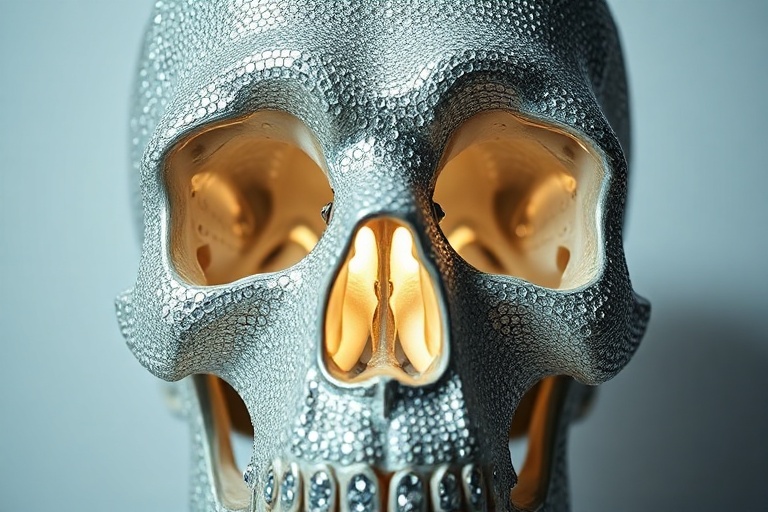
Damien Hirst: The Provocateur Who Redefined Contemporary Art
Early Life and the Rise of a Provocative Visionary
Damien Hirst was born on June 7, 1965, in Bristol, England, and raised in Leeds. His mother, an unwed teenager, left him in the care of his mother’s parents while she pursued a career as an artist herself. This fractured upbringing would later seep into Hirst’s work, which often explores themes of life, death, and the fragility of existence. His early fascination with science and anatomy—fueled by visits to the Leeds City Museum—laid the groundwork for a career that would challenge the boundaries of art and society.
Hirst moved to London in the 1980s to study at Goldsmiths College, where he began to cultivate the rebellious spirit that would define his career. By the late 1980s, he was at the center of the Young British Artists (YBAs) movement, a group known for their bold, often controversial, approach to contemporary art. The YBAs emerged from a cultural vacuum in Britain, a country still grappling with the aftermath of the Thatcher era. Their work reflected a society in flux, one where traditional values were being questioned and dismantled.
The Sensation Exhibition and the Birth of a Cultural Earthquake
In 1997, Hirst and the YBAs reached a global audience with the Sensation exhibition at the Royal Academy of Arts in London. The show, curated by Charles Saatchi, was a deliberate provocation, featuring works that pushed the limits of taste and decency. Hirst’s contribution, This Little Piggy Went to Market, This Little Piggy Stayed Home—a rotting pig carcass preserved in formaldehyde—became emblematic of the exhibition’s audacity. The display ignited fierce debates about the nature of art, the role of shock value, and the commercialization of creativity.
The exhibition traveled to Berlin and New York, where it continued to stir controversy. Critics and audiences alike were divided: some saw Hirst’s work as groundbreaking, while others dismissed it as crass or exploitative. Yet, the attention catapulted Hirst into the international spotlight, cementing his reputation as a provocateur who thrived on controversy. The Sensation exhibition was more than just an art show; it was a cultural moment that reflected the anxieties and contradictions of the late 20th century.
A Global Phenomenon: Hirst’s Art Beyond Borders
Hirst’s work transcends national boundaries, resonating with audiences from Tokyo to São Paulo. His exploration of mortality, often through the use of preserved animals, strikes a universal chord. In Japan, for example, his exhibitions have been met with both awe and criticism, reflecting the country’s complex relationship with life and death. Similarly, in the Middle East, where contemporary art is often viewed through a religious or political lens, Hirst’s work has sparked dialogues about the intersection of art and mortality.
His global appeal is not merely a result of shock value; it is rooted in his ability to tap into fundamental human experiences. Works like The Physical Impossibility of Death in the Mind of Someone Living—a tiger shark suspended in formaldehyde—challenge viewers to confront their own mortality. This universal theme has allowed Hirst to build a brand that is both celebrated and vilified across continents.
Business, Controversy, and the Commodification of Art
Hirst’s career has been as much about business as it is about art. In 2008, he bypassed traditional galleries entirely by selling a collection of works directly at Sotheby’s auction house in London. The sale, titled Beautiful Inside My Head Forever, grossed over $200 million, setting a precedent for artists selling their work without intermediaries. This move was both celebrated as a triumph of artist autonomy and criticized as a further commodification of art.
Controversy has followed Hirst throughout his career. In 2006, he was accused of plagiarism after similarities were noted between his work and that of other artists. In 2012, his exhibition Beautiful You in London featured sculptures of naked women that many found demeaning. Despite these scandals, Hirst has remained a polarizing yet undeniable force in the art world. His ability to generate headlines—whether through his art, his business ventures, or his personal life—has made him a master of self-promotion.
The Legacy of Damien Hirst: A Provocateur or a Symbol of the Art World’s Excesses?
As Hirst approaches his sixth decade, his legacy is still being debated. Some view him as a visionary who pushed the boundaries of what art could be, while others see him as a symbol of the art world’s commercialization and excess. His influence is undeniable; he has inspired a generation of artists to embrace controversy and to blur the lines between art and commerce.
Hirst’s work continues to evolve. Recent projects, such as his 2023 exhibition The Weight of Things, explore themes of beauty and decay through the lens of still-life paintings. These works, while less provocative than his earlier pieces, demonstrate his ongoing engagement with the cycle of life and death. Whether through formaldehyde-preserved sharks or delicate paintings, Hirst remains committed to exploring the boundaries of human experience.
His impact extends beyond the art world. Hirst’s career reflects broader cultural shifts, from the rise of the YBAs in 1990s Britain to the globalization of contemporary art. He has played a pivotal role in redefining the role of the artist in society, blurring the lines between creator, entrepreneur, and provocateur. In an era where art is increasingly commodified, Hirst’s work serves as a reminder of the power—and the pitfalls—of pushing boundaries.
Conclusion: The Provocateur’s Enduring Influence
Damien Hirst’s career is a testament to the power of provocation in art. Whether through his use of rotting animals, his forays into business, or his unapologetic embrace of controversy, Hirst has consistently challenged the status quo. Love him or loathe him, his work has left an indelible mark on contemporary art and culture.
As the art world continues to evolve, Hirst’s influence remains a topic of debate. Some see him as a relic of a bygone era of shock art, while others view him as a pioneer who paved the way for future generations. One thing is certain: Damien Hirst is not just an artist. He is a phenomenon—a cultural force who has redefined the boundaries of art, commerce, and provocation.
For those interested in exploring more about the intersection of art and culture, be sure to check out our Entertainment and Culture sections for further insights and analysis.