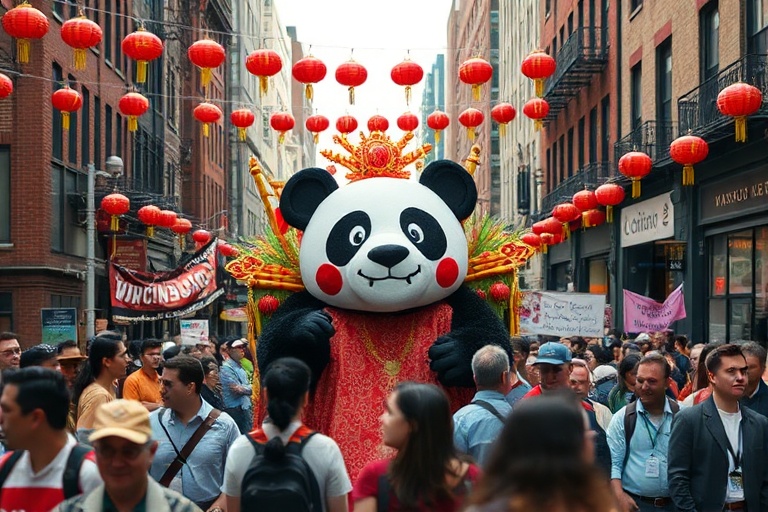
Boston’s Chinatown transforms each summer into a vibrant hub of cultural celebration during Panda Fest, an annual festival that has grown from a modest gathering into one of the city’s most anticipated events. Now in its seventh year, the festival blends traditional Chinese performances, modern entertainment, and authentic cuisine into a weekend-long experience that draws thousands of attendees. Unlike generic food festivals, Panda Fest distinguishes itself through its deep ties to Boston’s Asian American community and its commitment to showcasing both heritage and innovation.
The event’s name pays homage to the giant panda, a symbol of conservation and cultural diplomacy between China and the West. Yet, the festival itself is far more than a thematic nod. It serves as a platform for local Asian American artists, chefs, and entrepreneurs to share their stories with a broader audience. This year’s lineup includes a mix of lion dance troupes, hip-hop artists of Chinese descent, and pop-up restaurants featuring regional Chinese cuisines rarely seen in mainstream Boston eateries.
More Than Just a Festival: A Platform for Community Voices
Panda Fest was conceived in 2017 by a coalition of Boston-based Asian American nonprofits and student organizations at Tufts University. Their goal was to create an event that reflected the diversity of the Asian diaspora in New England, beyond the typical stereotypes of Chinese takeout and martial arts. Today, the festival features artists and vendors from Vietnamese, Korean, Japanese, and Filipino communities, each contributing to the event’s evolving identity.
One standout example is the festival’s “Storytelling Stage,” where community elders and young activists share personal narratives about immigration, identity, and belonging. Last year’s lineup included a Cambodian refugee recounting her journey to Boston in the 1980s, followed by a second-generation Taiwanese American poet exploring hybrid cultural identities. These sessions are not merely performances; they are living archives of Boston’s Asian American experience.
The festival’s organizers emphasize accessibility. Ticket prices remain low—often under $20 for a weekend pass—and many events are free, including the popular night market where local vendors sell handmade goods. This approach has helped Panda Fest cultivate a loyal following among students, families, and longtime residents alike.
The Culinary Heart of Panda Fest: From Dumplings to Innovation
No discussion of Panda Fest would be complete without highlighting its food scene. While the festival is not exclusively focused on cuisine, the culinary offerings are a major draw—and a deliberate showcase of authenticity. Unlike many city festivals that dilute cultural dishes for mass appeal, Panda Fest prioritizes vendors who prepare food the way it’s made in their hometowns, often using imported ingredients and family recipes.
This year’s food lineup features a mix of returning favorites and newcomers:
- Hand-pulled noodle bar: A Sichuan vendor demonstrating the art of lamian, stretching dough into silky strands by hand.
- Hong Kong-style egg waffle truck: Serving crispy, honeycomb-patterned waffles filled with red bean paste or matcha custard.
- Vietnamese bánh mì cart: Offering lemongrass grilled pork sandwiches on house-baked baguettes.
- Modern fusion pop-up: A Boston-based chef reimagining xiao long bao (soup dumplings) with local seafood and miso broth.
Food is more than sustenance at Panda Fest—it’s a form of cultural preservation. Organizers work closely with vendors to ensure respectful representation, avoiding caricatured dishes like “fortune cookie nachos.” This commitment has earned the festival praise from food critics and cultural organizations alike, including Dave’s Locker’s Food section, which highlighted Panda Fest as a model for authentic cultural events in New England.
Beyond the Main Stage: Immersive and Interactive Experiences
While the headline performances—such as the synchronized lion dance or the headline musical act—draw the largest crowds, Panda Fest is equally known for its smaller, interactive installations. These include:
- Calligraphy workshops: Led by local artists, attendees can learn to write their names in Mandarin or Japanese kanji.
- DIY tea blending station: A sommelier guides participants through selecting leaves, flowers, and herbs to create custom tea blends.
- Interactive mural project: Visitors contribute to a large-scale artwork that evolves throughout the weekend, with themes changing annually (this year’s focus is “Roots and Wings”).
- Karaoke lounge: Dedicated to Asian pop hits, from K-pop to Cantopop, with private booths and a curated playlist.
These activities are designed to engage attendees beyond passive observation, fostering a sense of participation and connection. The mural project, in particular, has become a festival staple, with previous iterations displayed in Boston Public Library’s Chinatown branch after the event.
Economic and Cultural Impact: Why Panda Fest Matters
Panda Fest is more than a celebration—it’s an economic driver for Boston’s Chinatown, a neighborhood that has faced rising rents and displacement pressures. The festival brings an estimated $1.2 million in direct spending to local businesses each year, according to a 2023 study by the Asian American Civic Association. Over 70% of vendors are small, minority-owned businesses, many of which rely on the event to reach new customers.
Culturally, the festival plays a crucial role in countering stereotypes and fostering cross-community understanding. In a city where Asian Americans make up 8% of the population—yet are often underrepresented in media and civic life—Panda Fest provides a rare platform for visibility. It also serves as a bridge between generations, with older immigrants sharing traditions with younger attendees who may not speak Chinese or have deep ties to their heritage.
The festival’s success has inspired similar events across the Northeast, from Philadelphia’s “AsiaFest” to New York’s “Chinatown Summer Fair.” Yet, Boston’s version remains distinctive for its grassroots origins and deep community involvement. As one longtime attendee noted, “Panda Fest doesn’t just put on a show—it builds a home for people who might otherwise feel like they’re living between two worlds.”
A Weekend to Remember: What to Expect in 2024
This year’s Panda Fest, scheduled for the last weekend of July, promises to be the largest yet. Highlights include a headlining performance by Mandarin pop sensation Karry Wang, known for her viral hits in China and the U.S., and a collaboration with the Boston Symphony Orchestra’s youth program, featuring a fusion of traditional Chinese instruments and Western classical music.
For families, the festival will offer a dedicated “Kids’ Zone” with games, storytelling sessions in Mandarin and English, and a mini parade led by youth lion dance teams. Evening events will include outdoor movie screenings of Asian American films and a late-night dance party featuring DJs spinning everything from 90s J-pop to modern trap infused with traditional flute melodies.
Whether you’re a foodie, an art lover, or simply curious about Boston’s diverse communities, Panda Fest offers something unexpected. It’s a reminder that culture isn’t static—it’s alive, evolving, and best experienced together.
For those planning to attend, tickets go on sale in early June, with early-bird discounts available. Be sure to arrive early for popular food vendors and to secure a spot at the storytelling sessions. And don’t forget to bring cash—many vendors and activities operate on a cash-only basis.