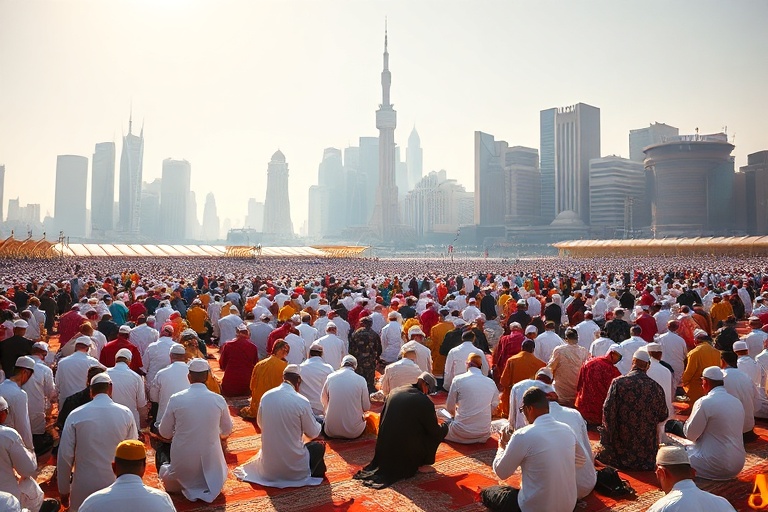
Eid ul Adha 2026: Key Dates, Traditions & Global Celebrations
As the Islamic lunar calendar continues its cycle, Eid ul Adha 2026 approaches with its blend of spiritual reflection and communal celebration. Unlike the fixed Gregorian calendar, Islamic holidays shift by about 10-12 days annually due to the lunar-based Hijri system. For 2026, Eid ul Adha is projected to begin on the evening of Tuesday, June 23, following the sighting of the Dhu al-Hijjah moon, and conclude at sunset on Thursday, June 25.
The determination of Eid’s start date depends on moon sightings in different regions. Saudi Arabia and other Middle Eastern countries traditionally rely on the official announcement from the Umm al-Qura Calendar, while local communities may follow independent sightings. This variability can lead to regional differences in observance dates, creating a dynamic where Muslims worldwide may celebrate on different days.
The Significance of Eid ul Adha in Islamic Tradition
Eid ul Adha, often called the “Festival of Sacrifice,” commemorates the willingness of Prophet Ibrahim (AS) to sacrifice his son Ismail (AS) in obedience to Allah’s command. Before the sacrifice could be carried out, Allah provided a ram as a substitute, reinforcing themes of faith, submission, and divine mercy. This story, shared across Abrahamic traditions, forms the spiritual core of the holiday.
The holiday also marks the culmination of Hajj, the annual pilgrimage to Mecca, one of the Five Pillars of Islam. While Hajj is obligatory only for those physically and financially capable, Eid ul Adha is celebrated by Muslims of all backgrounds, whether or not they performed Hajj that year. The day begins with a special congregational prayer, known as Salat al-Eid, followed by sermons that emphasize charity, gratitude, and communal unity.
Key Rituals and Observances
The most distinctive ritual of Eid ul Adha is the Qurbani, or sacrificial offering, where Muslims who meet financial thresholds sacrifice an animal—typically a sheep, goat, cow, or camel—and distribute its meat equally among family, friends, and the less fortunate. This act symbolizes sharing blessings with others and is a mandatory practice for those who can afford it.
In many communities, the distribution follows a structured approach:
- One-third to family: Ensuring loved ones partake in the celebration.
- One-third to friends and neighbors: Strengthening social bonds.
- One-third to the poor and needy: Fulfilling the Islamic duty of charity (Zakat al-Fitr is often given before Eid prayers).
Beyond Qurbani, families gather for festive meals, exchange greetings (“Eid Mubarak”), and wear new or best clothing. Children receive gifts, and charitable initiatives often see a surge in donations as Muslims worldwide honor the holiday’s emphasis on generosity.
Global Celebrations: From Mecca to Local Communities
Eid ul Adha’s observance varies widely across cultures, reflecting the diversity of the Muslim world. In Saudi Arabia, the day begins with the Eid prayer at the Grand Mosque in Mecca, where hundreds of thousands of pilgrims and locals participate. The streets of Jeddah and Riyadh come alive with processions, fireworks, and feasts that last late into the night.
In South Asia—particularly Pakistan, India, and Bangladesh—the holiday is marked by vibrant street markets selling sacrificial animals days in advance. Families prepare special dishes like biryani, nihari, and sheer khurma, while children play with sparklers and toys. The sound of takbeerat (chants of “Allahu Akbar”) fills the air, blending spiritual devotion with festive energy.
In Turkey and Central Asia, Eid is known as “Kurban Bayramı” or “Qurban Hayiti,” where communities gather for communal prayers in mosques and open-air spaces. Traditional sweets like baklava and lokum are shared, and families visit cemeteries to pay respects to deceased relatives, a practice that underscores the holiday’s connection to both joy and remembrance.
Cultural Fusion and Modern Adaptations
As Muslim communities grow in the West, Eid ul Adha celebrations have taken on new forms. In the United States, Canada, and Europe, mosques host large Eid prayers in stadiums or convention centers to accommodate thousands of worshippers. Local organizations coordinate Qurbani drives to ensure meat reaches refugee camps and food banks, extending the holiday’s spirit of generosity.
Technology has also transformed how Eid is observed. Livestreamed Eid prayers allow those unable to attend mosques—such as the elderly or those in remote areas—to participate virtually. Social media platforms buzz with Eid greetings, recipe tutorials, and charitable campaigns, creating a digital dimension to the holiday’s traditions.
However, modern adaptations come with challenges. In some urban areas, space constraints limit the ability to perform Qurbani, leading to partnerships with Islamic charities that handle the sacrifice and distribution on behalf of donors. This shift has sparked discussions about accessibility and the evolving role of technology in religious practices.
Eid ul Adha 2026: What to Expect
Looking ahead to 2026, several factors may influence how Eid ul Adha is celebrated. Climate change, for instance, could affect livestock availability and prices, particularly in regions prone to drought or extreme weather. The ongoing migration of Muslims to new countries may also reshape local traditions, as communities blend their heritage with their adopted homes.
Economically, the holiday remains a significant period for the halal meat industry, with global demand surging. Countries like Australia, Brazil, and the Netherlands export millions of tons of meat to Muslim-majority nations during this period. This economic ripple effect highlights Eid’s role beyond religious observance, impacting trade and commerce worldwide.
For travelers, Eid ul Adha presents unique opportunities and challenges. Popular destinations like Istanbul, Dubai, and Kuala Lumpur see a spike in tourism, with visitors eager to experience the holiday’s cultural richness. However, booking flights and accommodations well in advance is essential, as prices often rise and availability tightens.
As we approach 2026, Eid ul Adha continues to serve as a unifying force for Muslims globally. Whether through prayer, sacrifice, charity, or celebration, the holiday reinforces values of faith, community, and resilience. In a world marked by division, its message of shared humanity resonates perhaps more deeply than ever.
Conclusion: A Time for Reflection and Connection
Eid ul Adha 2026 will once again bring together millions of Muslims in a celebration that transcends borders and cultures. From the sacred rituals of Hajj to the communal feasts in local neighborhoods, the holiday embodies the essence of Islam’s teachings: devotion, sacrifice, and compassion.
As families prepare for Qurbani and communities organize charitable initiatives, the spirit of Eid reminds us of the importance of gratitude and generosity. In an era where global challenges often dominate the headlines, this festival offers a moment to pause, reflect, and reconnect with what truly matters.
Whether you’re observing Eid for the first time or celebrating it as a long-standing tradition, the holiday invites everyone to partake in its universal message of hope and unity.