Francis Ngannou’s rise from a Cameroonian street fighter to one of the most dominant heavyweight champions in mixed martial arts (MMA) history is a story of raw determination and unparalleled athleticism. His journey challenges conventional narratives about where champions are forged, blending African grit with global sports culture.
Born in 1986 in Batie, a small village in Cameroon, Ngannou grew up in poverty. His early life was marked by hardship—working in a sand quarry and dreaming of a better future. At 26, he moved to Paris to pursue boxing, a decision that set the stage for his eventual entry into professional fighting. By 2013, he signed with the UFC, and his trajectory changed forever.
The Rise of a Heavyweight Phenom
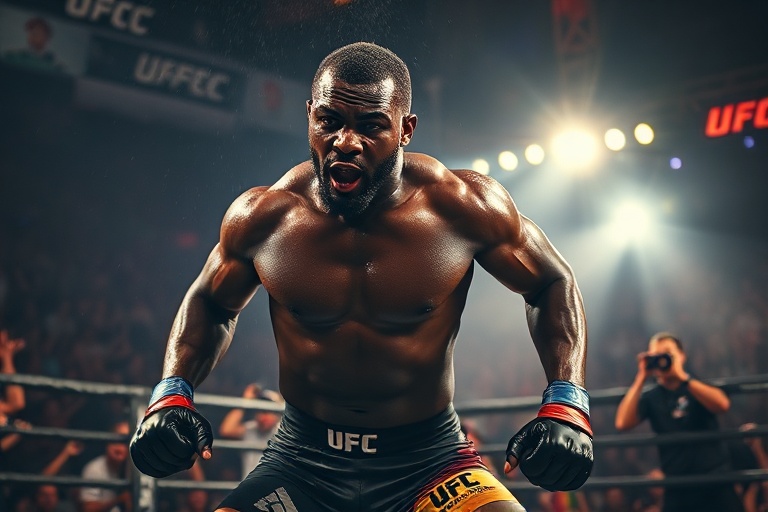
Ngannou’s UFC debut in December 2013 was unremarkable by most standards, but his rapid evolution was undeniable. Within five years, he became the UFC Heavyweight Champion, a title he held from 2018 to 2021. His knockout power became legendary—his overhand right against Stipe Miocic in 2021 remains one of the most brutal finishes in UFC history.
What set Ngannou apart wasn’t just his physical gifts—though his 89-inch reach and explosive power were unmatched—but his mental resilience. He overcame injuries, skepticism about his striking ability, and even a brief retirement scare in 2016 to return stronger. His 2021 knockout of Derrick Lewis, clocked at just 1.26 seconds, cemented his reputation as a knockout artist.
His dominance wasn’t confined to the octagon. Ngannou became a global brand, partnering with major sponsors and launching his own energy drink, Panga Energy. This crossover appeal reflected his understanding of modern sports as more than just competition—it’s entertainment, spectacle, and business.
A Cultural Bridge Between Africa and the World
Ngannou’s success resonates deeply in Africa, where he’s celebrated as a symbol of possibility. His story mirrors that of other African athletes who’ve broken into global sports, from football’s Didier Drogba to athletics’ Eliud Kipchoge. Yet Ngannou’s impact extends beyond inspiration; he actively uplifts African talent.
In 2022, he founded the Ngannou Academy in Cameroon, offering free training to young fighters. The academy isn’t just about producing champions—it’s about creating opportunities in a region where sports infrastructure is often lacking. His work aligns with a broader movement in African sports, where athletes are leveraging their success to drive systemic change.
Ngannou’s cultural influence is also evident in his embrace of African identity. He frequently incorporates traditional Cameroonian symbols into his walkouts, including a lion’s mane cape and rhythmic drumming. These choices aren’t mere aesthetics; they’re statements of pride and defiance against the homogenization of global sports culture.
The Business of Being Francis Ngannou
After leaving the UFC in 2023, Ngannou signed a multi-fight deal with the Professional Fighters League (PFL), signaling a new chapter in his career. This move underscored his strategic mindset—he’s not just a fighter but a savvy entrepreneur. The PFL’s format, with its million-dollar season-long tournaments, offers a fresh platform for his star power.
Ngannou’s business ventures extend beyond fighting. His partnership with Panga Energy highlights his ability to transcend sports, tapping into the lucrative wellness and energy drink market. Meanwhile, his social media presence—boasting millions of followers—shows he understands the power of personal branding in the digital age.
This business acumen isn’t accidental. Ngannou surrounds himself with a team that prioritizes long-term growth, from media training to investment opportunities. His approach reflects a modern athlete’s reality: success in sports is only the beginning.
Legacy and the Future of Combat Sports
Ngannou’s legacy is still being written, but his impact on combat sports is undeniable. He redefined the heavyweight division, proving that power and precision could coexist with technical mastery. His rivalry with Jon Jones—though never realized in the octagon—remains a topic of debate among fans, illustrating how deeply he’s shaped the sport’s narrative.
Looking ahead, Ngannou’s influence could extend to the global expansion of MMA. His African roots position him as a bridge between continents, introducing new audiences to the sport. If his PFL venture succeeds, it may inspire other athletes to explore alternative leagues, challenging the UFC’s long-standing dominance.
Yet Ngannou’s greatest contribution might be his ability to inspire. In a world where athletes are often reduced to statistics, he’s a reminder of the human stories behind the glory. His journey from a sand quarry to the top of the sports world is a testament to what’s possible when talent meets opportunity—and when that talent refuses to be ignored.
As combat sports evolve, Ngannou’s role as a pioneer will likely grow. Whether he returns to the UFC, dominates the PFL, or ventures into entirely new arenas, one thing is certain: Francis Ngannou isn’t just a fighter. He’s a force of change.
Key Moments in Ngannou’s Career
- 2013: Signed with the UFC after moving to France.
- 2015: First UFC knockout win against Curtis Blaydes.
- 2018: Became UFC Heavyweight Champion, defeating Stipe Miocic.
- 2021: Defended his title with a record-breaking knockout against Derrick Lewis.
- 2023: Left the UFC to join the PFL, launching a new phase in his career.
Francis Ngannou’s story is far from over. As he continues to break barriers, his legacy will serve as a blueprint for future generations of fighters—and dreamers.