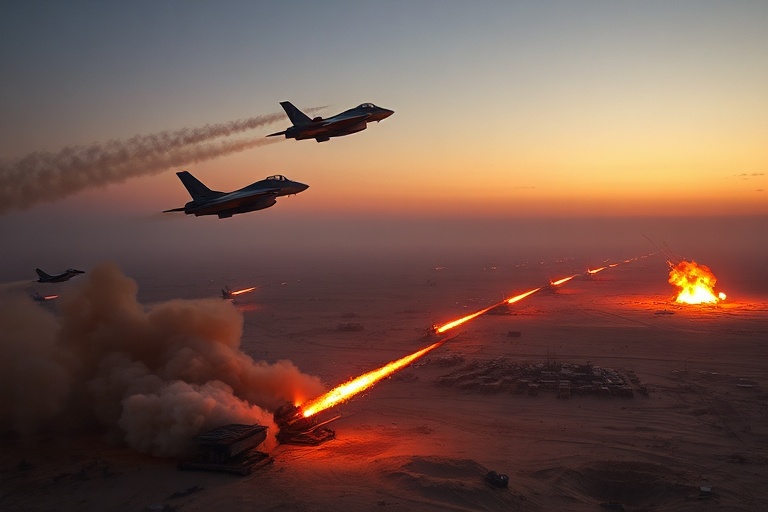
israel iran war
The shadow of direct military confrontation between Israel and Iran has loomed over the Middle East for decades. Recent years, however, have seen this tension escalate into a series of overt strikes, covert operations, and proxy conflicts that threaten to push the two nations from cold war toward open war. While both sides have engaged in tit-for-tat attacks—Israel targeting Iranian assets in Syria, Iran firing ballistic missiles at Israeli military sites—the risk of full-scale war now carries consequences far beyond their borders.
Understanding the current crisis requires examining historical grievances, military capabilities, and the shifting alliances that shape this volatile dynamic. This analysis explores the key drivers behind the escalation, the potential outcomes of a direct conflict, and what it means for global security.
The Roots of Conflict: Decades of Hostility
The enmity between Israel and Iran is rooted in the 1979 Islamic Revolution, which replaced Iran’s pro-Western monarchy with a theocratic regime openly hostile to Israel. Supreme Leader Ayatollah Ali Khamenei has repeatedly called for Israel’s destruction, while Israel views Iran’s nuclear program and regional influence as existential threats.
In the 1980s, Iran supported Hezbollah during the Lebanese Civil War, creating a proxy force that would later target Israel. Meanwhile, Israel has conducted covert operations—assassinations, cyberattacks, and airstrikes—to disrupt Iran’s nuclear ambitions. The 2007 Israeli strike on a Syrian nuclear reactor, believed to have been built with Iranian assistance, underscored Israel’s willingness to act unilaterally to prevent nuclear proliferation in hostile hands.
- 1979: Iranian Revolution establishes an anti-Israel theocracy.
- 1980s: Iran funds and arms Hezbollah in Lebanon.
- 2007: Israel destroys a Syrian nuclear facility linked to Iran.
- 2010s: Stuxnet cyberattack and assassinations of Iranian scientists.
- 2020: U.S. assassination of Qasem Soleimani raises tensions.
These actions have created a cycle of retaliation, where each side seeks to deter the other through force or subterfuge. The assassination of Iranian General Qasem Soleimani in 2020 by a U.S. drone strike—orchestrated with Israeli intelligence—was a turning point. It demonstrated Israel’s ability to influence U.S. policy in the region and Iran’s vulnerability to targeted strikes.
Recent Escalations: From Shadow War to Open Conflict
Since 2023, the conflict has shifted from covert operations to direct military confrontation. In April 2024, Iran launched over 300 drones and missiles at Israel in retaliation for an Israeli strike on its consulate in Damascus, which killed top IRGC commanders. While Israel, with U.S. and allied support, intercepted most projectiles, the attack marked the first time Iran launched a direct assault from its own territory.
Israel responded with a limited strike on Iranian radar and missile sites, signaling a preference for deterrence over escalation. Yet the risk of miscalculation remains high. A single missed intercept or misidentified target could spiral into a broader conflict involving Lebanon’s Hezbollah, Yemen’s Houthis, and Shiite militias in Iraq—all backed by Iran.
Meanwhile, Israel’s campaign in Gaza, launched after the October 7, 2023, Hamas attacks, has further inflamed regional tensions. Iran-backed groups have increased rocket fire from Lebanon and Yemen, while Hezbollah has engaged in near-daily skirmishes with Israeli forces along the northern border. The potential for a two-front war—Gaza in the south, Lebanon in the north—poses an unprecedented challenge to Israeli defense strategy.
Military Capabilities: Who Holds the Advantage?
Israel possesses one of the most advanced militaries in the world, with a sophisticated air force, missile defense systems (Iron Dome, Arrow, David’s Sling), and nuclear weapons. Its intelligence agencies, Mossad and Shin Bet, are renowned for their operational reach. Israel’s ability to conduct precision strikes—such as the 2021 attack on Iran’s Natanz nuclear facility—demonstrates its capacity to degrade Iranian capabilities without triggering full-scale war.
Iran, while lacking Israel’s air power and missile defenses, compensates with a large ballistic missile arsenal, drones, and a network of proxies across the region. Its nuclear program, though not yet weaponized, advances steadily under sanctions and covert sabotage. Iran’s strategy relies on asymmetric warfare: avoiding direct confrontation while inflicting maximum damage through proxies and long-range strikes.
Both nations have invested heavily in cyber capabilities. Israel’s Unit 8200 is a global leader in signals intelligence and cyber warfare, while Iran’s cyber forces have targeted Israeli infrastructure, including critical water and energy systems. A cyber escalation could disrupt civilian life in both countries, adding another dangerous dimension to the conflict.
Key Military Assets
- Israel: F-35 stealth fighters, Iron Dome missile defense, nuclear-capable submarines, cyber unit 8200.
- Iran: Shahab-3 ballistic missiles, Mohajer-6 drones, proxy networks (Hezbollah, Houthis, Iraqi militias), suspected nuclear research sites.
Global Implications: A Regional and International Crisis
A full-scale Israel-Iran war would have devastating consequences for the Middle East and beyond. The immediate impact would include mass civilian casualties, infrastructure damage, and a humanitarian crisis in Gaza, Lebanon, and potentially Syria and Iraq. Global oil markets would likely destabilize, with Iran threatening to block the Strait of Hormuz—a critical chokepoint for oil exports.
For the United States, the crisis presents a dilemma. While Washington supports Israel’s right to defend itself, it seeks to avoid a broader regional war that could draw in U.S. forces. The Biden administration has brokered ceasefires in Lebanon and Yemen, but diplomatic leverage is limited. Meanwhile, Russia and China have positioned themselves as mediators, offering arms deals and political support to Iran while maintaining ties with Israel.
Europe faces a similar balancing act. The EU has condemned Iran’s attacks on Israel but also criticized Israel’s military actions in Gaza. European nations are increasingly concerned about the spillover of refugees and the potential for radicalization among diaspora communities.
For neighboring Arab states, the conflict is a double-edged sword. On one hand, they share Israel’s concerns about Iran’s regional ambitions. On the other, public sentiment often aligns with anti-Israel and anti-Western rhetoric, making overt cooperation with Israel politically risky. Saudi Arabia and the UAE have engaged in normalization talks with Israel but remain cautious about full alignment.
Paths Forward: Diplomacy or Escalation?
The most immediate risk is not a deliberate war, but an accidental escalation. A misfired missile, a misinterpreted radar blip, or a rogue proxy attack could trigger a cycle of retaliation that neither side can control. Preventing such a scenario requires both military restraint and diplomatic creativity.
Several pathways could de-escalate tensions:
- Ceasefire negotiations: Brokering a halt to proxy conflicts in Lebanon, Yemen, and Syria would reduce the risk of broader war.
- Nuclear diplomacy: Reviving the JCPOA (Iran nuclear deal) could curb Iran’s nuclear progress, though political obstacles remain high.
- Confidence-building measures: Establishing communication channels between Israeli and Iranian military officials could prevent miscalculations.
- Regional alliances: Strengthening the Abraham Accords and other normalization efforts could create a united front against Iranian aggression.
Yet the path to peace is fraught with obstacles. Iran’s leadership views compromise as weakness, while Israel’s government faces domestic pressure to respond forcefully to any attack. The international community’s divided stance further complicates efforts to mediate.
In the long term, the Israel-Iran conflict is not just a regional issue—it is a global one. A wider war could draw in NATO allies, disrupt global supply chains, and trigger a humanitarian catastrophe. The stakes could not be higher.
As both nations stand on the brink of a conflict that could reshape the Middle East, the question is no longer whether war is possible, but how to prevent it from becoming inevitable.
For now, the world watches—and waits.
For deeper analysis on regional conflicts, visit our News section. To explore the historical context of Middle East tensions, check out our Analysis archives.