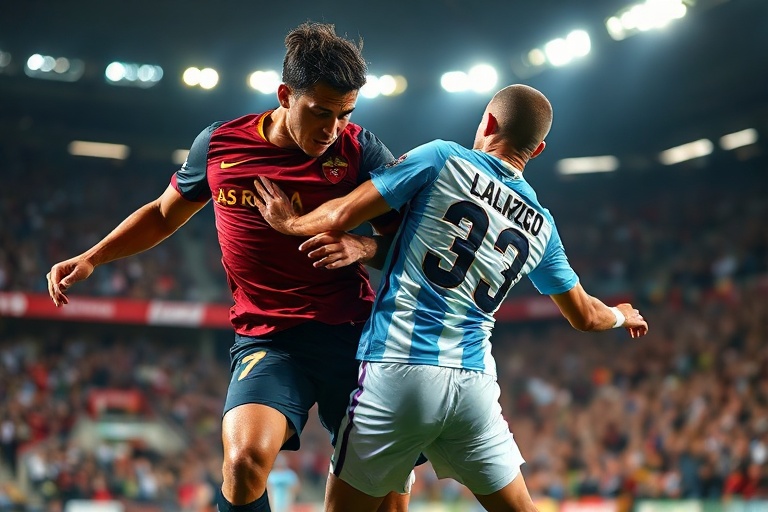
Roma vs Lazio: The Rome Derby and Its Global Echo
Few football rivalries capture the essence of a city like the Rome Derby between AS Roma and SS Lazio. More than just a match, this fixture embodies centuries of history, social divides, and cultural identity. Played out in the heart of Italy’s capital, the derby transcends sport, reflecting Rome’s layered past and its modern contradictions.
The rivalry between the two clubs is as old as the teams themselves. Founded in 1927 through a fascist decree merging three smaller clubs, Roma was initially seen as the people’s team—symbolizing the working-class, southern-influenced identity of the city. Lazio, founded in 1900, carried the legacy of Rome’s aristocracy and northern influence, historically associated with wealth, power, and even political conservatism. These distinctions, though less rigid today, still linger in the club’s identities and fan cultures.
The Historical Roots of the Derby
The first official Rome Derby took place in 1929, but the tension predated the match. Lazio was founded by military officers and the Italian upper class, while Roma emerged as a working-class alternative. This social divide shaped fan bases for decades. During the Fascist era, Lazio’s leadership aligned closely with Mussolini’s regime, while Roma’s fanbase often resisted political control—though both clubs suffered under wartime hardships.
Post-war Rome became a city of contrasts: ancient ruins standing beside modern apartments, poverty coexisting with opulence. The derby became a weekly reminder of these tensions, played out on the pitch. Matches were often tense, physical, and politically charged, with Lazio fans historically associated with far-right politics and Roma’s fanbase leaning left-wing and anti-fascist.
- Lazio: Historically linked to Rome’s elite, with fan groups that have included far-right elements.
- Roma: Seen as the club of the people, with a fanbase that has long opposed authoritarianism and racism in football.
- Stadio Olimpico: The neutral ground that hosts both clubs, yet divides them in spirit every season.
Beyond the Pitch: Culture, Identity, and Global Fandom
The Rome Derby is not just a local event—it has become a global spectacle. Thanks to Serie A’s international appeal and the rise of football as a cultural export, fans from Tokyo to Toronto tune in to watch two of Italy’s most storied institutions clash. The match draws attention from major sports networks, with commentators often framing the derby as a clash of cultures: tradition versus modernity, order versus passion.
Culturally, the derby has inspired literature, film, and music. Italian filmmakers like Paolo Sorrentino have referenced it in works exploring Rome’s soul. Internationally, journalists and analysts often use the match to discuss Italy’s political climate, immigration, and social change. In 2017, when a Lazio fan unfurled a banner reading “Roma merda” (Roma shit) during a match, the incident went viral, sparking global debate about racism and extremism in football.
Roma’s recent resurgence under manager José Mourinho has added a new layer to the narrative. Once overshadowed by Juventus and Inter Milan, Roma’s 2022–23 UEFA Europa Conference League triumph underlined their ambition. Lazio, meanwhile, has remained a consistent top-four contender, with a strong defensive identity. These contrasting trajectories have made recent derbies even more compelling for neutral observers.
The Derby in the Modern Era: What’s at Stake
In today’s football landscape, the Rome Derby carries weight beyond pride. Both clubs vie for Champions League qualification, and a win can shift momentum for the entire season. The 2023–24 season saw Roma defeat Lazio 2–1 in a dramatic late comeback, a result that energized their Europa League campaign. Such moments reinforce the derby’s status as a turning point in Serie A.
Security remains a major concern. Italian authorities deploy thousands of police officers to prevent clashes between ultras—fan groups known for their intensity. The Stadio Olimpico, a 70,000-seat venue, often feels like a fortress during derby week, with metal detectors, bag checks, and segregated fan zones.
The rivalry has also evolved in tone. While historical political divisions persist in some fan sectors, both clubs have taken steps to moderate extremism. Roma launched campaigns against racism, while Lazio has worked to distance itself from far-right associations. Yet, incidents still occur, reminding the world that football’s deepest rivalries often reflect society’s unresolved tensions.
A Rivalry That Defines a City
At its core, the Rome Derby is about more than football. It is a weekly cultural event, a historical mirror, and a testament to Rome’s enduring complexity. Whether viewed from the Curva Nord or the Curva Sud, in a trattoria in Trastevere or a pub in Brooklyn, the match connects people through shared passion—and shared conflict.
As Serie A continues to regain its global prestige, the Rome Derby remains one of football’s most authentic spectacles. It reminds us that the greatest rivalries are not just about points on a table, but about identity, memory, and the stories cities tell about themselves.
For fans of both clubs, the derby is a rite of passage. For neutrals, it is a masterclass in atmosphere, intensity, and footballing drama. And for Rome? It is a living, breathing chapter in the eternal city’s story.
As the next chapter unfolds, one thing is certain: when Roma and Lazio step onto the pitch, the world watches—not just to see who wins, but to understand what it means to be Roman.
Follow all the latest from Serie A and European football on Sports at Dave’s Locker.