A Symbol of Power and Precision
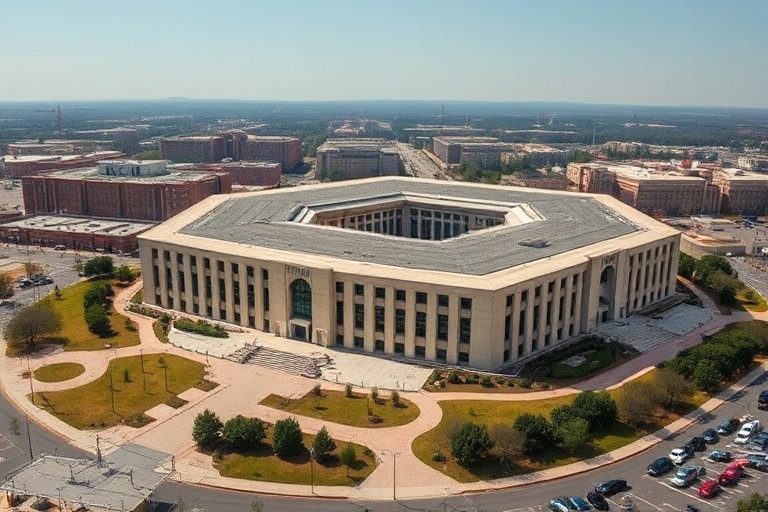
The Pentagon stands as one of the most recognizable structures in the world, not just for its size but for what it represents. Completed in 1943, the building was designed to consolidate the U.S. War Department’s operations during World War II, a time when rapid decision-making could determine the outcome of global conflicts. Its five-sided design, conceived by architect George Bergstrom and engineer Colonel Leslie Grove, was both practical and symbolic—a geometric marvel built to house 40,000 workers efficiently.
The building’s design also carried a strategic advantage. Its layout minimized the distance between offices, ensuring that communication and coordination among military branches could occur without delay. This efficiency was critical during a period when the U.S. was rapidly expanding its military infrastructure. Today, the Pentagon remains the headquarters of the United States Department of Defense, a constant reminder of America’s military and administrative might.
Architectural Ingenuity and Structural Challenges
Standing at just five stories tall but covering 29 acres of land, the Pentagon’s construction was a feat of engineering. Built in under two years, it required 680,000 tons of sand and gravel dredged from the nearby Potomac River, along with 41,492 concrete pilings driven into the earth to support its massive weight. The building’s outer walls, clad in limestone, were designed to withstand both the test of time and potential threats—a foresight that would prove invaluable decades later.
Internally, the Pentagon’s layout is a marvel of functional design. Its five concentric rings, connected by ten spoke corridors, create a self-contained environment where employees can navigate without ever leaving the building. This design not only streamlined operations but also fostered a sense of unity among the various branches of the military. The building’s central courtyard, known as “ground zero” during its construction, was originally intended as a hub for outdoor activities and gatherings, though it is now primarily an open space for reflection.
Sustainability and Modern Adaptations
In recent years, the Pentagon has undergone significant upgrades to align with modern standards of sustainability and security. The building’s $1.1 billion renovation, completed in 2011, included the installation of more than 1,500 solar panels, energy-efficient lighting, and water-saving fixtures. These changes reduced the Pentagon’s energy consumption by 30% and earned it a LEED Gold certification, making it one of the largest government buildings in the world to achieve such a distinction.
Security has also been a major focus, particularly in the wake of the September 11, 2001, terrorist attacks. The building’s west side, which was struck by American Airlines Flight 77, has since been rebuilt and reinforced with blast-resistant materials. The renovation included the addition of a 7-acre memorial park dedicated to the 184 lives lost in the attack, ensuring that the site remains a place of remembrance as well as governance.
The Pentagon’s Role in Global Affairs
The Pentagon is more than just a building; it is the nerve center of U.S. military operations and a key player in shaping global security. As the headquarters of the Department of Defense, it oversees a budget of over $700 billion annually, funding everything from advanced weaponry to humanitarian missions. The building’s influence extends far beyond its walls, with decisions made within its corridors often determining the course of international conflicts and alliances.
One of the Pentagon’s most critical functions is its role in strategic planning. The Joint Chiefs of Staff, based within the building, provide the President and Secretary of Defense with military advice, coordinating operations across all branches of the armed forces. This centralized command structure ensures that the U.S. can respond rapidly to crises, whether they involve counterterrorism, cyber warfare, or conventional military engagements.
Controversies and Criticisms
Despite its importance, the Pentagon has not been without controversy. Critics argue that its massive budget contributes to global militarization, fostering an environment where conflict resolution is often prioritized over diplomacy. The building has also been a target of scrutiny for its role in controversial policies, such as the use of drones in military operations and the detention of prisoners at Guantanamo Bay.
Additionally, the Pentagon has faced criticism for its handling of internal issues, including reports of sexual assault within the military and allegations of wasteful spending. Whistleblowers and investigative journalists have exposed instances where funds allocated for defense projects were mismanaged or misused, sparking public outrage and calls for reform. These controversies highlight the challenges of balancing operational efficiency with ethical responsibility in one of the world’s most powerful institutions.
Visiting the Pentagon: Public Access and Cultural Impact
While much of the Pentagon’s operations remain classified, the building does offer limited public access. The Pentagon Memorial, located just outside the building, is open to visitors and features 184 illuminated benches, each dedicated to a victim of the 9/11 attacks. The memorial serves as a solemn reminder of the lives lost and the resilience of those who continue to serve in the military.
For those interested in the building’s architecture and history, the Pentagon’s tour program provides a behind-the-scenes look at its design and functionality. Visitors can explore the building’s public areas, including the Hall of Heroes, which honors recipients of the Medal of Honor. The tour also offers insights into the Pentagon’s role in major historical events, from the Cold War to the War on Terror.
The Pentagon in Popular Culture
The Pentagon’s imposing presence has made it a frequent subject in films, television, and literature. From action-packed thrillers like Top Gun: Maverick to political dramas like The West Wing, the building is often depicted as a symbol of power, secrecy, and intrigue. These portrayals, while dramatized, reflect the public’s fascination with the inner workings of one of the world’s most secretive institutions.
Video games have also featured the Pentagon, often as a location in narratives involving espionage or military operations. Its inclusion in titles like Call of Duty and Metal Gear Solid underscores its status as an iconic symbol of American military might. These depictions, while fictionalized, contribute to the Pentagon’s cultural legacy as a place where decisions with global ramifications are made.
Conclusion: A Building That Defines an Era
The Pentagon is more than just a government building; it is a testament to American ingenuity, power, and resilience. From its rapid construction during World War II to its ongoing role in shaping global security, the Pentagon has evolved alongside the nation it serves. Its architectural brilliance, combined with its central role in military and political affairs, ensures that it remains a symbol of both strength and controversy.
As the U.S. continues to navigate an increasingly complex geopolitical landscape, the Pentagon will undoubtedly remain at the forefront of decision-making. Whether through its commitment to sustainability, its response to modern threats, or its handling of internal challenges, the building’s legacy is far from static. For those who study its history, its architecture, or its influence, the Pentagon offers endless avenues for exploration and reflection.
Explore more on government and military topics: Politics | History