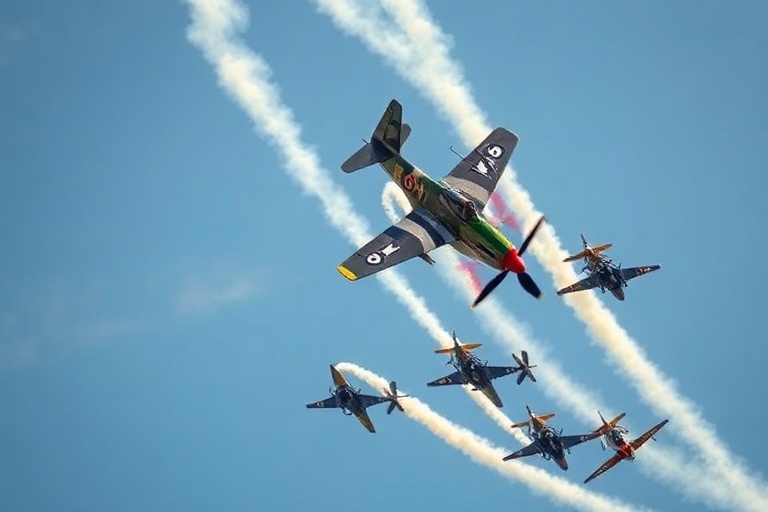
Few events capture the imagination of aviation enthusiasts and casual spectators quite like air shows. These gatherings transform runways and open skies into stages for feats of engineering, human skill, and raw power. More than mere entertainment, air shows serve as living museums of flight history, platforms for military diplomacy, and crucibles for technological innovation.
The Evolution of Air Shows: From Spectacle to Tradition
Air shows trace their origins to the early 20th century, when aviation was still in its infancy. The first recorded air meet took place in Reims, France, in 1909, just six years after the Wright brothers’ first powered flight. These early exhibitions were as much about proving the viability of flight as they were about thrilling audiences. Aerobatics—once considered too dangerous for public display—became a centerpiece of these events, with pilots like Lincoln Beachey performing death-defying maneuvers in fragile biplanes.
By the 1920s and 30s, air shows had evolved into elaborate spectacles. The National Air Races in the United States drew massive crowds to watch pilots compete in speed and distance challenges. World War II accelerated the development of military aircraft, and postwar air shows began incorporating jet-powered demonstrations. The Cold War era saw air shows become tools of soft power, with nations showcasing their technological prowess through precision flying teams like the U.S. Air Force Thunderbirds and Britain’s Red Arrows.
Today, air shows balance tradition with innovation. While vintage warbirds and classic aerobatic routines remain crowd favorites, modern shows feature drones, stealth aircraft, and even electric-powered experimental planes. The format has also diversified, ranging from small regional fly-ins to massive international events like the Royal International Air Tattoo in the UK or EAA AirVenture Oshkosh in Wisconsin.
What to Expect at a Modern Air Show
Attending an air show is an experience that engages multiple senses. The sensory overload begins before the first aircraft takes off—vendors sell model planes, flight simulators, and aviation-themed merchandise. The smell of jet fuel mingles with the scent of popcorn and cotton candy. Then comes the sound: the deep rumble of piston engines, the high-pitched scream of jets, and the thunderous applause from the crowd.
Most major air shows follow a similar structure, though content varies by event:
- Static Displays: Aircraft parked on the ground allow visitors to get up close to historic and modern planes. Many shows offer cockpit tours or rare access to military aircraft that are normally off-limits.
- Aerobatic Performances: Solo and team pilots push aircraft to their limits with loops, rolls, and inverted flight. Teams like the Blue Angels or Breitling Jet Team execute synchronized maneuvers that require years of training.
- Military Demonstrations: Missions like the F-35 Lightning II or the B-2 Spirit showcase cutting-edge technology, while parachute teams like the U.S. Army Golden Knights provide a human element to the aerial display.
- Flybys and Heritage Flights: Combinations of vintage and modern aircraft pay homage to aviation history. The sight of a P-51 Mustang flying alongside an F-22 Raptor is a powerful reminder of how far flight technology has come.
- Interactive Elements: Many shows now feature virtual reality flight simulators, drone racing, or even opportunities to take a discovery flight in a small aircraft.
The Broader Impact of Air Shows
Beyond entertainment, air shows play significant roles in education, industry, and national identity. For younger audiences, these events can spark lifelong interests in STEM fields, particularly aviation and aerospace engineering. Organizations like the Experimental Aircraft Association (EAA) use air shows as platforms to promote aviation education through programs like Young Eagles, which has introduced over 2 million children to flight.
Industry-wise, air shows serve as launchpads for new technology. Manufacturers like Boeing, Airbus, and Gulfstream use these venues to unveil new aircraft models or demonstrate capabilities to potential buyers. The Paris Air Show and Farnborough Airshow are particularly influential in this regard, often setting trends for the aerospace sector months or years in advance.
On a geopolitical level, air shows facilitate military diplomacy. International events like the Singapore Airshow or IDEX in the UAE provide platforms for nations to display defense capabilities without the immediate context of conflict. These exhibitions can open channels for dialogue, arms sales, and joint military exercises. However, they also occasionally spark controversy, as when China’s J-20 stealth fighter made its international debut at the 2017 Airshow China, signaling its growing military presence.
The economic impact of major air shows is substantial. Oshkosh’s EAA AirVenture, for example, brings over 10,000 aircraft and 600,000 visitors to Wisconsin each year, generating hundreds of millions of dollars in local revenue. Smaller regional shows provide similar boosts to local economies, supporting hotels, restaurants, and aviation-related businesses.
Challenges and the Future of Air Shows
Despite their enduring appeal, air shows face challenges in the 21st century. Rising fuel costs have increased operational expenses for organizers and performers alike. Environmental concerns have led some critics to question the carbon footprint of large-scale air shows, though many events are now incorporating sustainability initiatives, such as using biofuels or offsetting emissions.
Safety remains a paramount concern. While rare, accidents at air shows can have devastating consequences, as seen in the 2015 Shoreham Airshow crash in the UK. Regulators continually update safety protocols, and performers undergo rigorous training to minimize risks. The rise of drones has also introduced new regulatory hurdles, as organizers must balance the excitement of drone demonstrations with airspace security.
The future of air shows may lie in hybrid experiences that blend the physical event with digital innovation. Virtual reality could allow remote spectators to experience the thrill of flight from anywhere in the world. Augmented reality might enhance static displays by providing real-time information about aircraft as visitors walk around them. Social media will continue to play a crucial role in amplifying the reach of these events, with spectators sharing their experiences in real time and organizers leveraging platforms like TikTok to attract younger audiences.
Another trend is the growing popularity of “fly-in” events focused on general aviation rather than large-scale aerobatic displays. These gatherings emphasize community, education, and the joy of recreational flying, appealing to pilots and enthusiasts who value the social aspect of aviation as much as the spectacle.
Why Air Shows Matter
In an age where digital entertainment often dominates leisure time, air shows offer something irreplaceable: the visceral thrill of human achievement in motion. They remind us that flight is not just a mode of transportation but an art form—a dance between machine and pilot that pushes the boundaries of what is possible. Whether it’s the roar of a Rolls-Royce-powered Spitfire or the silent glide of a solar-powered aircraft, air shows connect us to the pioneering spirit that has driven aviation since its earliest days.
For those considering attending an air show for the first time, the experience can be overwhelming in the best possible way. Start by researching the event’s schedule to prioritize the performances you most want to see. Arrive early to explore static displays and talk to pilots—many are eager to share stories about their aircraft. Don’t forget to look up: some of the most memorable moments happen when you least expect them, like a vintage warbird surprising the crowd with a low pass you didn’t know was coming.
Air shows are more than just a day out; they are celebrations of human ingenuity, courage, and the unending quest to conquer the skies. As aviation continues to evolve, these events will undoubtedly adapt, ensuring that the magic of flight remains accessible to generations to come.
For those interested in exploring more about aviation culture and events, check out Dave’s Locker Entertainment section for reviews of aviation documentaries and films, or visit Dave’s Locker Travel for guides to aviation-themed destinations around the world.