Asteroids: From Cosmic Threats to Scientific Goldmines
“`html
Asteroids: Between Cosmic Threats and Scientific Marvels
The night sky has always been a canvas of wonder, but among the stars and planets drift smaller celestial bodies that have shaped Earth’s history. Asteroids—rocky remnants from the solar system’s formation—are more than just distant specks of light. They are time capsules, potential hazards, and subjects of both fear and fascination. From ancient myths to modern space missions, these objects tell a story that spans billions of years and continues to unfold.
While Hollywood often portrays asteroids as city-ending menaces, the reality is far more nuanced. Some asteroids contain valuable metals worth trillions. Others serve as scientific goldmines, revealing clues about the early solar system. Meanwhile, space agencies worldwide invest billions in tracking and deflecting those that pose a real threat. This duality—between destruction and discovery—makes asteroids one of the most compelling topics in space science today.
The Science Behind Asteroids: Origins and Classifications
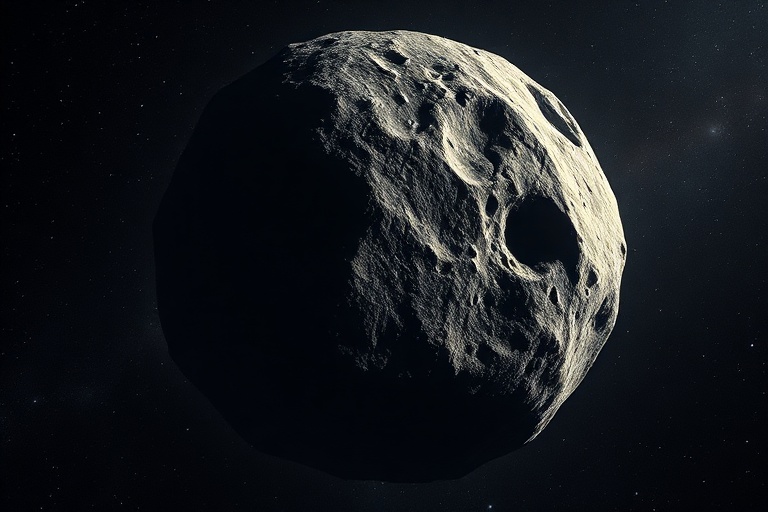
Asteroids are rocky fragments left over from the solar system’s birth about 4.6 billion years ago. Unlike planets, they never coalesced into larger bodies, likely due to Jupiter’s disruptive gravitational influence. Most orbit the Sun in the asteroid belt between Mars and Jupiter, though some follow eccentric paths that bring them closer to Earth.
Scientists classify asteroids based on their composition, which offers clues about their origins. The three main types are:
- C-type (Carbonaceous): The most common, making up about 75% of known asteroids. These are dark, primitive bodies rich in carbon compounds and water. Some scientists believe they delivered the building blocks of life to early Earth.
- S-type (Silicaceous): Composed mainly of silicate rocks and nickel-iron. These are brighter and often found in the inner asteroid belt.
- M-type (Metallic): Rare and composed primarily of metals like iron and nickel. These are believed to be fragments of the cores of larger, shattered protoplanets.
The study of asteroids isn’t just academic. Missions like NASA’s OSIRIS-REx, which successfully returned a sample from asteroid Bennu in 2023, demonstrate how these objects can provide insights into the conditions that led to Earth’s formation. The sample, currently being analyzed, may hold organic molecules that could explain how life began.
The Double-Edged Sword: Threats and Close Calls
The most infamous asteroid in history is the Chicxulub impactor, a 10-15 km wide object that struck the Yucatán Peninsula 66 million years ago. The resulting global catastrophe wiped out 75% of life on Earth, including the dinosaurs. While such events are rare—occurring roughly once every 100 million years—the possibility keeps astronomers vigilant.
Earth’s neighborhood is crowded. Over 34,000 near-Earth objects (NEOs) have been cataloged, including about 2,300 classified as potentially hazardous asteroids (PHAs). These objects come within 0.05 astronomical units (about 7.5 million kilometers) of Earth and are large enough to survive atmospheric entry.
Close approaches happen regularly. In 2029, Apophis—a 370-meter-wide asteroid—will pass within 31,000 kilometers of Earth, closer than some satellites. While it poses no threat this time, its trajectory is being monitored closely. Such events offer scientists rare opportunities to study asteroids in detail without launching expensive missions.
But what if a threat is detected too late? The Planetary Defense Coordination Office at NASA coordinates efforts to identify, track, and deflect hazardous asteroids. Strategies include:
- Kinetic Impact: Ramming a spacecraft into an asteroid to alter its orbit, as demonstrated by NASA’s DART mission in 2022, which successfully changed the trajectory of the asteroid Dimorphos.
- Gravity Tractor: A spacecraft flies alongside an asteroid for years, using its gravitational pull to subtly shift the asteroid’s path.
- Nuclear Option: A last-resort measure involving detonating a nuclear device near or on the asteroid to fragment or deflect it.
While the probability of a catastrophic impact in our lifetime is low, the stakes are high enough to justify global investment in detection and prevention. The United Nations Office for Outer Space Affairs (UNOOSA) has established the International Asteroid Warning Network (IAWN) to facilitate international cooperation in tracking and assessing threats.
Cultural Echoes: How Asteroids Shape Human Imagination
Long before science could explain asteroids, they occupied a place in human mythology and folklore. In ancient Mesopotamia, the god Nergal was associated with both war and the destructive forces of the sky. The Aztecs worshipped Quetzalcoatl, a feathered serpent god whose name is linked to the planet Venus but whose imagery may have been influenced by celestial phenomena, including comets and asteroids.
In modern times, asteroids have become symbols of existential risk and human ingenuity. Films like Armageddon (1998) and Deep Impact (1998) tapped into Cold War-era fears of sudden, unstoppable doom. These movies, while scientifically dubious, reflected real anxieties about humanity’s vulnerability to cosmic forces.
Yet asteroids also inspire hope. The Japanese Aerospace Exploration Agency (JAXA) and the European Space Agency (ESA) have successfully landed probes on asteroids, including JAXA’s Hayabusa2 mission, which returned samples from asteroid Ryugu in 2020. These missions capture the public imagination, showcasing human curiosity and technological prowess.
Art and literature continue to explore the theme of asteroids. In Kim Stanley Robinson’s novel The Memory Police, an asteroid serves as a metaphor for inevitability and loss. Meanwhile, the video game Asteroids (1979) turned cosmic debris into a cultural touchstone, defining a genre of arcade games where players navigate a field of floating rocks while avoiding collisions.
Asteroids even appear in music. The band Muse’s 2006 album Black Holes and Revelations features a song titled “Asteroid” that blends science fiction with apocalyptic themes. These cultural touchpoints reveal how asteroids transcend their scientific reality, becoming symbols of both fragility and resilience.
The Future: Mining, Research, and Interplanetary Ambitions
The next frontier for asteroid exploration is commercial. Companies like Planetary Resources and AstroForge are developing technologies to extract water, metals, and rare minerals from asteroids. Water can be split into hydrogen and oxygen for rocket fuel, while metals like platinum and gold could be worth trillions.
Luxembourg has positioned itself as a leader in space resources, passing laws to regulate asteroid mining. Meanwhile, NASA’s Artemis program, which aims to return humans to the Moon, includes plans to use lunar resources—learned from studying asteroids—to sustain long-term missions.
Asteroids could also serve as stepping stones for deeper space exploration. Their low gravity makes them ideal candidates for mining operations or even as bases for future missions to Mars. The Psyche mission, set to launch in 2023, will explore the asteroid 16 Psyche, which is thought to be composed almost entirely of metal—a potential core of a failed planet.
Yet challenges remain. The technology for mining asteroids is still in its infancy, and the legal framework for claiming resources in space is murky. The Outer Space Treaty of 1967 prohibits nations from claiming celestial bodies, but it doesn’t address private companies’ rights to extract and sell resources. This legal gray area could spark future conflicts or collaborations.
As space agencies and private companies set their sights on asteroids, the line between science fiction and reality continues to blur. Whether as sources of wealth, scientific knowledge, or existential threats, asteroids remind us that Earth is not an isolated island in the cosmos. We are part of a dynamic, ever-changing universe—and our future may depend on understanding these ancient wanderers.
For now, the sky remains a silent witness to humanity’s aspirations and fears. But as technology advances and our reach extends beyond Earth, asteroids will play an increasingly central role in shaping our destiny.