The Backbone of Polar Ecosystems
Ice shelves are the floating extensions of glaciers and ice sheets, stretching tens to hundreds of miles from the coast into polar waters. These massive, frozen platforms act as natural barriers, slowing the flow of glacial ice into the ocean. Without them, the rate of sea-level rise would accelerate dramatically. Scientists compare them to corks in a bottle—remove the cork, and the contents flow out uncontrollably.
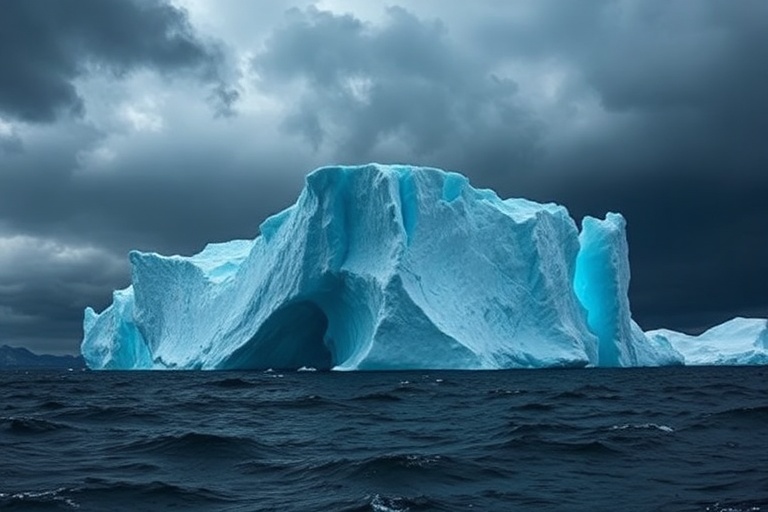
They form in the coldest regions on Earth, primarily around Antarctica and Greenland. Unlike sea ice, which freezes and melts seasonally, ice shelves are permanent features, though their size fluctuates with the climate. Some, like the Ross Ice Shelf in Antarctica, are as large as France. Their existence is a delicate balance between accumulation from snowfall and loss from melting and calving—the process where chunks break off to form icebergs.
Their role extends beyond mere ice blocks. These shelves support unique ecosystems beneath them, where sunlight barely penetrates. Microorganisms, fish, and even larger predators like seals and penguins depend on the nutrients released from melting ice. The Ross Ice Shelf, for instance, hosts a thriving community of organisms that have adapted to extreme darkness and cold. Disruptions to these ecosystems could ripple through polar food webs, with consequences we are only beginning to understand.
Global Consequences of Ice Shelf Collapse
When an ice shelf collapses, it doesn’t directly raise sea levels—after all, the ice is already floating. But it removes a critical buffer that slows the flow of land-based glaciers into the ocean. The Larsen Ice Shelf on the Antarctic Peninsula is a case in point. In 1995, the Larsen A shelf collapsed, followed by Larsen B in 2002. Since then, glaciers behind these shelves have accelerated their march toward the sea, contributing to rising global sea levels.
These collapses are often dramatic, occurring over weeks or even days. In 2021, the Conger Ice Shelf in East Antarctica collapsed entirely, a rare event in a region previously considered stable. Scientists attributed the collapse to record-breaking temperatures and warming ocean currents. East Antarctica, long seen as the “sleeping giant” of sea-level rise due to its vast ice reserves, is now showing signs of vulnerability.
The implications are global. Coastal cities from Miami to Mumbai, from Rotterdam to Rio de Janeiro, are bracing for higher tides and more frequent flooding. The Intergovernmental Panel on Climate Change (IPCC) estimates that even under moderate warming scenarios, sea levels could rise by up to one meter by 2100. Ice shelves, though remote, are the first domino in a chain reaction that could reshape coastlines worldwide.
The Human Cost of Melting Ice
Beyond the environmental impact, the destabilization of ice shelves threatens communities that have thrived for generations. Inuit communities in Greenland and Canada rely on stable sea ice for hunting and transportation. As ice shelves thin and break apart, traditional livelihoods are at risk. The loss of ice also exposes coastal infrastructure to storm surges and erosion, forcing costly adaptations.
Tourism in polar regions is another sector feeling the pinch. Cruise ships that once sailed near massive ice shelves now navigate unpredictable waters filled with newly calved icebergs. The allure of witnessing these natural wonders is tempered by the knowledge that their disappearance is a sign of planetary imbalance. Some operators have begun offering “last chance” tours, drawing ethical debates about exploiting climate change for profit.
Scientific Efforts to Understand Ice Shelves
Researchers are deploying an arsenal of tools to study ice shelves, from satellite imagery to underwater robots. NASA’s Operation IceBridge, a series of airborne missions, has provided unprecedented data on the thickness and structure of these frozen giants. Meanwhile, autonomous underwater vehicles (AUVs) like the Ran submersible have ventured beneath shelves to map cavities and measure melting rates.
One of the most pressing questions is how much of Antarctica’s ice shelves are thinning due to warming oceans. Warm water, driven by changing wind patterns and ocean currents, is eating away at the undersides of shelves. A 2023 study in Nature found that Thwaites Glacier, often called the “Doomsday Glacier,” is melting faster than previously thought due to intruding warm water. Thwaites itself is not an ice shelf but is buttressed by the floating ice shelf of Pine Island Glacier. If Thwaites collapses, it could destabilize a significant portion of West Antarctica.
International collaboration is key. The International Thwaites Glacier Collaboration, a partnership between the U.S. and U.K., is one of the largest efforts to understand the glacier’s fate. Researchers are drilling through the ice to study the bedrock beneath and deploying sensors to monitor changes in real time. These efforts are crucial for improving climate models and predicting future sea-level rise.
Cultural Symbolism and the Ice Shelf Narrative
Ice shelves have long captured the human imagination, symbolizing both the power and fragility of nature. Inuit oral traditions speak of the “ikkumaq,” or sea ice, as a living entity that must be respected. Similarly, explorers like Ernest Shackleton and Roald Amundsen viewed these icy barriers as both obstacles and gateways to discovery. Their accounts of navigating near-impossible conditions have become legends, highlighting the perilous relationship between humans and polar environments.
In popular culture, ice shelves often represent the frontier of environmental collapse. Films like Chasing Ice and documentaries such as Our Planet use time-lapse footage of calving events to underscore the urgency of climate action. These visuals are visceral, showing the immediate, tangible effects of warming temperatures in ways that graphs and statistics cannot.
Artists, too, have turned to ice shelves as symbols of impermanence. The photographer Camille Seaman’s work captures the beauty of these structures while emphasizing their vulnerability. Her images of icebergs, often tinged blue or green, evoke both awe and melancholy. These cultural representations serve as a bridge between scientific data and public consciousness, translating complex climate science into relatable narratives.
What’s Next for Ice Shelves?
The future of ice shelves hinges on global emissions. If warming is limited to 1.5°C above pre-industrial levels, some shelves may stabilize. But if emissions continue unchecked, the outlook is grim. The IPCC warns that even with drastic cuts, some ice shelves are already doomed to collapse. The question is not whether they will disappear but how quickly—and what that means for the rest of the planet.
Adaptation will be necessary, especially for coastal communities. Engineers are exploring solutions like artificial reefs to buffer storm surges and elevated infrastructure to keep buildings dry. Meanwhile, policymakers are grappling with how to protect polar regions from exploitation as melting ice opens new shipping routes and resource opportunities.
For scientists, the work is far from over. New technologies, from AI-driven climate models to DNA sequencing of polar organisms, are uncovering layers of complexity we are only beginning to understand. The study of ice shelves is not just about ice—it’s about the interconnected systems that sustain life on Earth.
A Call to Action
Ice shelves are sentinels of climate change, their cracks and collapses serving as early warnings for the planet. Their fate is intertwined with ours, a reminder that the poles are not distant, abstract places but integral parts of the global climate system. Protecting them requires more than scientific research; it demands systemic change. Reducing emissions, investing in renewable energy, and supporting policies that prioritize climate resilience are non-negotiable steps.
As we witness the transformation of these icy giants, we are forced to confront a simple truth: the Earth’s frozen regions are not just barometers of change—they are the architects of our future. The choices we make today will determine whether ice shelves remain as they have for millennia or become relics of a rapidly warming world.