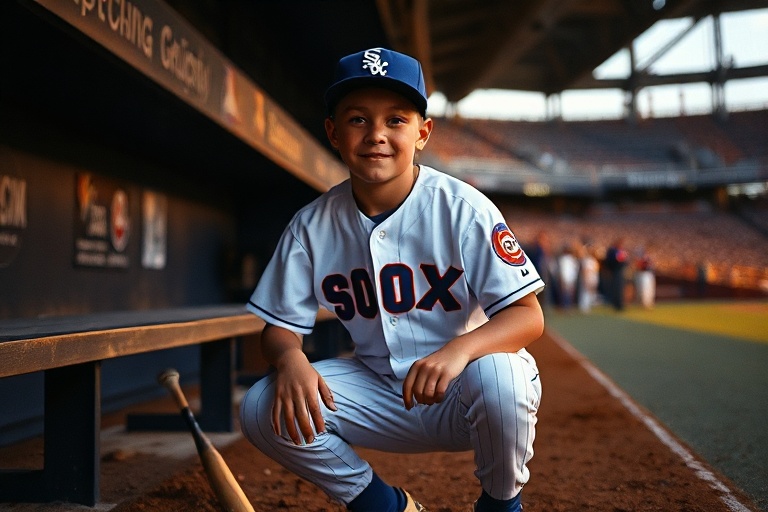
The rivalry between the Chicago Cubs and the Chicago White Sox transcends mere sports competition. It represents a clash of cultures, neighborhoods, and baseball philosophies that has defined Chicago’s identity for over a century. While both teams share the same city, their origins, fan bases, and playing styles have created a unique dynamic that extends far beyond the diamond.
This division isn’t just about North Side versus South Side pride. It reflects deeper socioeconomic and demographic divides that have shaped Chicago’s urban landscape. Understanding this rivalry requires examining its historical roots, cultural significance, and the ways it continues to influence Chicago’s sports culture today.
The Origins of a Split Loyalty
The Cubs, established in 1876, are one of baseball’s oldest franchises. Originally known as the White Stockings, they were a charter member of the National League. Their home at Wrigley Field, built in 1914, became a symbol of tradition and nostalgia in a rapidly changing city.
The White Sox, meanwhile, began in 1901 as one of the founding members of the American League. Their original home, South Side Park, was located in a working-class neighborhood, which helped shape their identity as the team of Chicago’s blue-collar residents. The 1919 Black Sox scandal, though a dark chapter in baseball history, further cemented their reputation as the underdog team.
This historical divide laid the foundation for fan allegiances. Cubs fans often came from more affluent North Side neighborhoods, while Sox supporters were concentrated in the city’s industrial South and West sides. These geographic and socioeconomic differences continue to influence how each team is perceived today.
Cultural and Demographic Divides
The Cubs-Sox rivalry isn’t just about baseball—it’s about identity. The Cubs have long been associated with tradition, family outings, and a certain polish that comes from decades of corporate sponsorships and media exposure. Wrigleyville, their home neighborhood, has transformed from a quiet residential area into a bustling entertainment district, complete with bars, restaurants, and luxury apartments.
The White Sox, on the other hand, have maintained a grittier, more blue-collar image. Guaranteed Rate Field, their home since 1991, sits in a neighborhood that has seen less economic development than the North Side. Sox fans often point to this as evidence of their team’s authenticity in an era where sports franchises are increasingly tied to real estate and corporate interests.
This cultural divide is reflected in the fan experience as well. Cubs games are often seen as social events, with fans arriving early to tailgate in the parking lots around Wrigley Field. Sox games, while no less passionate, tend to have a more neighborhood feel, with fans arriving just in time to catch the first pitch and leaving soon after the final out.
Key Differences Between Cubs and Sox Fans
- Cubs Fans: Often younger, more affluent, and drawn to the team’s historic charm and media presence.
- Sox Fans: Typically more diverse in age and socioeconomic background, with a stronger emphasis on loyalty and community.
- Game Day Experience: Cubs games are more likely to involve pre-game festivities and a focus on the overall experience, while Sox games prioritize the game itself.
- Merchandise and Branding: The Cubs have leveraged their brand more aggressively, with merchandise sales and corporate partnerships driving revenue. The Sox rely more on fan loyalty and local support.
The Modern Era: A Rivalry in Flux
In recent years, the Cubs and Sox have taken divergent paths. The Cubs, after a 108-year World Series drought, experienced a resurgence in the 2010s, culminating in their 2016 championship. This success brought unprecedented attention to the team and its fan base, further solidifying their place as Chicago’s “team of record.”
The White Sox, meanwhile, have undergone their own transformation. After years of mediocrity, they entered a rebuilding phase in the mid-2010s, focusing on developing young talent. This strategy paid off in 2020 when they won the American League Central division title, signaling a potential shift in the city’s baseball landscape.
The contrast between the two teams’ approaches reflects broader trends in Major League Baseball. The Cubs’ success was built on a combination of savvy drafting, international scouting, and strong player development. The Sox, under the leadership of executive vice president Kenny Williams and manager Tony La Russa, have embraced a more analytical approach, blending traditional scouting with data-driven decision-making.
Broader Implications for Chicago and Baseball
The Cubs-Sox rivalry offers a lens through which to view the evolution of baseball and American sports culture. It highlights the tension between tradition and innovation, between nostalgia and progress. The Cubs’ reliance on tradition—embodied by Wrigley Field and its ivy-covered walls—contrasts sharply with the Sox’s embrace of analytics and youth movement.
This rivalry also underscores the importance of local identity in sports. In an era where teams are increasingly global brands, the Cubs and Sox remain deeply rooted in their respective neighborhoods. This connection to place gives both teams a unique character that resonates with their fan bases.
Moreover, the rivalry serves as a microcosm of Chicago’s own divisions. The city’s stark contrasts between wealth and poverty, progress and stagnation, are mirrored in the contrasting fortunes of the two teams. Cubs fans often celebrate the North Side’s revitalization, while Sox fans point to the South Side’s struggles as a reminder of the city’s unmet challenges.
Yet, despite these differences, the rivalry also fosters a sense of unity. When the Cubs and Sox face off in interleague play, the city comes together, even if only temporarily, to celebrate baseball. These games are a reminder that, for all their differences, both teams—and their fans—share a common love for the game.
A Look Ahead: What’s Next for Cubs and Sox Fans?
As the 2020s progress, both the Cubs and the White Sox are poised for continued relevance. The Cubs, now in a post-championship phase, must navigate the challenges of maintaining success while managing the expectations of a fan base that has grown accustomed to winning. The Sox, meanwhile, are in the midst of a competitive window, with young stars like Luis Robert and Dylan Cease leading the charge.
For fans, the rivalry remains as intense as ever. Whether it’s debating the merits of Wrigley Field’s old-school charm versus Guaranteed Rate Field’s modern amenities, or arguing over which team has the better pitching staff, the conversations never end. And in a city as passionate as Chicago, these debates are more than just idle chatter—they’re a reflection of who we are.
Ultimately, the Cubs-Sox rivalry is about more than baseball. It’s about Chicago itself—a city of neighborhoods, of contrasts, of unyielding pride. As long as both teams continue to compete, the rivalry will endure, a testament to the enduring power of sport to bring people together, even when they’re divided.
For fans looking to dive deeper into baseball’s broader context, Dave’s Locker Sports offers comprehensive coverage of the sport’s trends and stories. For those interested in historical perspectives, Dave’s Locker Analysis provides deeper dives into the cultural and strategic dimensions of baseball.
No matter where your loyalties lie, one thing is certain: in Chicago, baseball isn’t just a game. It’s a way of life.