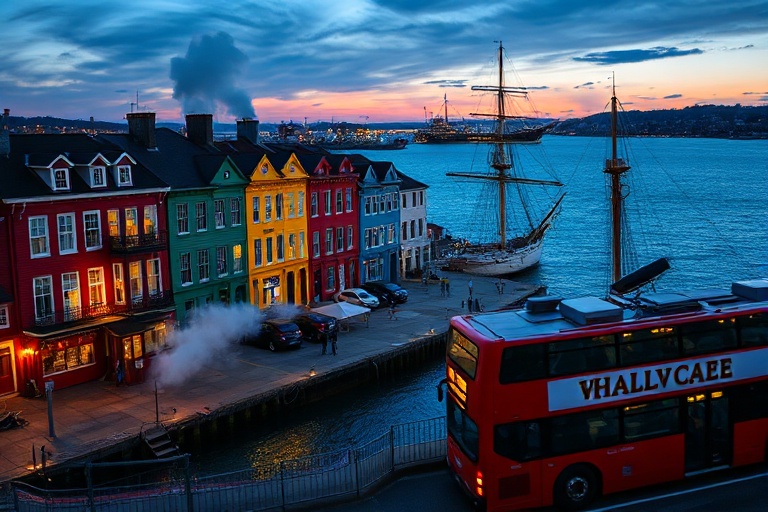
Perched on the edge of the North Atlantic, Halifax stands as both a historic sentinel and a modern metropolis. The capital of Nova Scotia has evolved from a fortified naval outpost into a thriving urban center where maritime tradition meets contemporary innovation. Its story is one of survival, adaptation, and quiet ambition—qualities that define its identity today.
The Historical Foundations of Halifax
Founded in 1749 by British settlers, Halifax was conceived as a strategic stronghold to counter French influence in Atlantic Canada. The city’s early years were shaped by military necessity, with the construction of the Halifax Citadel and the establishment of a naval dockyard that would later become the Royal Canadian Navy’s Atlantic headquarters. These fortifications were not just symbols of power; they were lifelines during times of conflict, including the American Revolution and the War of 1812.
The city’s role as a military and shipping hub laid the groundwork for its economic growth. By the 19th century, Halifax had become a critical port for transatlantic trade, connecting North America to Europe and beyond. Its deep natural harbor, sheltered by the rugged coastline, provided an ideal location for commerce and defense. The arrival of the railway in the late 1800s further solidified Halifax’s position as a key transit point, bridging the vast distances of the Canadian interior with the wider world.
A City Forged by Adversity
Halifax’s resilience was tested repeatedly throughout its history. The 1917 Halifax Explosion, one of the largest artificial non-nuclear explosions in history, devastated the city and killed nearly 2,000 people. Yet, from the rubble emerged a community that rebuilt itself with remarkable determination. The disaster also fostered a spirit of solidarity, as relief efforts poured in from across North America. Today, the scars of the explosion serve as a reminder of the city’s ability to endure and recover.
In the 20th century, Halifax continued to adapt. The decline of traditional industries like fishing and shipbuilding forced the city to diversify its economy. The post-World War II era saw the growth of the service sector, while the 1990s brought significant federal investments in infrastructure and technology. These shifts helped Halifax transition from a regional backwater to a dynamic urban center with a growing reputation in education, healthcare, and technology.
Halifax Today: A City of Contrasts and Opportunities
Modern Halifax is a study in contrasts. The city’s skyline, dominated by glass towers and historic stone buildings, reflects its dual identity as both a modern economy and a guardian of tradition. The waterfront, once the domain of sailors and dockworkers, is now a bustling promenade lined with restaurants, galleries, and museums. Yet, just a short drive from the city center, one can find quiet fishing villages and rugged coastal trails that evoke the region’s timeless character.
Economically, Halifax is experiencing a renaissance. The city’s technology sector has grown rapidly, earning it the nickname “Silicon Harbour.” Startups and established firms alike are drawn to Halifax’s skilled workforce, lower operating costs compared to larger Canadian cities, and high quality of life. Meanwhile, the port remains a vital artery for trade, handling millions of tons of cargo annually and serving as a gateway for goods moving between North America and Europe.
The Cultural Pulse of Halifax
Culture in Halifax is as rich and layered as its coastline. The city has long been a magnet for artists, musicians, and writers, drawn to its scenic beauty and creative energy. Halifax’s music scene, in particular, has produced global acts like Sloan, Joel Plaskett, and Classified, earning it a place in Canada’s cultural lexicon. The annual Halifax Pop Explosion festival and the Halifax Jazz Festival are just two examples of how the city celebrates its artistic heritage.
Culinary culture is another area where Halifax shines. The city’s dining scene is a reflection of its diverse population and coastal geography. Fresh seafood, particularly lobster and scallops, features prominently on menus, while local farmers’ markets offer a bounty of seasonal produce. The city’s craft beer scene has also flourished, with breweries like Garrison and Propeller becoming local favorites and attracting visitors from across the region.
Halifax’s Broader Implications and Future Outlook
Halifax’s trajectory offers broader lessons for cities grappling with economic and environmental challenges. The city’s ability to reinvent itself—from a military outpost to a tech hub—demonstrates the importance of adaptability in an ever-changing world. Its focus on sustainable development, including investments in renewable energy and green infrastructure, positions Halifax as a leader in the transition to a low-carbon economy.
However, challenges remain. Like many coastal cities, Halifax is vulnerable to the impacts of climate change, including rising sea levels and more frequent storms. Balancing growth with environmental stewardship will be critical in the decades ahead. Additionally, the city must address issues of housing affordability and income inequality, which have intensified as Halifax’s population grows.
What’s Next for Halifax?
Looking ahead, Halifax’s future appears bright but complex. The city’s strategic location, combined with its educated workforce and innovative spirit, makes it well-positioned to capitalize on emerging opportunities. Key areas of growth include:
- Technology and Innovation: With a growing number of tech companies and research institutions, Halifax is poised to become a major player in Canada’s innovation ecosystem.
- Tourism and Hospitality: The city’s natural beauty, cultural attractions, and culinary scene make it an increasingly popular destination for travelers.
- Maritime Industry: As global trade patterns shift, Halifax’s port could play an even larger role in connecting North America to international markets.
- Education and Research: Dalhousie University and other institutions are driving advancements in oceanography, health sciences, and renewable energy.
Yet, success will require careful planning. The city must invest in infrastructure to support its growing population, from public transit to affordable housing. It must also preserve the qualities that make Halifax unique—its sense of community, its connection to the sea, and its rich cultural heritage.
A City Worth Watching
Halifax may not always command the headlines of larger metropolises, but its story is one of quiet significance. It is a city that has weathered storms, both literal and metaphorical, and emerged stronger each time. Its blend of history, resilience, and forward-thinking ambition makes it a compelling case study in urban evolution.
For those who call Halifax home, the city is more than a place—it is a testament to the power of reinvention. For outsiders, it offers a glimpse into a way of life that values both progress and tradition. As Halifax continues to grow and change, it serves as a reminder that the most enduring cities are not those that resist the future, but those that shape it with purpose and passion.
Whether you’re drawn by the call of the ocean, the allure of opportunity, or the charm of its historic streets, Halifax invites you to explore its layers—and perhaps, to stay awhile.
For more on cities that blend history with innovation, explore the Travel and Culture sections of Dave’s Locker.