Harry Styles’ ‘Dance the Night’ Video: A Bold Visual Reinvention
Harry Styles has once again demonstrated why he remains one of pop’s most visually adventurous artists with the release of the “Dance the Night” music video. The video, directed by A.G. Cook, doesn’t just complement the song—it reimagines it, transforming a catchy pop anthem into a surreal, high-fashion tableau that blurs the line between performance and performance art.
Styles has long been known for pushing creative boundaries, but “Dance the Night” marks a particularly bold step. The video eschews conventional narrative in favor of a dreamlike sequence that feels plucked from a mid-century avant-garde film. It’s a choice that raises questions about the evolving role of music videos in an era dominated by algorithm-driven content.
The Visual Language of “Dance the Night”
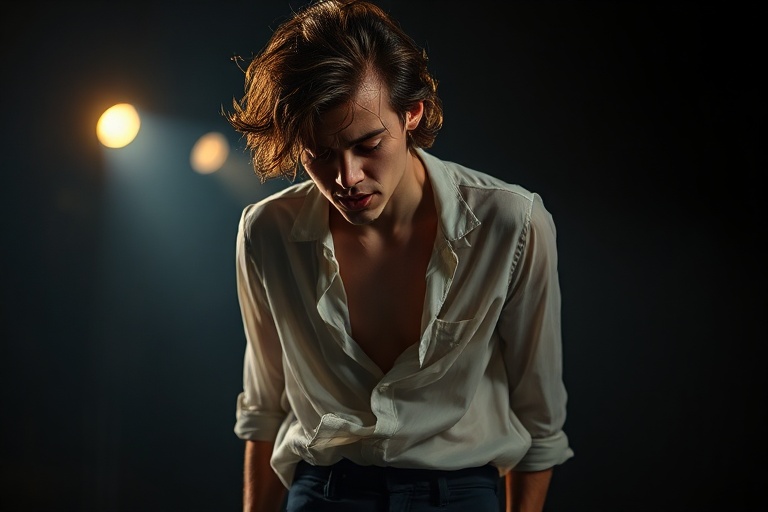
The video opens in a dimly lit, retro-futuristic nightclub where Styles, clad in a shimmering silver suit, performs with a group of dancers whose movements sync perfectly with the song’s disco-infused rhythm. What follows is less a traditional music video and more a stylized vignette, where every frame feels meticulously curated—from the neon lighting to the exaggerated, almost theatrical choreography.
Cook, known for his work with experimental pop acts, brings a distinctly European art-house aesthetic to the project. The video’s color palette is rich but restrained, dominated by deep blues, purples, and golds that evoke the glamour of 1970s disco while feeling entirely contemporary. Styles’ wardrobe—particularly the silver suit—recalls the androgynous glam of David Bowie, reinforcing the video’s themes of identity and performance.
What stands out most is the absence of a clear storyline. Instead, the video relies on atmosphere and symbolism. The dancers, who appear almost like automatons, move in unison, their precision contrasting with Styles’ looser, more expressive style. It’s a deliberate choice that underscores the song’s themes of freedom within structure, a duality that Styles has explored throughout his career.
Why This Video Matters in the Current Music Landscape
In an era where music videos are often optimized for TikTok virality—short, punchy, and designed for quick consumption—”Dance the Night” is a deliberate throwback to a time when videos were meant to be experienced, not just watched. It’s a reminder that music videos can still be works of art, not just promotional tools.
This approach isn’t just artistic pretension; it’s a strategic one. Styles’ willingness to embrace ambiguity and visual experimentation aligns with his broader brand of artistic integrity. While other pop stars chase trends, Styles leans into his strengths: charisma, visual flair, and a refusal to be pigeonholed.
The video’s release also coincides with a broader resurgence of interest in analog aesthetics within pop culture. From Dua Lipa’s retro-inspired visuals to The Weeknd’s neon-soaked Renaissance tour, there’s a clear appetite for nostalgia reimagined. “Dance the Night” fits neatly into this trend, but it distinguishes itself by its lack of irony. There’s no wink at the camera, no postmodern detachment—just pure, unfiltered style.
Key Takeaways from the “Dance the Night” Video
- Visual Storytelling Over Narrative: The video prioritizes mood and symbolism over a traditional plot, a bold choice in an era of instant gratification.
- Artistic Collaboration: A.G. Cook’s direction brings a high-fashion, avant-garde sensibility to Styles’ pop music, elevating it beyond its genre roots.
- Nostalgia Without Irony: The video channels 1970s glam without mocking it, a refreshing contrast to the irony-soaked aesthetics of recent years.
- Performative Identity: Styles’ androgynous style and the dancers’ synchronized movements explore themes of freedom, control, and self-expression.
- Cultural Commentary: In a music video landscape dominated by algorithm-friendly content, “Dance the Night” stands as a defiant embrace of artistic ambition.
The Broader Implications for Pop Music Videos
“Dance the Night” arrives at a pivotal moment for music videos. Streaming platforms and social media have democratized video production, but they’ve also homogenized it. Viral success often hinges on formulaic structures—quick cuts, repetitive hooks, and easily replicable dance moves. Styles’ video, by contrast, is slow, deliberate, and unapologetically stylized. It doesn’t beg for shares; it demands attention.
This raises an important question: Can music videos still be works of art in the digital age, or have they been irrevocably reduced to marketing tools? “Dance the Night” suggests the former is still possible, but it requires artists and directors willing to take risks. Styles, with his history of pushing boundaries, is uniquely positioned to make that case.
The video also highlights the growing influence of high fashion on pop music. Cook’s direction leans heavily into couture, with Styles’ silver suit evoking the work of designers like Jean Paul Gaultier or even the futuristic visions of Iris van Herpen. This isn’t the first time Styles has collaborated with fashion—his Met Gala appearances and brand partnerships are well-documented—but “Dance the Night” formalizes that relationship, treating the video less like a promotional clip and more like a runway show.
Conclusion: A Defiant Act of Artistry
“Dance the Night” isn’t just another music video. It’s a statement—a reminder that pop music can still be visually ambitious, that artists can prioritize artistry over algorithms, and that beauty doesn’t need to be explained to be effective. In an industry often criticized for its lack of originality, Styles’ latest visual offering is a breath of fresh air.
For fans, it’s a feast for the eyes. For critics, it’s a conversation starter. And for the music video landscape, it’s a challenge: Can the industry still make room for the avant-garde, or will it continue to cater to the lowest common denominator? Only time will tell, but for now, Styles has given us something rare—a piece of pop culture that feels truly original.