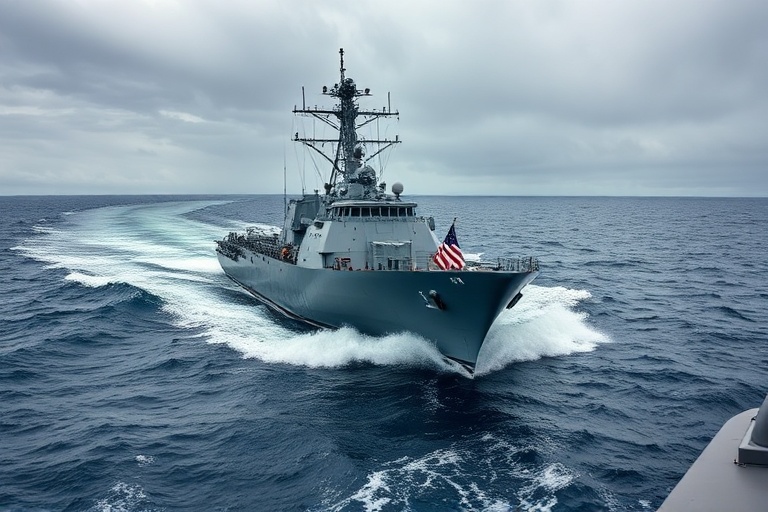
The USS Mason (DDG 87) stands as a testament to modern naval engineering and strategic adaptability. Commissioned in 2003, this Arleigh Burke-class guided-missile destroyer has spent nearly two decades as a cornerstone of U.S. naval operations. Its presence underscores the evolving nature of naval warfare, where stealth, precision, and adaptability define success.
The ship’s history is marked by operational excellence and technological innovation. From counter-piracy missions in the Red Sea to high-stakes ballistic missile defense in the Pacific, the USS Mason has consistently demonstrated the U.S. Navy’s commitment to global security. Its deployment history reflects broader geopolitical shifts, making it a critical asset in maintaining maritime dominance.
The Evolution of Naval Warfare: How the USS Mason Fits In
The Arleigh Burke-class destroyers, of which the USS Mason is a part, represent a leap forward in naval technology. Introduced in the 1990s, these ships were designed to replace aging cruisers and provide a more versatile platform for modern threats. The USS Mason, with its advanced Aegis Combat System, integrates radar, missile defense, and electronic warfare capabilities into a single, cohesive system.
One of the most significant advancements aboard the USS Mason is its phased-array radar, which allows for simultaneous tracking of multiple targets. This technology enables the ship to engage ballistic missiles, cruise missiles, and aircraft with unprecedented accuracy. The USS Mason’s ability to operate in high-threat environments has made it a key player in missile defense operations, particularly in regions like the Persian Gulf and the South China Sea.
The destroyer’s role extends beyond traditional naval combat. In 2016, the USS Mason was deployed to the Red Sea as part of Operation Inherent Resolve, providing critical air defense for coalition forces. Its presence in such operations highlights the growing importance of naval assets in countering asymmetric threats, including drone attacks and missile strikes.
Key Moments in the USS Mason’s Operational History
The USS Mason’s service record is defined by pivotal moments that showcase its capabilities and adaptability. Below are some of the most notable operations and deployments:
- 2004-2005 Deployment: The USS Mason’s maiden deployment took it to the Mediterranean and Persian Gulf, where it participated in maritime security operations and supported Operation Iraqi Freedom.
- 2011 Libya Intervention: The destroyer launched Tomahawk missiles in support of NATO’s no-fly zone enforcement, marking one of its first combat engagements.
- 2016 Red Sea Operations: During a period of heightened tensions in the region, the USS Mason intercepted multiple Houthi-launched missiles aimed at U.S. and coalition vessels, demonstrating its missile defense prowess.
- 2020 Pacific Deployment: The destroyer conducted freedom of navigation operations in the South China Sea, asserting U.S. presence amid territorial disputes.
Each of these deployments underscores the USS Mason’s role as a multi-mission platform. Its ability to transition seamlessly between roles—from air defense to strike missions—reflects the dynamic nature of modern naval operations. The ship’s crew, trained in advanced electronic warfare and missile defense, ensures that it remains a critical asset in an increasingly complex security environment.
Technological Innovations Aboard the USS Mason
The USS Mason is equipped with cutting-edge technology that sets it apart from earlier generations of destroyers. At its core is the Aegis Combat System, which integrates radar, missile guidance, and battle management into a single network. This system allows the ship to track and engage multiple targets simultaneously, a capability that has become essential in modern naval warfare.
Another key innovation is the ship’s Vertical Launch System (VLS), which can deploy a variety of missiles, including the Standard Missile-3 (SM-3) for ballistic missile defense and the Tomahawk land-attack missile for precision strikes. The USS Mason’s VLS cells can hold up to 96 missiles, providing unparalleled firepower and flexibility.
The destroyer also features advanced electronic warfare systems, including the AN/SLQ-32, which detects and counters incoming missile threats. This system has proven crucial in recent operations, where the USS Mason has faced drone and missile attacks. Its ability to jam enemy radar and disrupt incoming threats has made it a vital component of U.S. naval strategy.
The Broader Implications of the USS Mason’s Service
The USS Mason’s operational history offers insights into the evolving nature of naval warfare and the role of destroyers in modern military strategy. Its deployments highlight the increasing importance of missile defense, electronic warfare, and multi-domain operations. As geopolitical tensions rise, the need for versatile, high-capacity naval assets has never been greater.
One of the most significant trends illustrated by the USS Mason’s service is the growing integration of naval forces into broader military operations. From counter-piracy to ballistic missile defense, destroyers like the USS Mason are no longer confined to traditional roles. Instead, they serve as flexible platforms capable of adapting to a wide range of threats.
The ship’s involvement in recent conflicts, such as the 2016 missile strikes in the Red Sea, also underscores the role of naval assets in asymmetric warfare. The ability to intercept and neutralize threats at sea has become a critical component of maintaining global security. The USS Mason’s success in these operations demonstrates the effectiveness of modern naval technology in countering emerging threats.
Looking ahead, the USS Mason and its sister ships will continue to play a vital role in U.S. naval strategy. As new technologies emerge, including hypersonic missiles and autonomous drones, the need for advanced destroyers will only grow. The USS Mason serves as a model for future naval platforms, combining cutting-edge technology with operational adaptability.
For those interested in exploring more about naval technology and its broader implications, visit our News and Technology sections. These categories offer in-depth analysis and updates on the latest developments in military and technological advancements.
Conclusion: The USS Mason as a Symbol of Modern Naval Power
The USS Mason represents more than just a ship; it embodies the principles of modern naval warfare. Its advanced technology, operational versatility, and strategic importance make it a cornerstone of U.S. naval power. From its early deployments to its recent missile defense missions, the USS Mason has consistently demonstrated the Navy’s commitment to innovation and adaptability.
As global security challenges evolve, the role of destroyers like the USS Mason will only become more critical. Their ability to integrate into multi-domain operations, counter emerging threats, and project power across the globe ensures that they remain indispensable to national defense. The USS Mason’s legacy is a testament to the enduring value of naval innovation in an ever-changing world.