Few objects carry as much cultural weight and universal beauty as lanterns. These delicate structures of light have illuminated human history for centuries, serving not just as practical sources of illumination but as powerful symbols of hope, celebration, and spiritual connection. From the floating lanterns of Thailand to the intricate paper sky lanterns of China, these objects transcend their simple function to become vessels of meaning.
Lanterns have evolved across cultures and centuries, adapting to local traditions, materials, and technologies. Their designs range from the ornate and ceremonial to the humble and everyday. Yet, regardless of their form, lanterns share a common purpose: to pierce the darkness with light, both literal and metaphorical. This article explores the rich history, cultural significance, and modern adaptations of lanterns around the globe.
The Ancient Origins of Lanterns
The history of lanterns stretches back to ancient civilizations, where they were first developed as portable light sources. The earliest lanterns appeared in China during the Han Dynasty (206 BCE–220 CE), crafted from paper and bamboo frames. These early designs were not merely functional but held deep symbolic value, representing enlightenment and the triumph of knowledge over ignorance.
In Europe, lanterns emerged independently during the Roman era. Craftsmen created lanterns from metal and glass, designed to protect candles from wind and rain. These lanterns were essential for nighttime travel and night watch duties, evolving into ornate designs during the Renaissance. The famous “lanterns of the night watch” became iconic symbols of civic duty and order in European cities.
The spread of Buddhism along the Silk Road further cemented the cultural importance of lanterns. Buddhist monks used lanterns in rituals to symbolize the Buddha’s teachings illuminating the path to enlightenment. This practice spread to Japan, Korea, and Southeast Asia, where lanterns became integral to religious festivals and temple ceremonies.
Cultural Traditions and Symbolism
Lanterns hold diverse meanings across cultures, often tied to specific festivals, rituals, or seasonal celebrations. Their symbolism is rarely uniform, reflecting the values and histories of the communities that use them.
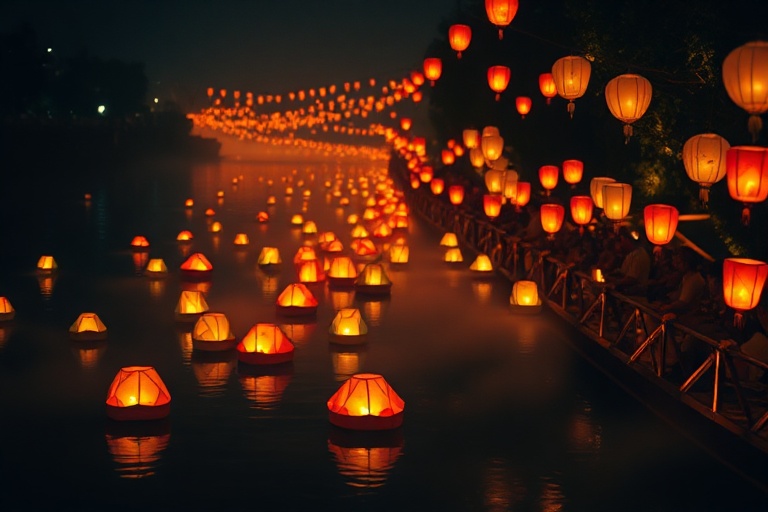
- Asia: In China, lanterns are central to the Lantern Festival, marking the end of Lunar New Year celebrations. Red lanterns, symbolizing good fortune and joy, adorn streets and homes. In Thailand, Yi Peng lantern festivals involve releasing thousands of sky lanterns to pay respects to the Buddha and release negative energy. Japan’s Toro Nagashi, or “floating lanterns,” honors ancestors during Obon, with lanterns set adrift on rivers to guide spirits home.
- Europe: In Sweden, the St. Lucia festival features processions with candle-lit wreaths, symbolizing light in the dark winter months. The Czech Republic’s “Lantern Processions” in Prague celebrate the Feast of the Assumption, with children carrying lanterns through the streets.
- Latin America: Mexico’s Día de los Muertos (Day of the Dead) incorporates candles and lanterns to guide spirits back to the living. In Guatemala, the “Barriletes Gigantes” festival features massive, colorful kite-lanterns flown to communicate with the spirit world.
- Africa: In Morocco, lanterns called “fanoos” are crafted from metal and colored glass, used during Ramadan to illuminate homes and streets. South Africa’s “Diwali lanterns” are part of the Hindu festival, symbolizing the victory of light over darkness.
The diversity of lantern traditions underscores their role as cultural ambassadors. Whether crafted from rice paper, silk, metal, or glass, lanterns carry stories of community, spirituality, and resilience. They remind us that light—both physical and metaphorical—is a universal human need.
Modern Adaptations and Innovations
While traditional lanterns remain beloved, modern technology has transformed their design and function. Today, lanterns are not limited to festivals or religious ceremonies; they have found new roles in art, interior design, and even technology.
Solar-powered lanterns have become essential in regions without reliable electricity. Organizations like Technology initiatives distribute these lanterns to off-grid communities, replacing kerosene lamps that pose health and environmental risks. These modern lanterns are often collapsible, portable, and equipped with USB charging ports, blending tradition with innovation.
In the world of art and design, lanterns have become canvases for creativity. Artists like Dale Chihuly have incorporated lantern-inspired forms into glass sculptures, while designers create lantern-style lighting fixtures for homes. The Japanese art of “chōchin” (paper lanterns) has inspired contemporary interior designers to use lanterns as statement pieces, blending light and shadow in minimalist spaces.
Technology has also given rise to digital lanterns. Projection-mapped lanterns, often seen at festivals like Burning Man, use LED lights and interactive displays to create immersive experiences. These lanterns can change colors, patterns, and even respond to sound or movement, pushing the boundaries of what a lantern can be.
The fusion of tradition and modernity is perhaps most evident in the global popularity of sky lanterns. While their use has sparked debates over fire safety and environmental impact, companies have developed biodegradable and fire-retardant options. These innovations aim to preserve the beauty of sky lanterns while addressing their drawbacks.
The Enduring Magic of Lanterns
Lanterns occupy a unique space in human culture—a blend of utility, art, and symbolism. They are at once practical objects and vessels of meaning, bridging the gap between the physical and spiritual worlds. Whether floating on a river in Japan, lighting up a temple in India, or hanging from a tree in a suburban backyard, lanterns remind us of the power of light to unite, heal, and inspire.
In an era dominated by digital screens and artificial lighting, the humble lantern offers a tangible connection to tradition. It invites us to slow down, to appreciate the interplay of light and shadow, and to reflect on the stories these objects carry. Lanterns are more than decorations or tools; they are timeless symbols of humanity’s enduring search for light in the darkness.
As cultures continue to evolve, so too will the forms and functions of lanterns. Yet, their core purpose remains unchanged: to illuminate. In a world often divided by borders and beliefs, lanterns serve as universal reminders of what connects us all—the desire for light, both within and around us.