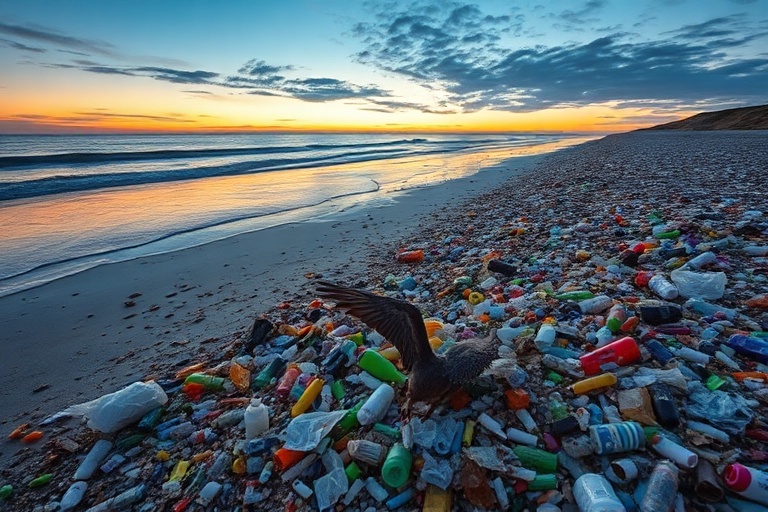
Plastic Pollution: A Crisis in Every Ocean, Street, and Breath
The modern world runs on convenience. From single-use water bottles to disposable cutlery, plastic has embedded itself into daily life with promises of hygiene and efficiency. Yet this material, celebrated for its durability, now chokes waterways, poisons wildlife, and infiltrates human bodies. The United Nations estimates that over 400 million tons of plastic waste are generated each year—enough to circle the Earth four times if stacked in bags.
What began as a symbol of progress in the 20th century has become one of humanity’s most pressing environmental failures. Unlike organic materials, plastic does not decompose. It only breaks down into smaller fragments called microplastics, which persist in the environment for centuries. These particles have been found in Arctic ice, deep-sea trenches, and even human blood. The scale of contamination is no longer a distant threat; it is a global reality.
The Scale of the Problem: More Than Just Trash on the Beach
The most visible form of plastic pollution is the debris littering coastlines and city streets. Tourist hotspots in Southeast Asia, once pristine, now resemble landfills. In Indonesia, beaches that once drew divers now show microplastic concentrations as high as 2,000 particles per kilogram of sand. Similar scenes play out in the Mediterranean, where floating plastic outnumbers marine life by a disturbing margin.
But the damage extends far beyond aesthetics. Coral reefs suffocate under plastic bags that mimic jellyfish, a favorite food source. Sea turtles ingest plastic bags, mistaking them for jellyfish, and die from internal blockages. Albatross chicks on Midway Atoll are fed bottle caps by their parents, leading to starvation. These are not isolated incidents. Scientists estimate that by 2050, plastic will outweigh fish in the ocean by weight.
Landlocked nations are not spared. The Ganges River, which flows through India and Bangladesh, carries an estimated 120,000 tons of plastic into the Bay of Bengal annually. This river alone contributes 1.2 billion pounds of plastic pollution each year—nearly 10% of the global total. The problem is not confined to tropical regions; microplastics have been detected in Antarctic snow and Arctic seawater, proving that no ecosystem is immune.
Cultural Attitudes: Why Plastic Is So Hard to Quit
Plastic is deeply embedded in consumer culture. The rise of convenience culture in the late 20th century normalized single-use items. Fast food chains wrapped burgers in plastic, supermarkets bagged produce in thin films, and online shopping arrived with layers of bubble wrap and padding. These habits were not just practical—they became cultural shorthand for modernity.
In Japan, the concept of mottainai—a sense of regret over waste—has roots in Buddhist philosophy. Yet even here, plastic consumption per capita remains high. In contrast, Scandinavian countries have pushed back by imposing strict recycling laws and promoting reusable alternatives. Denmark, for example, has one of the highest recycling rates in the world, thanks to a culture that values sustainability as a civic duty.
The disparity in global attitudes reveals a paradox: plastic is both a symbol of global inequality and global excess. In wealthier nations, plastic waste is often exported to poorer countries under the guise of recycling. In 2021, Malaysia returned 150 containers of illegal plastic waste to countries including the U.S. and U.K., exposing a broken system where convenience in one region creates catastrophe in another.
What’s Being Done: From Bans to Breakthroughs
Governments and corporations are beginning to respond—though not fast enough. The European Union has banned several single-use plastics, including straws and cotton buds. Canada has committed to banning harmful plastics by 2025. Meanwhile, Rwanda has enforced a strict plastic bag ban since 2008, with visible results: its capital, Kigali, is one of the cleanest cities in Africa.
Innovation is also emerging. Companies are developing biodegradable plastics made from algae, mycelium, and even shrimp shells. Startups in India and Indonesia are turning plastic waste into building materials, roads, and clothing. In sports, apparel brands are incorporating recycled ocean plastic into jerseys and shoes, turning pollution into performance gear.
Yet solutions remain fragmented. Recycling rates globally hover around 9%, according to the OECD. The rest ends up in landfills, incinerators, or the environment. Extended Producer Responsibility (EPR) laws, which make manufacturers accountable for the full lifecycle of their products, are gaining traction in countries like France and South Korea. These policies shift the burden from consumers to corporations—a necessary step if real change is to occur.
What You Can Do: Small Steps with Global Impact
Individual action matters, especially when amplified collectively. Refusing single-use plastics is the most direct way to reduce demand. Bringing reusable bags, bottles, and containers can cut hundreds of plastic items from personal waste annually. Supporting brands that use recycled materials or offer package-free options sends a market signal that sustainability sells.
Community involvement amplifies impact. Beach cleanups, organized through groups like the Ocean Conservancy, remove millions of pounds of plastic each year. In the Philippines, a youth-led movement called “Plastic-Free Bohol” has mobilized local governments and businesses to adopt zero-waste policies. These efforts demonstrate what’s possible when people organize around a shared cause.
Education is equally vital. Schools worldwide are integrating plastic pollution into curricula, teaching students about the lifecycle of materials and the ethics of consumption. In Costa Rica, environmental education is mandatory, and the country has pledged to become carbon-neutral by 2050—a goal that includes drastic reductions in plastic use.
While systemic change requires policy and corporate accountability, personal habits create cultural momentum. Every reusable bag used, every bottle refilled, every piece of plastic refused is a vote for a different future. The challenge is not technological or even economic—it is cultural. And culture can change.
A Call to Action: Beyond Awareness to Accountability
The plastic pollution crisis is not a problem to be solved in the future. It is a crisis unfolding now, in every tide, every storm drain, every landfill. The solutions exist. What’s missing is the will to implement them at scale. Governments must enforce bans and invest in recycling infrastructure. Corporations must redesign packaging and take responsibility for waste. Consumers must demand better alternatives and change habits permanently.
This is not about guilt or sacrifice. It is about survival—of marine life, of human health, of the planet itself. The ocean does not care about borders or economies. The plastic that enters the sea in Jakarta will end up on the shores of Hawaii. The toxins in microplastics consumed by fish in the Atlantic will eventually reach our dinner plates.
The time to act is not tomorrow. It is today. And it begins with recognizing that this is not someone else’s problem. It is everyone’s responsibility.