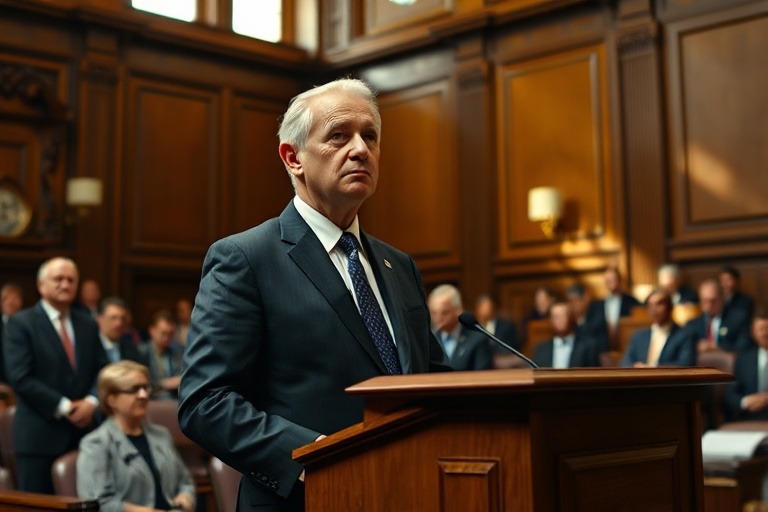
The Solicitor General of the United States occupies a unique position at the intersection of law, politics, and constitutional governance. Often referred to as the “Tenth Justice,” this role carries immense responsibility, shaping legal precedent and influencing the trajectory of American jurisprudence. Unlike other high-ranking officials, the Solicitor General serves as both an advocate for the federal government and a neutral arbiter of legal principles, creating a dynamic that demands both legal acumen and political savvy.
The position was established by the Judiciary Act of 1870, replacing the earlier role of Attorney General as the government’s primary legal representative in the Supreme Court. Today, the Solicitor General—appointed by the President and confirmed by the Senate—heads the Office of the Solicitor General (OSG) within the Department of Justice. The role requires a deep understanding of constitutional law, appellate procedure, and the broader implications of judicial decisions on federal policy.
The Three Pillars of the Solicitor General’s Authority
The Solicitor General’s influence rests on three foundational pillars: representation, discretion, and institutional credibility. Each of these elements plays a critical role in how the office functions and why its decisions carry weight far beyond individual cases.
- Representation of the United States: The Solicitor General is the government’s chief legal advocate before the Supreme Court, presenting arguments in cases where the federal interest is at stake. This includes defending the constitutionality of federal laws, challenging state actions that conflict with federal authority, and providing neutral interpretations of statutes and regulations.
- Discretion in Case Selection: Unlike private attorneys, the Solicitor General has the authority to decide which cases to appeal to the Supreme Court and which to settle or dismiss. This discretion allows the office to shape the Court’s docket, prioritizing issues that align with the administration’s legal and policy objectives while avoiding cases that could undermine federal interests.
- Institutional Credibility: The Solicitor General’s reputation for impartiality and legal rigor grants the office a unique status in the eyes of the judiciary. The Court often defers to the Solicitor General’s recommendations on whether to grant review in a case, a phenomenon known as the “Brandeis brief” phenomenon, named after former Solicitor General Louis Brandeis. This deference reflects the Court’s trust in the OSG’s ability to present arguments that are both legally sound and tempered by broader institutional concerns.
This balance between advocacy and neutrality is not always easy to maintain. The Solicitor General must navigate the tension between advancing the President’s agenda and upholding the rule of law, a challenge that has led to both praise and criticism throughout history. For example, during the Obama administration, the Solicitor General’s office defended the Affordable Care Act before the Supreme Court, a move that required balancing political loyalty with legal obligation. Similarly, the Trump administration’s Solicitor General argued for the inclusion of a citizenship question on the 2020 census, a position that drew sharp legal and ethical debates.
Historical Evolution: From Humble Beginnings to Supreme Influence
The Solicitor General’s role has evolved significantly since its inception. In the early 20th century, the office was largely seen as a technical legal position, focused on routine appeals and statutory interpretation. However, as the federal government expanded its reach into areas such as civil rights, environmental regulation, and healthcare, the Solicitor General’s responsibilities grew in both scope and complexity.
Several key moments in American legal history underscore the office’s growing influence:
- The New Deal Era: Under President Franklin D. Roosevelt, the Solicitor General’s office became a critical player in defending the constitutionality of New Deal legislation. Cases such as West Coast Hotel Co. v. Parrish (1937) marked a turning point in the Court’s deference to federal economic regulation, with the Solicitor General playing a pivotal role in shaping the government’s arguments.
- The Civil Rights Movement: During the 1950s and 1960s, the Solicitor General’s office became a champion of desegregation and voting rights. Thurgood Marshall, who later became the first African American Supreme Court Justice, served as Solicitor General under President Lyndon B. Johnson and argued landmark cases such as Heart of Atlanta Motel v. United States (1964), which upheld the Civil Rights Act of 1964.
- The War on Terror: In the aftermath of 9/11, the Solicitor General’s office faced unprecedented challenges in defending the Bush administration’s policies on detention, surveillance, and interrogation. Cases such as Hamdi v. Rumsfeld (2004) and Rasul v. Bush (2004) tested the limits of executive power and the role of the judiciary in wartime.
These historical examples highlight the Solicitor General’s ability to adapt to the nation’s changing legal and political landscape. The office’s role in shaping constitutional law is not merely reactive; it is proactive, often anticipating and influencing the direction of judicial interpretation.
Controversies and Ethical Dilemmas: The Solicitor General’s Tightrope Walk
Despite its institutional prestige, the Solicitor General’s role is not without controversy. The office frequently finds itself caught between competing demands: the need to defend the government’s interests, the obligation to uphold the rule of law, and the pressure to maintain public trust. These tensions have led to ethical dilemmas and public scrutiny in several notable cases.
One of the most contentious issues is the Solicitor General’s dual role as both advocate and advisor. While the office is expected to present the government’s position honestly and vigorously, it must also consider the broader implications of its arguments. For instance, in Gonzales v. Raich (2005), the Solicitor General argued that the federal government could regulate medical marijuana under the Commerce Clause, a position that aligned with the administration’s drug policy but raised questions about states’ rights and individual liberty.
Another area of concern is the Solicitor General’s relationship with the Supreme Court. The Court’s deference to the OSG’s recommendations has led some critics to argue that the office wields undue influence over the judiciary. In United States v. Texas (2016), the Supreme Court deadlocked 4-4 on the Obama administration’s immigration executive actions, effectively upholding a lower court’s injunction. The Solicitor General’s decision to pursue the case—despite its uncertain prospects—raised questions about the office’s political motivations.
The ethical challenges facing the Solicitor General extend beyond individual cases. The office must also grapple with issues of transparency and accountability. Unlike elected officials, the Solicitor General is not directly accountable to the public, raising concerns about the lack of democratic oversight. Additionally, the revolving door between the OSG and private legal practice has led to accusations of conflicts of interest, particularly when former Solicitors General return to argue before the Supreme Court.
The Solicitor General’s Broader Impact on American Law
The Solicitor General’s influence extends far beyond the Supreme Court. The office plays a critical role in shaping federal policy, guiding executive branch agencies, and setting legal standards for the entire government. Its decisions reverberate through the lower courts, influencing how laws are interpreted and applied across the country.
One of the most significant ways the Solicitor General shapes American law is through its amicus curiae (“friend of the court”) briefs. These briefs allow the office to weigh in on cases where the federal government is not a party but has a strong interest in the outcome. For example, in Obergefell v. Hodges (2015), the Solicitor General filed a brief supporting same-sex marriage, a move that helped sway the Court’s decision and set a nationwide precedent.
The Solicitor General also plays a key role in international law. The office represents the United States in cases before international tribunals, such as the International Court of Justice, and advises the government on matters of treaty interpretation and compliance. This global reach underscores the office’s importance in maintaining the United States’ legal credibility on the world stage.
Moreover, the Solicitor General’s work has a lasting impact on the development of legal doctrine. The office’s arguments often lay the groundwork for future Supreme Court rulings, shaping the evolution of constitutional law for decades. For instance, the Solicitor General’s brief in Brown v. Board of Education (1954) helped dismantle the legal foundation of segregation, setting the stage for the Civil Rights Movement.
In an era of polarized politics and heightened judicial scrutiny, the Solicitor General’s role has never been more vital—or more precarious. The office must navigate a complex legal and political landscape, balancing the demands of the executive branch with the principles of justice and fairness. As the nation continues to grapple with issues such as immigration, healthcare, and civil rights, the Solicitor General will remain a central figure in the ongoing struggle to define the meaning of the Constitution.
For those interested in exploring the intersection of law and politics further, Dave’s Locker offers in-depth analysis on related topics. Visit our Politics and Analysis sections for more insights into the forces shaping American governance.
Conclusion: A Legacy of Legal Leadership
The Solicitor General of the United States stands as a guardian of the Constitution, a defender of federal interests, and a steward of the nation’s legal heritage. The office’s unique blend of authority and responsibility makes it one of the most consequential positions in the American legal system. From its origins in the 19th century to its modern-day challenges, the Solicitor General has demonstrated an unparalleled ability to adapt to changing times while upholding the rule of law.
As the Supreme Court continues to shape the nation’s legal landscape, the Solicitor General will remain a critical voice in the ongoing dialogue between law and democracy. Its legacy is not just one of legal victories or defeats, but of the enduring struggle to balance power with principle. In an era of uncertainty and division, the Solicitor General’s role reminds us that the law is not merely a tool of governance—it is the foundation of a