victoria day canada
Every year on the Monday preceding May 25, Canadians celebrate Victoria Day, a holiday steeped in history and patriotism. Often called the “May Long” or “May Two-Four,” this day honors Queen Victoria’s birthday while marking the unofficial start of summer. Beyond its royal connections, the holiday has evolved into a uniquely Canadian tradition filled with fireworks, parades, and backyard gatherings. The origins of Victoria Day reveal much about Canada’s colonial past and its gradual path to national identity.
The Historical Roots of Victoria Day
Victoria Day originated in 1845 as a celebration of Queen Victoria’s birthday. In that year, the Legislative Assembly of the Province of Canada declared May 24 a public holiday. At the time, Queen Victoria was just 26 years old and had reigned for eight years, making her a beloved figure across the British Empire—including in Canada.
When Queen Victoria died in 1901, her actual birthday—May 24—became known as Empire Day in her memory. Canadian communities embraced the day with patriotic displays, school concerts, and military parades. Though Empire Day was officially renamed Commonwealth Day in 1952, Canada chose to keep May 24—or the closest Monday—as Victoria Day, ensuring the holiday retained its royal significance.
Today, Victoria Day serves as a reflection of Canada’s historical ties to the British monarchy while also functioning as a seasonal milestone. It’s one of the few holidays uniquely Canadian, not directly tied to a specific province or religious observance. This dual identity—both royal and distinctly Canadian—sets it apart from other public holidays.
How Canadians Celebrate Victoria Day
Victoria Day is celebrated across the country, but traditions vary by region. In Ontario and the Atlantic provinces, the long weekend often includes fireworks displays, especially in cities like Toronto and Halifax. These shows light up the sky over lakes and parks, drawing thousands of spectators.
In Quebec, Victoria Day is not a statutory holiday, but many anglophone communities still observe it with local events. Meanwhile, in British Columbia, the holiday often coincides with the first long weekend of the season, prompting cottage openings and camping trips. Across the country, barbecues, picnics, and sports tournaments are common, signaling the unofficial start of warm-weather activities.
One of the most iconic traditions is the “May Two-Four,” a term that plays on both the date and the Canadian slang for a case of 24 beers. While not an official part of the holiday, it reflects the casual, festive spirit many Canadians adopt during the long weekend. Retailers often run sales, and cottage owners rush to open their seasonal homes before summer truly begins.
- Fireworks: Major cities host public displays, often synchronized with music.
- Parades: Small-town parades feature marching bands, floats, and local organizations.
- Sports: Baseball games, soccer tournaments, and hockey playoffs are common.
- Cottage Culture: Many families head to lakeside cabins for the first time of the season.
The Cultural Significance of Victoria Day
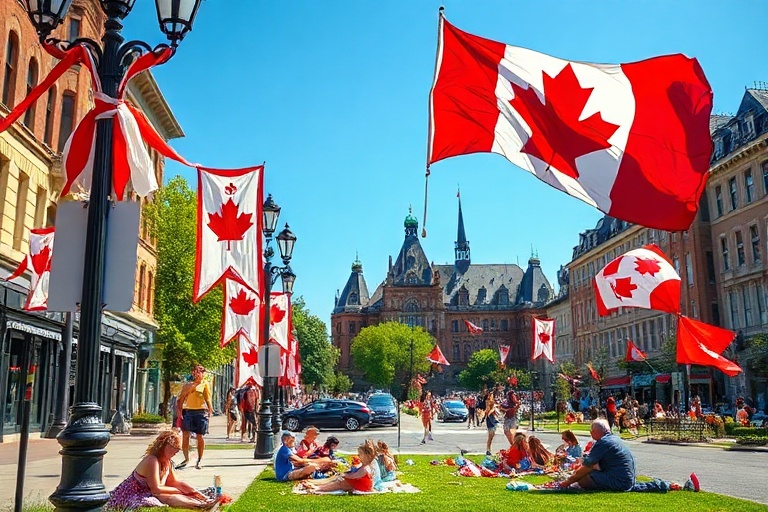
Victoria Day occupies a unique place in Canada’s cultural calendar. Unlike Canada Day on July 1, which celebrates the country’s confederation, Victoria Day is more about seasonal transition and community. It’s a time when neighbors gather, flags are flown, and the air carries the scent of fresh-cut grass and charcoal.
For many, Victoria Day also represents a personal milestone. Children finish school for the summer, university students return home, and families plan vacations. The holiday often serves as a psychological reset, signaling a shift from spring’s unpredictability to summer’s warmth and routine. In this way, Victoria Day functions as both a cultural touchstone and a practical marker of the year’s rhythm.
In some communities, Victoria Day ceremonies include the singing of “God Save the King” or “O Canada,” reinforcing national pride. While not as overtly patriotic as Canada Day, Victoria Day carries a quieter, more inclusive form of celebration—one that emphasizes family, nature, and local identity.
The Controversies and Changing Perceptions
Despite its widespread popularity, Victoria Day has faced occasional criticism. Some argue that the holiday’s ties to the monarchy are outdated in a modern, independent Canada. Others point out that the date’s proximity to other holidays, like the U.S. Memorial Day, can cause confusion for travelers and newcomers.
In recent years, calls to rename or rebrand Victoria Day have grown louder. Advocates for republicanism or decolonization have suggested alternatives such as “May Long Weekend” or “Victoria and Canadian Heritage Day.” So far, however, these proposals have not gained significant traction, and the holiday remains firmly rooted in tradition.
Another point of debate is accessibility. Fireworks, while beloved, can be distressing for veterans, pets, and people with sensory sensitivities. Some municipalities have responded by offering sensory-friendly fireworks or alternative light displays, such as drone shows. These changes reflect a broader shift toward inclusive celebrations that consider all members of the community.
Despite these discussions, Victoria Day continues to thrive as a holiday that bridges past and present. It honors history without demanding rigid allegiance to it, and it welcomes the future with open arms. Whether through quiet reflection or loud celebration, Canadians make this day their own.
A Holiday That Belongs to Everyone
Victoria Day is more than a day off work or a chance to crack open a cold beverage. It’s a living tradition—one that tells the story of Canada’s growth from a British colony to a confident, multicultural nation. It’s a day when fireworks light up small towns and big cities alike, when families reunite, and when the promise of summer feels just within reach.
As Canada continues to evolve, so too might the ways it celebrates Victoria Day. Yet the essence of the holiday—community, renewal, and pride—remains unchanged. Whether you’re watching a fireworks show over a lake, firing up the grill in your backyard, or simply enjoying a rare long weekend, Victoria Day offers something for everyone.
And that’s what makes it truly Canadian.