Subaru Outback Sales Drop in 2026: What’s Behind the Shift?
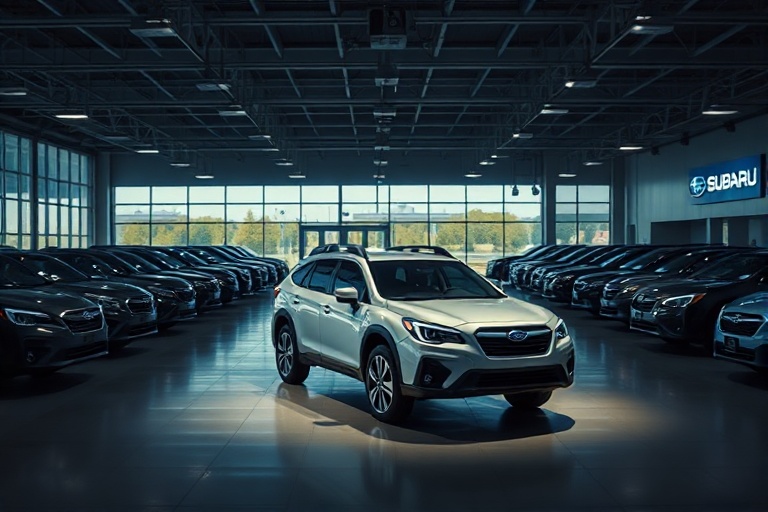
The Subaru Outback has long been a staple of the rugged crossover segment, blending SUV practicality with wagon-like efficiency. For years, it dominated sales charts with its reputation for reliability, all-wheel drive capability, and family-friendly design. Yet, as 2026 unfolds, the model is experiencing a notable decline in sales figures. Dealers and analysts are asking: what’s driving this downturn?
The shift isn’t isolated to a single market. While the Outback remains popular in the United States and Canada, its sales have softened significantly in key regions like Japan and Europe. Industry reports indicate a year-over-year decline of approximately 15% in global deliveries, a trend that has caught the attention of automotive journalists and Subaru stakeholders alike. To understand this drop, we need to examine a combination of market dynamics, consumer preferences, and broader economic factors.
The Rise of Electric and Hybrid Alternatives
One of the most significant factors contributing to the Outback’s sales decline is the rapid rise of electric and hybrid vehicles. Consumers are increasingly prioritizing fuel efficiency and lower emissions, pushing automakers to accelerate their electrification strategies. Subaru, while committed to its “Electrified” lineup, has faced criticism for lagging behind competitors in battery-electric vehicle (BEV) development.
The Outback’s traditional powertrain, though efficient with its standard all-wheel drive, relies on a gasoline engine. In markets where governments are tightening emissions regulations—such as the European Union and parts of Asia—this becomes a liability. The European Union’s 2035 ban on new internal combustion engine (ICE) vehicles has already begun influencing buyer behavior, with many opting for fully electric models like the Volvo XC60 Recharge or the Tesla Model Y instead.
Subaru’s response has been gradual. The brand introduced the Outback Wilderness in 2020, targeting off-road enthusiasts, but it hasn’t yet launched a fully electric Outback. The upcoming 2027 Subaru Solterra, an all-electric crossover, may eventually fill this gap, but for now, the Outback lacks the green credentials that modern buyers increasingly demand.
Changing Consumer Preferences in the Crossover Segment
The crossover utility vehicle (CUV) market has evolved dramatically in the past five years. What once favored rugged, body-on-frame SUVs like the Outback has shifted toward sleeker, more urban-oriented models. Buyers today are gravitating toward vehicles that offer a balance of style, technology, and efficiency—qualities that the Outback, with its boxy design and utilitarian focus, doesn’t always deliver.
Consider the Toyota RAV4, which has consistently outsold the Outback in the U.S. market. The RAV4 offers a more modern aesthetic, hybrid options, and a reputation for reliability that resonates with younger buyers. Similarly, the Honda CR-V has expanded its appeal with a refined interior and advanced driver-assistance systems. The Outback, while practical, struggles to compete with these models in terms of perceived sophistication.
Another challenge is the Outback’s positioning. It straddles the line between wagon and SUV, often failing to fully satisfy either camp. Traditional wagon buyers may find it too bulky, while SUV enthusiasts might see it as lacking in capability. This identity crisis has made it harder for the Outback to stand out in a crowded market.
A Global Perspective: Regional Variations in Demand
The decline in Outback sales isn’t uniform across all markets. In the United States, the model remains a strong contender, particularly among families and outdoor enthusiasts. However, even in the U.S., sales growth has plateaued. According to data from J.D. Power, the Outback’s market share in the midsize crossover segment dropped from 12% in 2023 to 10% in 2025.
In Japan, the Outback’s home market, sales have plummeted by nearly 30% over the past two years. This decline reflects broader trends in the Japanese automotive industry, where compact and kei cars continue to dominate. The Outback, with its larger footprint and higher price point, has lost ground to models like the Toyota Corolla Cross and the Honda ZR-V, which better align with urban Japanese consumers’ needs.
Europe presents another challenge. The Outback has never been a major player in this market, where wagons and compact SUVs like the Skoda Karoq and Volkswagen Tiguan hold sway. Subaru’s limited dealer network and lack of localized production further hinder its competitiveness. The brand’s focus on all-wheel drive, while a selling point in snowy regions, doesn’t resonate as strongly in markets where front-wheel drive dominates.
Economic Factors and Supply Chain Pressures
Beyond consumer preferences, economic factors are also playing a role in the Outback’s sales decline. Rising interest rates have made auto loans more expensive, dampening demand across the industry. In the U.S., the average new car loan rate exceeded 7% in early 2026, a significant increase from previous years. This has particularly affected mid-market vehicles like the Outback, where buyers are more price-sensitive.
Supply chain disruptions have also taken a toll. The global semiconductor shortage of 2021-2023 led to production delays and reduced inventory levels. While the industry has largely recovered, lingering effects continue to impact automakers. Subaru, like many of its peers, has had to prioritize certain models over others, and the Outback has not always been at the top of the list.
Additionally, the COVID-19 pandemic accelerated shifts in buying behavior. The rise of online car shopping and the decline of traditional dealership visits have forced automakers to rethink their sales strategies. Subaru, which has historically relied on a strong dealer network, has had to adapt quickly to these changes, but not without some growing pains.
What’s Next for the Subaru Outback?
Despite these challenges, the Outback isn’t on the brink of extinction. Subaru has a loyal customer base, particularly among families and outdoor enthusiasts, who value its durability and all-weather capability. The brand’s commitment to safety—highlighted by its top ratings in crash tests and advanced driver-assistance systems—remains a strong selling point.
However, to reverse the sales decline, Subaru will need to make strategic adjustments. These could include:
- Accelerating electrification: Introducing a fully electric Outback or a plug-in hybrid variant could attract eco-conscious buyers.
- Redesigning the interior: Modernizing the cabin with higher-quality materials and advanced technology could help the Outback compete with more stylish crossovers.
- Expanding hybrid options: Offering a hybrid powertrain could appeal to buyers looking for better fuel efficiency without fully committing to an EV.
- Enhancing its off-road lineup: The Outback Wilderness has been a hit, but Subaru could further differentiate this model with unique features and marketing campaigns.
The road ahead won’t be easy, but Subaru has proven its resilience in the past. The brand’s ability to adapt to changing market conditions will determine whether the Outback can reclaim its former glory or fade into the background as a relic of a bygone era.
For now, the Outback remains a symbol of Subaru’s heritage—a vehicle built for adventure and dependability. But in an industry that rewards innovation and adaptability, its future will depend on how well it can evolve to meet the demands of tomorrow’s buyers.