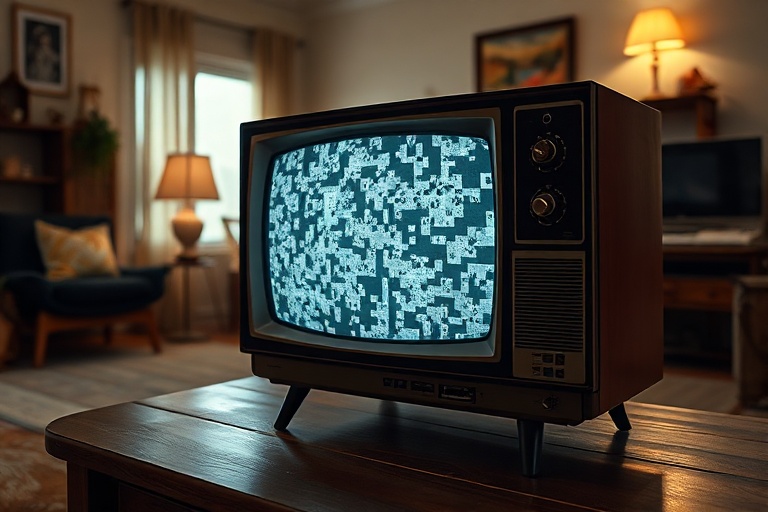
What Is Terrestrial Television?
Terrestrial television refers to broadcast signals transmitted from ground-based towers rather than via satellite or cable networks. Unlike streaming platforms that rely on internet connectivity, terrestrial TV uses radio waves to deliver content directly to antennas in homes. This technology has been the backbone of mass media since the mid-20th century, shaping how billions consume news, entertainment, and cultural programming.
The system dates back to the 1930s, when experimental broadcasts began in Europe and North America. By the 1950s and 1960s, governments worldwide adopted it as a public service, often pairing it with early regulations to ensure broad accessibility. Even today, terrestrial television remains critical in regions where internet infrastructure is limited or expensive.
How Terrestrial TV Differs From Modern Alternatives
Unlike cable or satellite services, terrestrial television does not require a paid subscription. Viewers simply need a compatible antenna to receive over-the-air (OTA) signals. This makes it one of the most cost-effective ways to access high-definition local and national channels.
Another key difference is latency. Terrestrial broadcasts are nearly instantaneous, making them ideal for live events such as sports and breaking news. In contrast, streaming platforms often introduce buffering delays due to compression and internet routing.
Moreover, terrestrial TV is less vulnerable to cyber threats. Since it operates on dedicated radio frequencies, it is not susceptible to hacking or server outages that can disrupt digital platforms. This reliability has kept it relevant even as newer technologies emerge.
The Role of Terrestrial TV in Different Regions
Around the world, terrestrial television plays varying roles depending on infrastructure and policy:
- North America: Terrestrial TV remains popular, especially for local news and network affiliates like ABC, CBS, and NBC. The transition to digital in 2009 improved signal quality, and many viewers still rely on antennas for free access.
- Europe: Countries like Germany and the UK still use terrestrial networks as primary sources of information. Public broadcasters such as the BBC and ARD provide culturally significant content alongside commercial channels.
- Asia: In Japan and South Korea, terrestrial TV dominates with high-definition channels like NHK and KBS. Governments often subsidize antennas to ensure rural populations aren’t left behind.
- Africa: Terrestrial signals are crucial where broadband internet is scarce. South Africa’s SABC and Kenya’s KBC use OTA broadcasts to reach millions in remote areas.
- Latin America: Terrestrial TV faces competition from cable but remains dominant in countries like Brazil and Mexico, where free-to-air channels still draw large audiences.
Cultural and Social Impact
Terrestrial television has long been a unifying force. Shared national broadcasts of major events—from royal weddings to World Cup finals—create collective experiences that transcend class and geography. This shared cultural fabric is harder to replicate in an era of fragmented streaming preferences.
In many countries, public broadcasters funded by governments use terrestrial networks to promote education and civic engagement. Shows about health, science, and citizenship reach audiences that might otherwise lack access to such content. For example, India’s Doordarshan has aired educational programs for decades, contributing to literacy and awareness.
Yet terrestrial TV also reflects societal divides. In some nations, state-controlled channels have been criticized for biased reporting or censorship. The dominance of commercial channels can marginalize minority languages and perspectives. As streaming grows, terrestrial networks face pressure to innovate while preserving their public service mission.
The Future of Terrestrial Television
Despite the rise of streaming, terrestrial television is not disappearing—it is evolving. Many broadcasters now simulcast their signals online, allowing viewers to watch via apps or websites. This hybrid approach bridges traditional and modern consumption habits.
Technological advancements are also improving terrestrial TV. Next-generation standards like ATSC 3.0 (in the U.S.) and DVB-T2 (in Europe) deliver 4K resolution and interactive features. These upgrades make OTA broadcasts competitive with streaming quality.
Governments continue to support terrestrial infrastructure as a public good. In the U.S., the FCC has preserved spectrum for broadcast use, recognizing its role in emergencies and local communication. Similarly, the EU mandates that member states maintain free-to-air access for all citizens.
However, challenges remain. The decline of linear TV audiences—especially among younger generations—threatens long-term sustainability. Broadcasters must adapt by integrating on-demand features and social media engagement to stay relevant.
Will Terrestrial TV Survive the Digital Shift?
The answer depends on how well the medium adapts. Terrestrial TV’s strengths—reliability, accessibility, and cost-effectiveness—ensure its survival in some form. Yet its future hinges on innovation and relevance. If broadcasters can blend tradition with digital convenience, terrestrial television may continue serving as a cornerstone of global media for decades to come.
One thing is clear: in a world where connectivity is increasingly privatized, terrestrial television’s commitment to universal access remains its greatest asset.