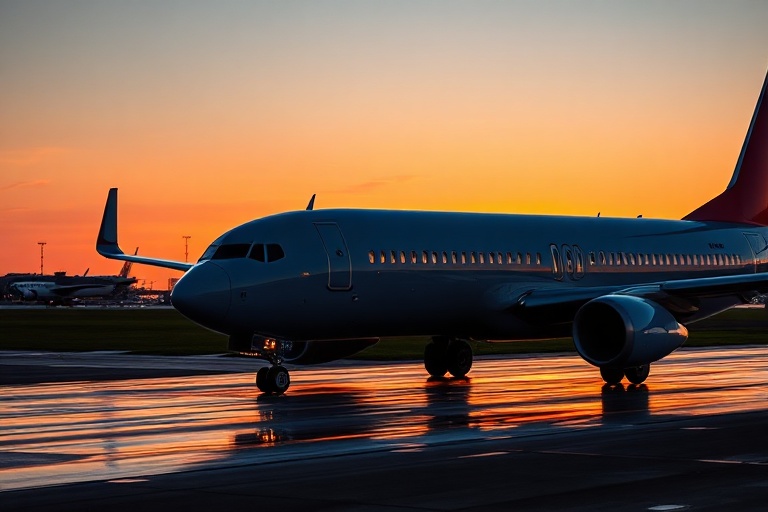
boeing 737
“`html
Boeing 737: The Jet That Shaped Global Aviation
The Boeing 737 stands as one of the most influential aircraft in aviation history. Since its debut in 1967, it has become a staple of commercial air travel, connecting cities across continents with remarkable efficiency.
A Brief History of the 737
Boeing introduced the 737 in 1967 as a short-to-medium-range jet designed to compete with the Douglas DC-9 and the BAC One-Eleven. The aircraft’s launch was driven by Boeing’s need to expand its commercial aircraft lineup beyond the larger 707 and 727 models.
The first 737-100 rolled out in January 1967 and entered service with Lufthansa later that year. While the initial model was modest in size, Boeing quickly recognized the potential for expansion. By 1968, the slightly longer 737-200 variant debuted, offering greater capacity and range. This version became a favorite among airlines, particularly in the United States, where it served regional and domestic routes.
The 1980s marked a turning point with the introduction of the 737 Classic series (the -300, -400, and -500 models). These aircraft featured more efficient CFM56 engines, improved aerodynamics, and increased capacity. The Classic series solidified the 737’s reputation as a reliable workhorse for airlines worldwide.
Evolution and Innovation Over the Decades
The 737’s longevity is a testament to Boeing’s commitment to continuous improvement. Each new generation introduced advancements in technology, fuel efficiency, and passenger comfort.
The Next Generation (NG) series, launched in the late 1990s, featured the -600, -700, -800, and -900 models. These aircraft incorporated modern avionics, a redesigned wing, and improved engines, reducing fuel consumption by up to 20% compared to earlier versions. The NG series also introduced the Boeing Sky Interior, which enhanced the passenger experience with larger overhead bins and improved lighting.
In 2011, Boeing unveiled the 737 MAX, the fourth generation of the aircraft. The MAX series promised even greater efficiency with the new CFM LEAP-1B engines, which reduced fuel burn by an additional 12-15%. The MAX also featured advanced systems, including the Maneuvering Characteristics Augmentation System (MCAS), designed to improve flight stability.
However, the MAX’s introduction was marred by two tragic accidents in 2018 and 2019, which led to a global grounding of the fleet. The incidents raised serious questions about Boeing’s safety culture and regulatory oversight. After extensive modifications and recertification, the MAX returned to service in late 2020, but its reputation had been significantly impacted.
The 737’s Impact on Global Aviation
The Boeing 737 has played a pivotal role in shaping the modern airline industry. Its versatility and reliability have made it a preferred choice for airlines of all sizes, from budget carriers to legacy operators.
One of the 737’s most significant contributions has been its role in democratizing air travel. By offering a cost-effective and efficient aircraft, Boeing enabled airlines to expand their route networks, bringing air travel to millions of passengers who previously could not afford it. This shift contributed to the rise of the low-cost carrier model, exemplified by airlines like Southwest, Ryanair, and easyJet.
The 737 has also been a key player in the globalization of trade and tourism. Its ability to operate on short-haul routes while maintaining efficiency has made it ideal for connecting regional hubs to international destinations. This has facilitated economic growth in emerging markets, where air travel was once a luxury reserved for the elite.
Despite its challenges, the 737 remains a cornerstone of Boeing’s commercial aircraft lineup. As of 2023, over 13,000 737s have been ordered, with more than 11,000 delivered. Its continued production and upgrades ensure that it will remain a dominant force in aviation for decades to come.
Key Contributions of the Boeing 737
- Cost Efficiency: The 737’s design prioritized cost-effective operations, making it ideal for budget airlines and high-frequency routes.
- Scalability: Boeing’s ability to stretch and upgrade the 737 allowed it to cater to a wide range of passenger capacities and range requirements.
- Technological Advancements: Each new generation introduced innovations in aerodynamics, avionics, and fuel efficiency, keeping the 737 competitive.
- Global Reach: The 737’s adaptability has enabled airlines to serve remote and underserved regions, fostering economic development.
The Future of the 737 and Its Broader Implications
The Boeing 737 faces a complex future as the aviation industry grapples with sustainability challenges and evolving passenger demands. The MAX series, despite its troubled past, remains a critical part of Boeing’s portfolio. However, the aircraft’s long-term viability will depend on several factors.
One of the most pressing issues is sustainability. Airlines are under increasing pressure to reduce their carbon footprint, and the 737 MAX, while more efficient than its predecessors, still relies on conventional jet fuel. Boeing has explored hybrid-electric and hydrogen-powered propulsion systems, but these technologies are still in their infancy. The industry’s shift toward sustainable aviation fuels (SAFs) may offer a more immediate solution, though scaling production remains a challenge.
The rise of electric vertical takeoff and landing (eVTOL) aircraft and urban air mobility (UAM) solutions could also disrupt the 737’s dominance in regional travel. Companies like Archer Aviation and Joby Aviation are developing electric aircraft designed for short-haul flights, which could compete with the 737 on routes under 200 miles. While these technologies are not yet mature, their potential to reshape regional air travel cannot be ignored.
Another factor is the growing demand for larger, long-haul aircraft. The Boeing 787 Dreamliner and Airbus A350 have demonstrated that passengers and airlines alike are willing to pay a premium for improved comfort and fuel efficiency on international routes. The 737’s role in this market is limited, as it is optimized for shorter distances. Boeing’s response to this trend will be critical in determining whether the 737 remains a dominant force or gradually cedes ground to larger, more advanced aircraft.
For Boeing, the 737’s future also hinges on rebuilding trust. The MAX crises exposed significant flaws in Boeing’s safety culture and regulatory oversight. Reestablishing confidence among airlines, passengers, and regulators will require transparency, rigorous testing, and a commitment to continuous improvement. The company’s ability to address these issues will shape not only the 737’s future but also its broader reputation in the aviation industry.
—
METADATA—
{
“title”: “Boeing 737: The Jet That Shaped Global Aviation History”,
“metaDescription”: “From its debut in 1967 to the MAX series, discover how the Boeing 737 revolutionized air travel and shaped modern aviation.”,
“categories”: [“Technology”, “Analysis”],
“tags”: [“Boeing 737”, “commercial aviation”, “aircraft history”, “Boeing MAX”, “aviation innovation”],
“imageDescription”: “A modern Boeing 737 MAX aircraft in flight against a clear blue sky, with its distinctive winglets and engines visible. The aircraft is captured mid-climb, emphasizing its sleek design and aerodynamic efficiency. The setting is a busy airport in the background, with other planes and airport infrastructure faintly visible, suggesting a bustling global hub.”
}
—END METADATA—
“`