Qeshm Island: Iran’s Unspoiled Jewel of the Persian Gulf
Qeshm Island is a destination that defies the expectations many travelers hold about Iran. While the country’s mainland often draws attention for its ancient cities and political narratives, this island in the Strait of Hormuz offers a quieter, more introspective experience. Stretching 120 kilometers in length and up to 40 kilometers in width, Qeshm is Iran’s largest island and a place where geography, culture, and history converge in unexpected ways.
The island’s strategic location has shaped its identity for centuries. Positioned just off the southern coast of Iran, near the port city of Bandar Abbas, Qeshm has long served as a crossroads for trade and migration. Its proximity to the Arabian Peninsula and the Indian Ocean made it a vital stop for merchants transporting spices, textiles, and precious metals. Today, the island retains a sense of its historical role, blending ancient traditions with the rhythms of modern life.
The Natural Wonders of Qeshm
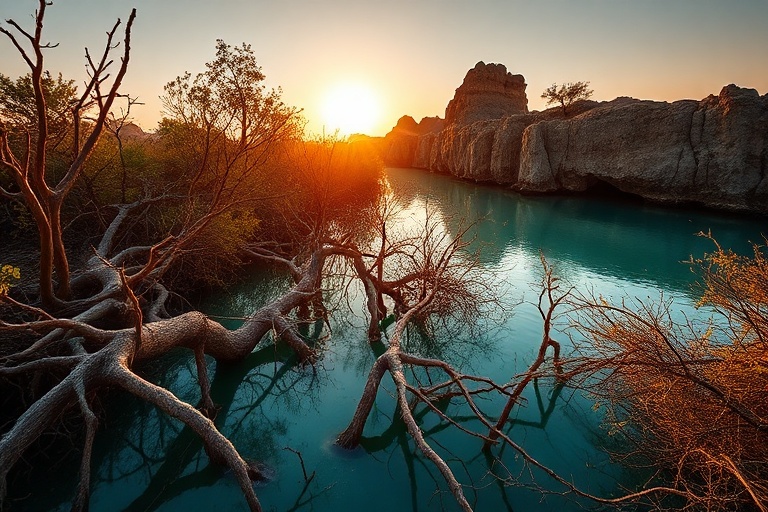
Qeshm’s landscape is a study in contrasts. From the rugged cliffs of the north to the pristine beaches of the south, the island’s terrain is as diverse as it is dramatic. One of its most striking features is the Hara Forest, a UNESCO-recognized mangrove ecosystem that stretches along the northern coast. This labyrinth of tangled roots and waterways is home to a rich variety of bird species, including herons, egrets, and flamingos, making it a paradise for birdwatchers and nature enthusiasts.
The island’s geological formations are equally captivating. The Chahkooh Canyon, with its towering rock walls and narrow passages, offers a glimpse into the island’s ancient past. Geologists believe the canyon was carved by erosion over millions of years, its striated layers revealing clues about the region’s climatic history. Visitors can hike through the canyon, marvelling at the interplay of light and shadow on the rock faces.
Qeshm’s coastline is another highlight. The southern beaches, such as Toroq Beach, are known for their turquoise waters and soft white sand. Unlike the crowded tourist hubs of other Gulf destinations, these shores remain largely untouched, offering a sense of solitude rarely found in popular beach locations. The island’s lack of mass tourism has preserved its natural beauty, making it a haven for those seeking tranquility.
Cultural Encounters and Local Traditions
Qeshm’s cultural landscape is as rich as its natural one. The island is home to several ethnic groups, including Persians, Arabs, and Afro-Iranians, each contributing to the island’s unique identity. The local cuisine, for example, reflects this diversity. Dishes like mahyawa, a tangy fish sauce, and dizi, a hearty lamb and bean stew, are staples that showcase the island’s culinary heritage.
The people of Qeshm are known for their hospitality, a trait that has endured despite the island’s relative isolation. Visitors often remark on the warmth of the locals, who are eager to share stories about their traditions and way of life. One such tradition is the Qeshm Music Festival, which celebrates the island’s folk music. The festival features performances of traditional instruments like the barbat (a short-necked lute) and the dohol (a double-headed drum), offering a window into the island’s artistic soul.
The island’s religious and historical sites also provide insight into its cultural fabric. The Qeshm Grand Mosque, with its intricate tilework and towering minarets, stands as a testament to the island’s Islamic heritage. Meanwhile, the Portuguese Castle, a 17th-century fortress built by the Portuguese during their brief occupation of the island, serves as a reminder of Qeshm’s strategic importance in regional history.
Adventure and Exploration on Qeshm
For those seeking adventure, Qeshm offers a wide range of activities. The island’s varied terrain makes it ideal for hiking, cycling, and even off-road driving. The Valiabad Salt Dome, a massive salt formation rising from the earth, is a popular spot for trekkers and photographers. The dome’s otherworldly appearance has earned it comparisons to a lunar landscape, and its reflective surfaces create stunning visual effects.
Water-based activities are equally enticing. The island’s clear waters are perfect for snorkeling and diving, with coral reefs teeming with marine life. The Tang-e Chahkooh area, near the canyon, is a particularly good spot for diving, where divers can encounter colorful fish, sea turtles, and even dolphins. Kayaking through the Hara Forest’s mangrove channels is another unforgettable experience, offering a chance to navigate the waterways from a unique perspective.
Qeshm is also a gateway to some of Iran’s most fascinating cultural and historical sites. A short boat ride from the island’s port takes visitors to the Hormuz Island, known for its red soil and ancient ruins. The island’s small community of artists and craftsmen creates vibrant paintings and sculptures using the natural pigments found in the soil, making it a hub for art lovers.
A Sustainable Future for Qeshm
As tourism to Iran grows, so does the need to preserve the delicate balance of Qeshm’s ecosystems and cultural heritage. The Iranian government has taken steps to promote sustainable tourism on the island, including the establishment of protected areas and eco-friendly lodging options. However, challenges remain. The island’s infrastructure is still developing, and access to some remote areas can be difficult. Yet, these limitations also contribute to Qeshm’s allure, offering travelers a chance to disconnect from the hustle of modern life.
Efforts are underway to ensure that Qeshm’s development remains mindful of its environmental and cultural significance. Local initiatives focus on educating visitors about the importance of preserving the island’s natural resources, from the mangrove forests to the coral reefs. Community-led tourism projects, such as homestays and guided tours, allow travelers to engage with locals while supporting the island’s economy in a sustainable way.
The future of Qeshm may lie in its ability to attract travelers who value authenticity over mass tourism. As more people seek out destinations that offer genuine cultural experiences and untouched natural beauty, Qeshm is poised to become a model for responsible tourism in the region. Its story is one of resilience, adaptability, and quiet strength—a narrative that resonates far beyond the shores of the Persian Gulf.
Conclusion
Qeshm Island is more than just a travel destination; it is a living testament to the intersection of nature, culture, and history. Its landscapes tell stories of ancient geological forces, while its people preserve traditions that have been passed down through generations. For those willing to venture off the beaten path, Qeshm offers an experience that is both enriching and humbling. It is a place where the past and present coexist, where the whispers of history can still be heard in the rustling of the mangroves and the call to prayer echoing over the water.
As the world becomes increasingly interconnected, destinations like Qeshm remind us of the value of places that remain unspoiled. They challenge us to look beyond the headlines and discover the quiet corners of the globe where time seems to slow down. Whether you are drawn by the allure of adventure, the promise of cultural discovery, or the simple desire to escape the ordinary, Qeshm Island awaits with open arms.