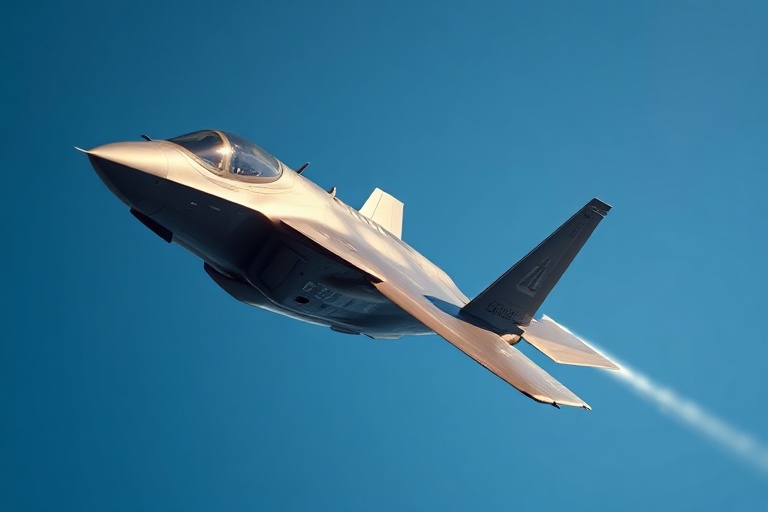
The Lockheed Martin F-35 Lightning II stands as one of the most ambitious military aviation projects in history. Conceived in the late 1990s as a joint strike fighter, it has evolved into a cornerstone of modern airpower for multiple nations. With stealth technology, advanced sensors, and unparalleled versatility, the F-35 isn’t just an aircraft—it’s a strategic shift in how nations project military power.
A Multinational Effort Shaping Global Security
The F-35 program is the result of collaboration between nine partner nations: the United States, the United Kingdom, Italy, the Netherlands, Turkey, Canada, Australia, Norway, and Denmark. Initially launched under the Joint Strike Fighter program, it sought to replace aging fleets of fourth-generation fighters while unifying allied air forces under a single platform. The program’s scale is unprecedented—over 3,000 aircraft are expected to be built, with production spanning decades.
This international partnership reflects a broader shift in global defense strategy. Nations are increasingly investing in interoperable systems that enhance collective security. The F-35’s networking capabilities allow pilots from different countries to share real-time battlefield data, creating a seamless operational environment. As geopolitical tensions rise in regions like the South China Sea and Eastern Europe, the F-35 serves as both a deterrent and a force multiplier.
Variants Tailored for Different Missions
The F-35 family includes three primary variants, each designed for specific operational needs:
- F-35A (CTOL): The conventional takeoff and landing version, used by the U.S. Air Force and international partners. It is the most widely deployed variant, optimized for air superiority and ground attack.
- F-35B (STOVL): The short takeoff and vertical landing variant, crucial for amphibious assault ships and expeditionary operations. The U.S. Marine Corps and the UK’s Royal Navy rely on this model for expeditionary warfare.
- F-35C (CATOBAR): Designed for aircraft carriers, this variant features reinforced landing gear and larger wings for enhanced stability at sea. The U.S. Navy uses it to modernize its carrier air wings.
The adaptability of these variants ensures the F-35 can operate from land bases, aircraft carriers, and austere forward operating locations—a flexibility that no other fifth-generation fighter can match.
Stealth, Sensors, and the Future of Aerial Warfare
At the heart of the F-35’s combat effectiveness is its stealth technology. The aircraft’s angular design and radar-absorbent materials reduce its radar cross-section to levels comparable to a small bird, making it nearly invisible to enemy radar systems. This capability is critical in contested environments where survivability is paramount.
Beyond stealth, the F-35’s sensor suite is a marvel of modern engineering. The AN/APG-81 AESA radar provides unmatched situational awareness, detecting and tracking targets at long ranges while remaining resistant to electronic jamming. The Distributed Aperture System (DAS) projects a 360-degree view of the aircraft’s surroundings onto the pilot’s helmet-mounted display, allowing them to “see through” the airframe. This technology transforms how pilots engage with the battlefield, offering a tactical advantage that was once unimaginable.
The Controversies and Challenges
Despite its technological prowess, the F-35 program has faced significant scrutiny. Cost overruns, developmental delays, and maintenance issues have plagued the project since its inception. Critics argue that the aircraft’s price tag—now exceeding $80 million per unit—has stretched defense budgets to their limits. Additionally, questions about the F-35’s reliability persist, with reports of engine failures and software glitches raising concerns among operators.
Political tensions have also complicated the program. Turkey, once a key partner, was removed from the F-35 program in 2019 after its acquisition of Russian S-400 missile systems. The loss of Turkish industrial contributions forced a reevaluation of the supply chain, demonstrating how geopolitical rivalries can disrupt even the most meticulously planned defense initiatives.
Cultural and Strategic Implications
The F-35’s influence extends beyond the battlefield. Its development has spurred debates about the future of warfare, the ethics of autonomous systems, and the role of technology in military strategy. In popular culture, the F-35 has been featured in films, video games, and documentaries, often portrayed as the ultimate symbol of technological dominance. This representation reinforces the idea that military power is synonymous with innovation—a narrative that resonates in an era where nations compete not just for territory, but for technological supremacy.
From a global perspective, the F-35 program highlights the increasing importance of multinational defense initiatives. In an era where no single nation can dominate the security landscape, collaboration has become essential. The F-35’s success—or failure—will set a precedent for future joint ventures, influencing how nations approach defense procurement and interoperability.
Looking Ahead: The Next Decade of the F-35
The F-35’s operational lifespan is expected to extend well into the 2070s, ensuring its continued relevance in an evolving security environment. Upgrades such as the Block 4 software suite will introduce new capabilities, including improved sensor fusion, advanced electronic warfare, and the integration of directed-energy weapons. These enhancements will keep the F-35 at the forefront of aerial combat for decades to come.
As nations continue to modernize their air forces, the F-35 will play a pivotal role in shaping global defense strategies. Its success will depend not only on technological advancements but also on the ability of partner nations to address the program’s challenges. For now, the F-35 remains a testament to human ingenuity—and a reminder of the high stakes in modern warfare.
Conclusion
The Lockheed Martin F-35 Lightning II is more than just an aircraft; it is a symbol of the future of military aviation. With its stealth capabilities, advanced sensors, and unparalleled versatility, it has redefined what it means to project airpower in the 21st century. While the program has faced its share of controversies, its impact on global defense is undeniable.
As geopolitical tensions continue to rise, the F-35 will remain a critical asset for nations seeking to maintain their strategic edge. Its story is one of innovation, collaboration, and the relentless pursuit of technological superiority—a narrative that will shape the future of warfare for generations to come.