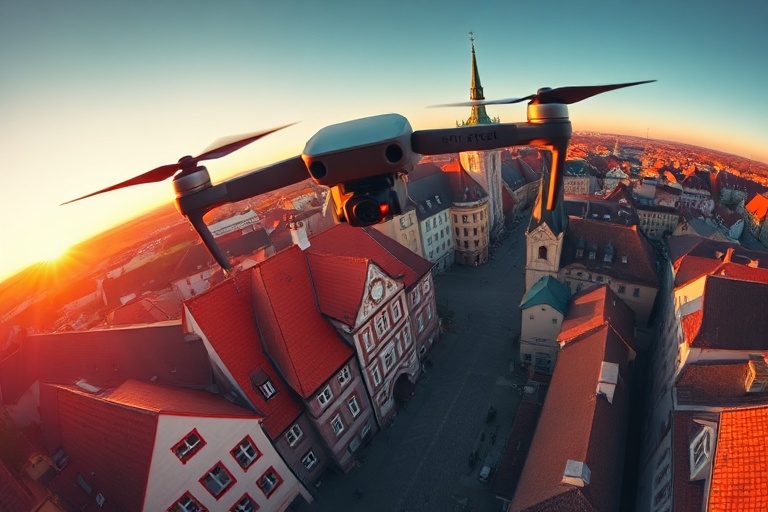
How Estonia Became Europe’s Unexpected Drone Leader
“`html
Estonia’s Drone Revolution: Small Nation, Big Skies
Estonia has quietly become one of Europe’s most surprising leaders in drone technology. With vast forests, sparse population, and forward-thinking policies, this Baltic state is redefining how unmanned aerial systems can serve society. From emergency response to environmental monitoring, Estonian drones are flying where others hesitate.
The country’s approach is pragmatic rather than flashy. Where some nations fixate on military applications or flashy prototypes, Estonia focuses on real-world utility. This has attracted global attention—and investment. The Estonian drone ecosystem blends Nordic efficiency with Eastern European ingenuity, creating a model that smaller countries worldwide now study.
The Regulatory Backbone: Why Estonia Leads
Estonia didn’t become a drone hub by accident. In 2017, it launched the world’s first national drone traffic management system, known as UTM Estonia. This digital infrastructure allows drones to operate safely beyond visual line of sight (BVLOS), a capability rare even in larger nations.
Key features of Estonia’s regulatory framework include:
- Light-touch licensing: Operators can obtain permits in days, not months.
- Digital identification: Every drone must broadcast its identity, enabling real-time tracking.
- Open data integration: Flight paths and airspace restrictions are publicly accessible via APIs.
This openness has turned Estonia into a testing ground for global drone companies. Companies like AirMap and FlytBase have established European headquarters in Tallinn, drawn by clear rules and government support.
Drones on the Front Lines: Estonia’s Practical Uses
Estonia’s drones aren’t just flying toys—they’re working tools. In rural areas, they monitor forest fires and track wildlife. In cities, they deliver medical supplies across Tallinn’s tram lines. During the COVID-19 pandemic, drones broadcast public health messages in Estonian and Russian, reaching remote villages.
One standout initiative is the Estonian Rescue Board’s drone program. Equipped with thermal cameras and AI-powered search algorithms, these drones locate missing hikers in under 30 minutes—a fraction of the time traditional methods take. In 2023, they assisted in over 200 search operations.
Estonia is also pioneering drone-based infrastructure inspection. Tallink, the country’s ferry operator, uses drones to scan hulls for corrosion, reducing dry-dock time by 40%. Meanwhile, energy company Elering employs drones to inspect power lines through dense forests, cutting costs and risk.
The Cultural Shift: From Skepticism to Acceptance
Not long ago, Estonians viewed drones with suspicion. Cold War memories of Soviet surveillance lingered, and privacy concerns were real. But over the past decade, public perception has shifted dramatically. Today, drones are seen as symbols of progress—especially among younger generations.
This cultural evolution reflects Estonia’s broader digital transformation. The country was among the first to offer e-residency and digital governance. Drones are simply the next frontier in Estonia’s “e-nation” vision. Citizens now expect technology to solve problems, not create them.
Still, challenges remain. Some older rural residents resist drone overflights, fearing noise or intrusion. Local governments have responded with community engagement programs, hosting drone demo days where residents can see the technology firsthand. These efforts have gradually built trust.
The Global Ripple Effect: Lessons for Other Nations
Estonia’s drone success isn’t just a local story—it’s a case study for policymakers worldwide. Countries from Singapore to Canada are adopting elements of Estonia’s model. The World Economic Forum has even recognized Estonia as a “drone-ready” nation, hosting workshops for officials from 20+ countries.
What makes Estonia’s approach transferable? Three factors stand out:
- Political will: Leaders prioritize innovation over bureaucracy.
- Cross-sector collaboration: Government, startups, and academia work in tandem.
- Scalable infrastructure: The UTM system can expand without reinventing the wheel.
This model is particularly relevant for small nations with limited resources. Estonia proves that size doesn’t dictate impact—vision does.
A Skyward Future: What’s Next for Estonian Drones
The next chapter may include drone taxis. Tallinn-based Threod Systems is testing autonomous cargo drones capable of carrying 150 kg over 100 km. The company envisions a network linking Estonia’s islands to the mainland, reducing ferry dependence.
Meanwhile, efforts are underway to integrate drones with Estonia’s 5G network. This would enable real-time video streaming from high-altitude flights, revolutionizing aerial journalism and emergency response.
As climate change intensifies, Estonia’s drones will likely play a bigger role in environmental protection. From tracking illegal logging to monitoring algal blooms in the Baltic Sea, they offer a cost-effective alternative to manned aircraft.
The story of Estonia’s drones is still being written. But one thing is clear: this tiny nation has proven that the future of flight doesn’t belong only to giants. It belongs to the bold, the agile, and the visionary—regardless of size.
Estonia’s drone journey reflects a broader truth: progress often starts where others overlook. In a world obsessed with scale, Estonia reminds us that innovation thrives in the smallest corners of the globe.
For tech enthusiasts and policy watchers alike, the Baltic nation offers a compelling blueprint—one flight path at a time.