How Oil Refineries Shape the World: Power, Pollution, and Change
“`html
The Global Reach and Environmental Impact of Oil Refineries
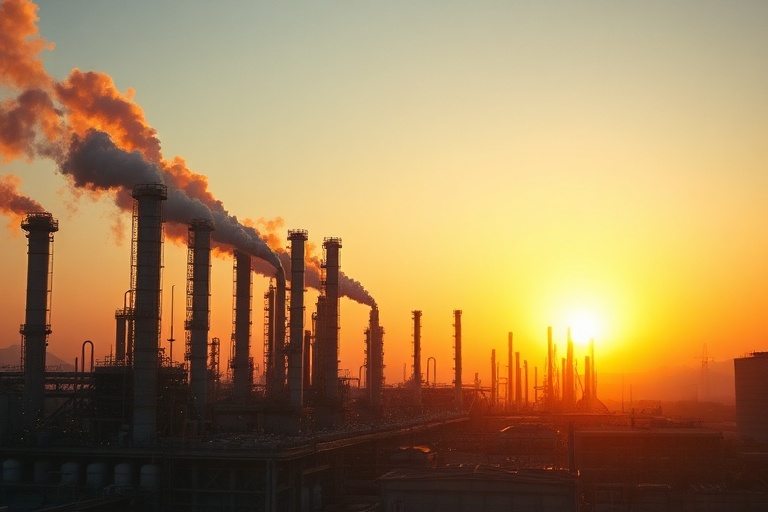
Oil refineries are the backbone of modern industry, transforming crude oil into the fuels and chemicals that power our world. From gasoline for cars to plastics for smartphones, these industrial facilities touch nearly every aspect of daily life. Yet their environmental and social consequences often spark debate among policymakers, environmentalists, and communities living near refinery sites.
The first oil refinery began operating in 1856 in Ploiești, Romania, just five years after the world’s first commercial oil well was drilled in nearby Prakon. Early refineries were small and inefficient, producing mostly kerosene for lamps. Today, modern refineries are sprawling complexes capable of processing hundreds of thousands of barrels of crude oil per day, using advanced technologies to maximize efficiency and minimize waste.
The Role of Refineries in the Global Energy Supply
Refineries operate as part of a complex supply chain that spans continents. Crude oil is extracted from fields in the Middle East, North America, and Russia, then transported via pipelines, tankers, and railways to refineries in the United States, Europe, China, and India. These facilities are strategically located near ports, pipelines, or industrial hubs to reduce transportation costs and improve distribution.
The global refining industry is dominated by a few key players. State-owned companies like Saudi Aramco and China National Petroleum Corporation control vast refining capacities, while multinational corporations such as ExxonMobil and Shell operate refineries across multiple continents. This concentration of power allows a small number of entities to influence global fuel prices and energy security.
In 2023, the world’s total refining capacity reached approximately 101 million barrels per day, according to the U.S. Energy Information Administration. The largest refinery in the world, India’s Jamnagar Refinery, operated by Reliance Industries, processes 1.4 million barrels per day—enough to meet the daily fuel needs of an entire country.
Key Products from a Barrel of Crude Oil
A single 42-gallon barrel of crude oil yields a variety of essential products through the refining process:
- Gasoline (46%) – Powers most vehicles on the road.
- Diesel fuel (20%) – Used in trucks, ships, and trains.
- Jet fuel (10%) – Fuels commercial and military aircraft.
- Heating oil (5%) – Used in residential and industrial heating systems.
- Petrochemical feedstocks (19%) – Base materials for plastics, synthetic rubber, and synthetic fibers.
- Asphalt and road oil (4%) – Used in paving and roofing.
- Liquefied petroleum gases (LPG) (2%) – Used in heating and cooking.
The refining process itself is energy-intensive. It requires significant heat, electricity, and water to separate and purify hydrocarbons. Refineries consume about 2% of the world’s total energy supply, a figure that has drawn criticism from environmental advocates pushing for cleaner alternatives.
Environmental Concerns and Health Risks
Refineries are major sources of air pollution, emitting sulfur dioxide, nitrogen oxides, volatile organic compounds (VOCs), and particulate matter. These pollutants contribute to smog, acid rain, and respiratory diseases. A 2022 study by the Environmental Integrity Project found that people living within three miles of a U.S. refinery face a 20% higher risk of developing cancer due to toxic emissions.
Water pollution is another critical issue. Refineries use large volumes of water for cooling and processing, and accidental spills or wastewater discharges can contaminate local water supplies. In 2020, a major oil spill from the Formosa Plastics refinery in Texas released over 1,300 pounds of toxic chemicals into Lavaca Bay, prompting lawsuits and heightened scrutiny.
Community Resistance and Environmental Justice
Refineries are often built in low-income or minority communities, where residents have limited political power to oppose industrial projects. This phenomenon, known as environmental racism, has led to protests and legal challenges worldwide. In the U.S., the “Cancer Alley” region along the Mississippi River between Baton Rouge and New Orleans is home to over 200 petrochemical plants and refineries, and has one of the highest cancer rates in the country.
In Europe, communities in Rotterdam and Antwerp have organized against refinery expansions, citing concerns over air quality and climate change. In India, activists have protested the expansion of refineries in Mumbai and Gujarat, highlighting the health impacts on local fishing communities.
The Future of Refining: Transition or Decline?
The refining industry faces an uncertain future as the world shifts toward renewable energy and electric vehicles. The International Energy Agency (IEA) projects that global oil demand could peak by 2030, driven by climate policies and technological advancements. This decline in demand could render many refineries obsolete, leading to job losses and economic disruption in regions dependent on the industry.
Some refineries are adapting by investing in biofuels, hydrogen production, or carbon capture technologies. In California, refineries like Chevron’s Richmond facility are exploring ways to convert waste carbon dioxide into usable products. Others are diversifying into petrochemicals, which are less likely to be displaced by electrification.
Yet critics argue that these adaptations are merely delaying the inevitable. The European Union has proposed banning the sale of new gasoline and diesel cars by 2035, and several U.S. states have set similar targets. As battery technology improves and charging infrastructure expands, the demand for refined petroleum products is expected to decline sharply.
Cultural and Economic Impact
Refineries have shaped the identity and economy of many communities. Cities like Houston, Texas, and Rotterdam, Netherlands, owe much of their growth and prosperity to the oil industry. These places have developed unique cultures, from rodeo traditions in Texas to maritime festivals in the Netherlands, all tied to the energy sector.
However, the economic benefits are often unevenly distributed. While refinery owners and shareholders profit from high oil prices, local workers frequently face hazardous conditions and low wages. In many countries, refinery jobs are unionized and provide stable incomes, but in others, labor rights violations are common.
The cultural legacy of refineries is also evident in art, literature, and film. Painters like Edward Hopper have captured the stark industrial landscapes of refinery towns, while documentaries such as The Human Element have highlighted the human cost of energy production. In music, artists like Neil Young have used refinery imagery to critique environmental degradation.
Refineries in Popular Culture
Refineries have appeared in various forms of media, often symbolizing industrial power, environmental degradation, or economic struggle:
- There Will Be Blood (2007) – Daniel Day-Lewis stars as an ambitious oil tycoon in early 20th-century California, reflecting the ruthless expansion of the oil industry.
- Erin Brockovich (2000) – While not about refineries directly, the film highlights the health impacts of industrial pollution, a recurring theme in refinery-adjacent communities.
- Oil City Confidential (2009) – A documentary about the Canvey Island refinery in England, exploring its cultural and economic impact on the local community.
As the world grapples with climate change and energy transition, the role of refineries will continue to evolve. Some will adapt to new realities, while others may fade into history. Yet their legacy—both as engines of economic growth and as sources of environmental harm—will remain a defining feature of the modern era.