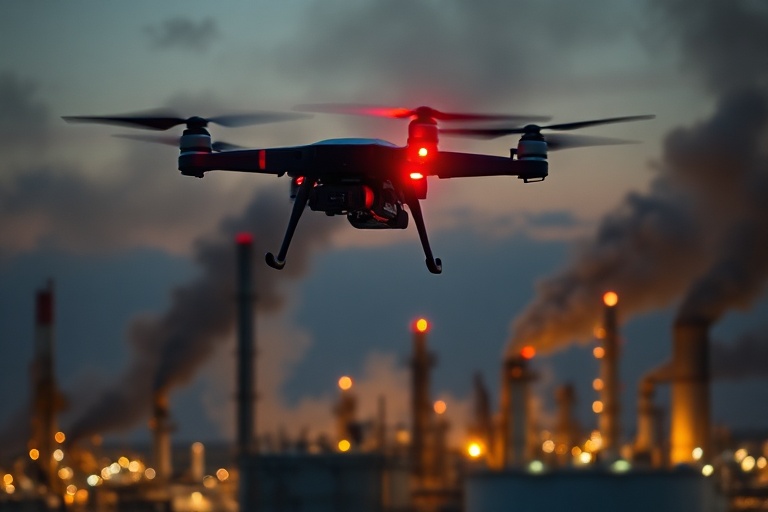
Ukraine’s Drone Campaign Against Russian Oil: Tactics and Targets
The war in Ukraine has evolved beyond traditional battlefield engagements into a complex technological confrontation. Among the most visible aspects of this shift is Ukraine’s use of long-range drones to target Russian oil infrastructure. These strikes are not merely tactical but part of a broader strategy to disrupt Russia’s economic lifelines.
According to open-source intelligence reports, Ukraine has conducted dozens of drone strikes on refineries and oil storage facilities deep inside Russian territory. The most prominent targets include the Ryazan Refinery, the Novoshakhtinsk Refinery, and the Tuapse Refinery—all critical nodes in Russia’s oil processing and export networks. These operations demonstrate a significant escalation in Ukraine’s ability to project force beyond its borders, leveraging commercially available drone technology repurposed for precision strikes.
Ukrainian forces have primarily used first-person view (FPV) drones, which offer real-time piloting and high maneuverability. These drones are often equipped with improvised explosive devices capable of penetrating warehouse roofs or igniting fuel tanks. The psychological impact of these attacks is compounded by their unpredictability, forcing Russian authorities to divert resources toward air defense rather than offensive operations.
The Strategic Logic Behind the Strikes
From a strategic standpoint, Ukraine’s drone campaign against Russian oil serves multiple purposes. Economically, it aims to reduce Russia’s export revenues, which remain a crucial source of funding for its war effort. Russia’s budget relies heavily on oil and gas exports, accounting for nearly 40% of federal revenue in 2023. By targeting refineries and storage sites, Ukraine seeks to shrink Russia’s export capacity and force Moscow to divert funds toward repairing damaged infrastructure.
Politically, these strikes undermine Russian President Vladimir Putin’s narrative of stability and inevitability. The Kremlin has long promoted the idea that Western sanctions would fail to cripple the Russian economy. Yet, repeated drone attacks on domestic oil facilities expose vulnerabilities in Russia’s claimed resilience. This narrative erosion is particularly damaging as Putin seeks to maintain public support amid growing discontent over mobilization and economic strain.
The international community has reacted with a mix of cautious approval and concern. While Western governments have not officially endorsed Ukraine’s cross-border strikes, diplomatic leaks suggest tacit understanding. Meanwhile, global energy markets have remained relatively stable, partly due to strategic oil reserves and diversified supply chains. Still, analysts warn that prolonged disruptions could lead to price volatility, especially in Europe, which remains reliant on Russian diesel imports.
The Human and Environmental Toll
The human cost of these strikes extends beyond immediate casualties. Local communities near targeted refineries face heightened risks of chemical exposure and fires. In February 2024, a drone strike on the Rosneft-owned Tuapse Refinery triggered a large fire, forcing evacuations and releasing plumes of toxic smoke into the air. Such incidents highlight the collateral damage of Ukraine’s campaign, raising ethical questions about proportionality.
Environmentally, the strikes have caused localized ecological harm. Oil refineries are notorious for their environmental footprint, and fires at these facilities can release benzene, sulfur dioxide, and other hazardous substances. Environmental groups have called for greater transparency in assessing the long-term impact of these attacks on regional air and water quality.
In response, Russian authorities have intensified air defense deployments around critical infrastructure. Cities like Moscow and Saint Petersburg now host advanced S-400 missile systems, while smaller towns have seen the installation of Pantsir and Tor systems. The financial burden of this defense effort further strains Russia’s already stretched military budget.
Global Energy Markets: Ripples and Reactions
The global implications of Ukraine’s drone strikes on Russian oil are far-reaching. The energy sector, already sensitive to geopolitical shocks, has demonstrated resilience but not immunity. Below are key market reactions observed since the escalation of these attacks:
- Oil Price Volatility: Brent crude prices briefly spiked in March 2024 following rumors of a major refinery fire, though they stabilized as supply from alternative sources increased.
- Refinery Output Shifts: Some European refineries have ramped up production to offset potential shortages in diesel and heating oil from Russian sources.
- Insurance Premiums Rise: Companies insuring cargo ships and tankers in the Black Sea have increased premiums, citing heightened risk of interdiction or collateral damage.
- Sanctions Loopholes Exposed: The strikes have revealed gaps in Western sanctions enforcement, particularly in countries like India and China, which continue importing Russian oil at discounted rates.
- Renewable Energy Push: Some EU policymakers have cited the strikes as justification for accelerating green energy transitions, though critics argue this is more rhetoric than reality.
The United States and European Union have responded by expanding their own drone capabilities. In a move closely watched by analysts, the U.S. recently approved the sale of advanced surveillance drones to Ukraine, signaling a long-term commitment to asymmetric warfare tactics. Meanwhile, Russia has accelerated the development of counter-drone systems, including electronic warfare jammers and AI-driven interception networks.
A Cultural Shift in Warfare
Beyond the battlefield, Ukraine’s drone campaign reflects a broader cultural shift in modern warfare. The use of commercially available technology—drones, 3D-printed components, and open-source software—has democratized military capability. This trend challenges traditional notions of state monopoly over advanced weaponry and empowers smaller nations to resist larger aggressors.
Ukraine’s drone operators, many of whom are civilian volunteers with backgrounds in IT or engineering, have become folk heroes in Ukrainian media. Their stories are celebrated in documentaries, social media campaigns, and even pop music. This cultural narrative reinforces national unity and resilience, turning technical innovation into a symbol of resistance.
In Russia, the drone strikes have fueled a wave of paranoia and conspiracy theories. State media frequently blames “Western saboteurs” or “Ukrainian Nazi battalions” for the attacks, despite evidence pointing to domestic Ukrainian operations. This disinformation campaign underscores the Kremlin’s struggle to maintain control over the national narrative amid battlefield setbacks.
What Comes Next?
The future of Ukraine’s drone campaign remains uncertain. Military analysts predict further escalation, with Ukraine likely to deploy drones with greater range and payload capacity. Russia, in turn, is expected to invest in layered air defenses, possibly including directed-energy weapons like lasers.
Diplomatically, the strikes have complicated peace negotiations. While Ukraine frames them as legitimate acts of self-defense, Russia views them as acts of terrorism. This divergence in perception makes de-escalation increasingly difficult.
For the global energy market, the key question is whether these strikes will trigger a structural shift in oil supply chains. If Russian export capacity continues to decline, importers may permanently redirect their purchases to the Middle East, the U.S., or Latin America. Such a realignment could reshape global energy geopolitics for decades.
One thing is clear: Ukraine’s drone war on Russian oil is more than a military tactic. It is a test of modern statecraft, economic resilience, and the limits of technological warfare. As nations watch this conflict unfold, they are forced to reconsider the rules of engagement in an era where drones and data can carry as much weight as tanks and troops.
The stakes could not be higher. The outcome will shape not only the war in Ukraine but the future of energy security, global trade, and the very nature of modern conflict.