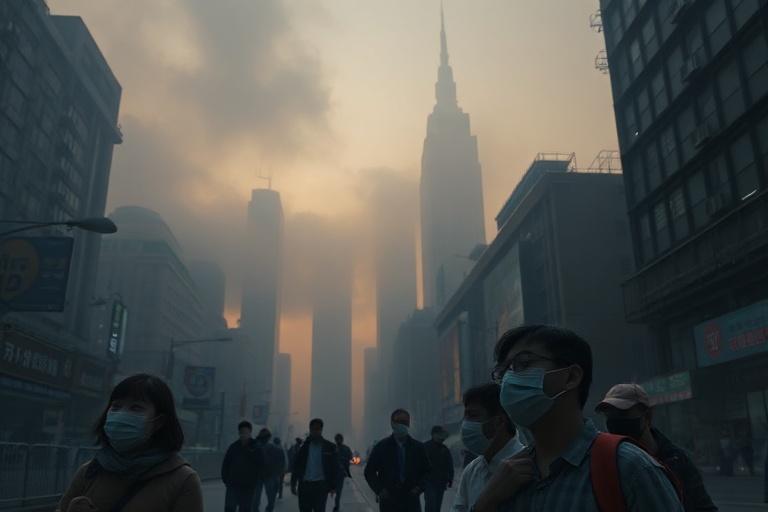
Every breath we take contains more than just oxygen. In cities from Delhi to Los Angeles, microscopic pollutants infiltrate the air, embedding themselves into the rhythm of daily life. Air pollution is no longer a distant environmental concern—it has become a defining characteristic of modern urban existence, influencing health, culture, and even economic systems.
The Science Behind the Smog
At its core, air pollution stems from a cocktail of harmful substances released into the atmosphere. These include particulate matter (PM2.5 and PM10), nitrogen oxides, sulfur dioxide, carbon monoxide, and ground-level ozone. The sources are as varied as they are numerous: vehicle exhaust, industrial emissions, agricultural burning, and even household activities like cooking with solid fuels.
The World Health Organization estimates that 99% of the global population breathes air that exceeds its recommended quality guidelines. This silent crisis claims an estimated seven million lives annually, according to the organization’s data. The health consequences are severe—respiratory diseases, cardiovascular disorders, and even cognitive decline in children have all been linked to prolonged exposure to polluted air.
In developing nations, the problem is exacerbated by rapid industrialization and limited regulatory infrastructure. Beijing’s notorious “airpocalypse” of 2013, where pollution levels spiked to 40 times the WHO’s safe limits, became a global wake-up call. While China has since implemented aggressive clean air policies, the legacy of its industrial boom lingers in the lungs of its citizens.
Cultural Echoes of Pollution
Air pollution doesn’t just affect bodies—it reshapes cultures, art, and collective memory. In India, the annual burning of crop residue in Punjab and Haryana creates a toxic haze that blankets Delhi every winter. This seasonal phenomenon has seeped into the country’s consciousness, inspiring literature, music, and even political movements. Protests against stubble burning have become a recurring spectacle during election seasons, with farmers and urban activists clashing over land use and environmental justice.
In China, the government’s “war on pollution” has spawned a new wave of eco-conscious art. Artists like Brother Nut have gained international attention for their provocative installations, such as “Beijing Smog Respiratory Mask,” which collects dust particles from the air and shapes them into tangible art. These works force viewers to confront the physical reality of pollution, transforming an invisible threat into something undeniable.
Literature, too, has responded to the crisis. Arundhati Roy’s recent novel explores the intersection of pollution and social inequality in India, while Chinese writer Chen Qiufan’s dystopian sci-fi The Waste Tide imagines a future where pollution has rendered large swaths of the planet uninhabitable. These narratives reflect a growing cultural anxiety about the environmental consequences of unchecked growth.
Economic Costs of a Toxic Atmosphere
The financial burden of air pollution is staggering. A 2022 report by the Swiss bank UBS estimated that global economic losses from air pollution could reach $176 billion annually by 2040. These costs manifest in healthcare expenditures, reduced workforce productivity, and even diminished cognitive performance among students exposed to high pollution levels.
In Europe, cities like Milan and Paris have implemented congestion charges and low-emission zones to curb pollution. These policies have yielded mixed results—while some urban centers have seen measurable improvements, others struggle with enforcement and public resistance. The economic incentives for reducing pollution are clear, yet the political will often lags behind.
Meanwhile, in the United States, the Environmental Protection Agency’s regulations have faced relentless legal challenges from industries reluctant to adopt cleaner technologies. The debate over the economic impact of pollution control often pits short-term profits against long-term sustainability, a tension that plays out in courtrooms and boardrooms alike.
The Role of Technology in the Fight Against Pollution
Innovation offers a glimmer of hope in the battle against air pollution. From electric vehicles to smog-eating buildings, technology is providing new tools to combat this invisible enemy. In Rotterdam, the Technology startup Carbon Engineering has developed direct air capture systems that remove CO2 from the atmosphere, while cities like London deploy “smog towers” to filter pollutants from the air.
However, technology alone cannot solve the crisis. The adoption of electric vehicles, for example, depends on the availability of renewable energy sources. Without a shift in global energy infrastructure, these innovations risk becoming mere band-aid solutions.
A Call for Collective Action
The fight against air pollution demands a multi-faceted approach. Governments must enforce stricter emissions standards, industries need to invest in cleaner technologies, and individuals must reconsider their daily habits. Simple changes, like reducing car use or supporting policies that promote renewable energy, can collectively make a difference.
Grassroots movements are also gaining traction. In Kenya, the “Clean Air Nairobi” initiative has mobilized communities to plant trees and advocate for stricter industrial regulations. Similarly, in Mexico City, citizen-led campaigns have pressured local authorities to implement bike-sharing programs and pedestrian-friendly infrastructure.
The path forward is not straightforward, but the urgency is undeniable. Air pollution is not just an environmental issue—it is a social, economic, and cultural challenge that requires coordinated action. As cities grow and industrialization spreads, the air we breathe will continue to reflect the choices we make today.
For those interested in exploring further, Health offers deeper insights into the medical implications of pollution, while our Science section delves into the latest research and technological innovations shaping the future of clean air.
The invisible threat is real, but so is the power to change it. The question is whether we will act in time.