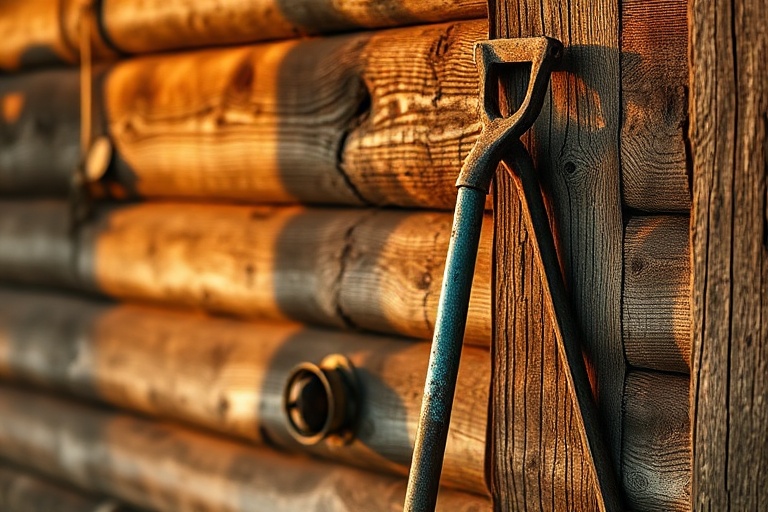
The Enduring Cultural Legacy of the Pitchfork in Modern Society
“`html
What Exactly Is a Pitchfork—and Why Does It Still Matter in 2024?
The pitchfork isn’t just a tool; it’s an icon. With its three-pronged silhouette, it has punctuated art, politics, and everyday life for centuries. While modern agriculture has moved toward mechanized solutions, the pitchfork remains a symbol of rural tradition, rebellion, and even pop culture. Its presence stretches from 19th-century European farms to protest signs in 2020s movements. To understand its lasting influence, we must look beyond its agricultural roots and into its cultural footprint.
Originally designed for lifting hay, straw, or manure, the pitchfork’s simplicity belies its versatility. Made from forged steel and wood, early versions were durable enough to last generations. But as machinery like tractors and balers took over large-scale farming, the pitchfork’s role narrowed. Yet, instead of fading into obscurity, it became a vessel for meaning—carried in protests, painted in protest art, and even wielded as a political metaphor.
The Pitchfork as Political Symbol: From Populism to Protest
No discussion of the pitchfork is complete without acknowledging its association with American populism. In the late 19th century, the People’s Party—often called the Populist Party—used the pitchfork as a rallying image. Their 1892 Omaha Platform declared, “We will organize cooperative enterprises large enough to handle our own business, to wheat from the thresher to the consumer.” The pitchfork symbolized the farmer’s labor and the demand for economic justice.
Decades later, the pitchfork reappeared in unexpected places. During the 2008 financial crisis, images of pitchforks appeared in editorial cartoons and protest signs, representing public outrage over corporate greed. The phrase “pitchforks and torches” became shorthand for grassroots rebellion. In 2020, as global protests surged, the pitchfork motif resurfaced in social media memes and street art, symbolizing collective action against systemic injustice.
The pitchfork’s dual role—as both a farming tool and a protest icon—highlights how objects gain new meanings in different contexts. It’s not just about what something is, but what it represents. And in an era of digital activism, even a relic from the agrarian past can become a powerful visual shorthand.
A Global Icon: The Pitchfork Beyond the United States
While the pitchfork is strongly tied to American populism, its influence extends worldwide. In rural Europe, particularly in Scandinavia and the British Isles, variations of the pitchfork have been used for centuries. The “hay fork” in England and the “gaffel” in Sweden share the same basic design: three tines for lifting, two handles for control. These tools were essential not just for farming, but for survival during harsh winters.
In Eastern Europe, similar tools appeared in folklore and art. Ukrainian embroidery, for example, sometimes incorporates symbolic motifs of farming tools, including pitchforks, as representations of labor and resilience. In Japan, the kuwa, a traditional digging tool with a curved blade, serves a comparable function, though it lacks the iconic three-pronged shape.
Even in contemporary global art, the pitchfork appears as a recurring motif. Banksy’s 2005 mural The Mild Mild West in Bristol features a riot policeman holding a pitchfork, blending pastoral imagery with social commentary. Japanese artist Takashi Murakami has used pitchfork-like shapes in his vibrant, surreal compositions, reimagining the tool as part of a global visual language.
This cross-cultural presence shows that the pitchfork transcends language. Whether as a functional object, a political symbol, or an artistic element, it adapts to local contexts while retaining a recognizable form.
The Pitchfork in Pop Culture: From Horror to Humor
Beyond politics and agriculture, the pitchfork has carved a niche in entertainment. It’s most famously—and infamously—associated with horror. The 1978 film Halloween introduced the image of Michael Myers stalking his victims with a kitchen knife, but it was The Texas Chain Saw Massacre (1974) that cemented the connection between farm tools and terror. Leatherface’s use of a chainsaw overshadowed the pitchfork, but the tool remains a staple in slasher iconography.
Yet the pitchfork isn’t always menacing. In comedy, it often plays a humorous role. The 1990s sitcom Home Improvement featured a memorable episode where Tim Taylor, played by Tim Allen, accidentally impales a turkey with a pitchfork during Thanksgiving. The scene became a cultural reference point, highlighting the tool’s unexpected—and unintentionally dangerous—uses.
In music, the pitchfork appears in album art and lyrics. The band Tool, known for its complex visuals and themes, has used pitchfork imagery in concert posters and merchandise. Folk singer John Prine referenced the tool in his song Fish and Whistle, singing, “I got a job to do, and a pitchfork to carry.” These references show how the pitchfork has seeped into creative expression across genres.
From horror to humor to music, the pitchfork’s cultural footprint is as diverse as it is enduring.
Why the Pitchfork Still Matters Today
In an age of digital transformation, the pitchfork might seem like a relic. But its persistence tells a deeper story about how objects evolve in meaning. It embodies the tension between tradition and progress, labor and automation, individual effort and collective action. It reminds us that symbols endure long after their original purpose fades.
Today, the pitchfork is experiencing a quiet revival. Small-scale farmers and homesteaders are rediscovering manual tools as sustainable alternatives to industrial agriculture. Artisans are crafting hand-forged pitchforks as heirlooms. Even in digital spaces, memes and social media challenges have brought the pitchfork back into public consciousness.
So what’s next for the pitchfork? It may never return to the fields in large numbers, but its symbolic power ensures it won’t disappear. Whether carried in protest, painted on a mural, or wielded in a horror film, the pitchfork remains a tool for more than just lifting hay—it lifts ideas, emotions, and movements.
In the end, the pitchfork’s story is a reminder that meaning isn’t fixed. It’s shaped by those who use it, reinterpret it, and pass it along. And in that sense, the pitchfork is far from obsolete—it’s a living symbol in a world that still needs tools to dig deeper.
Where to See the Pitchfork in Action
If you’re curious about the pitchfork’s real-world applications or cultural appearances, consider exploring these avenues:
- Local folk art exhibitions, where traditional tools are often displayed as cultural artifacts.
- Documentaries on rural life, such as The Last Harvest (2021), which explores modern farming and the tools that define it.
- Protest art archives, where the pitchfork frequently appears as a symbol of resistance.
- Farmers’ markets and blacksmith workshops, where hand-forged pitchforks are still made and sold.
Whether you encounter it in a museum, on a protest sign, or in a viral meme, the pitchfork continues to make its presence known—one prong at a time.