Boeing 737: The Jet That Defined Modern Air Travel
“`html
Boeing 737: The Jet That Shaped Modern Aviation
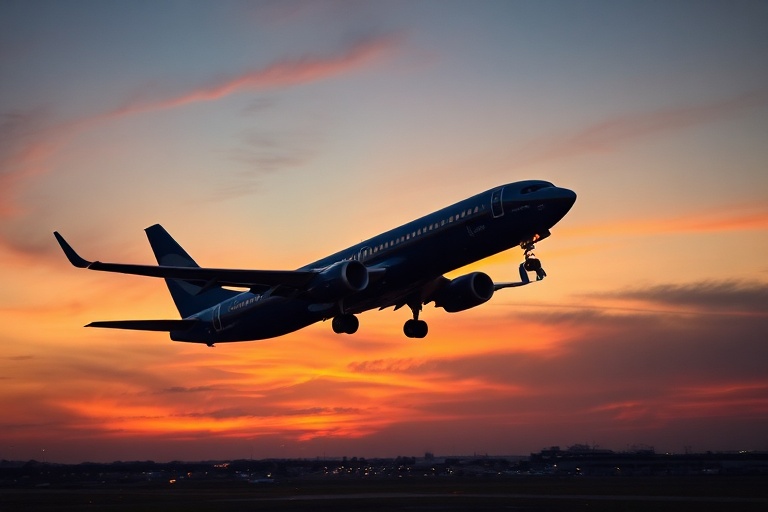
Few aircraft have left as indelible a mark on commercial aviation as the Boeing 737. Since its debut in the late 1960s, this narrow-body jet has become the backbone of global air travel, connecting cities and cultures with unparalleled efficiency. Its evolution—spanning more than half a century—reflects not only technological advancements but also shifting economic priorities in the aviation industry.
A Legacy of Innovation and Adaptation
The Boeing 737’s origins trace back to a 1964 directive from United Airlines, which sought a shorter, more versatile aircraft to replace its aging fleet of Douglas DC-8s and Boeing 727s. Boeing responded with a design that prioritized simplicity, cost-effectiveness, and ease of maintenance—qualities that would define the 737’s enduring appeal. The first model, the 737-100, took to the skies on April 9, 1967, entering service with Lufthansa later that year.
What set the 737 apart from competitors like the McDonnell Douglas DC-9 was its under-wing engine configuration, which allowed for a lower cabin floor and easier boarding. This feature, combined with its narrow-body design, made it ideal for short-haul routes and high-density operations. Over the decades, Boeing continuously refined the 737, introducing stretched variants like the 737-200, -300, -400, and -500 (collectively known as the “Classic” series) in the 1980s and early 1990s. Each iteration improved fuel efficiency, range, and passenger capacity, cementing the 737’s dominance in the skies.
By the late 1990s, Boeing faced mounting pressure from Airbus, whose A320 family offered advanced fly-by-wire technology and superior fuel economy. In response, Boeing launched the 737 Next Generation (NG) series, featuring redesigned wings, upgraded avionics, and more efficient CFM56 engines. The NG series—comprising the -600, -700, -800, and -900 variants—proved to be a commercial triumph, outselling its Airbus counterparts and solidifying the 737’s market leadership.
The 737 MAX: Ambition, Crisis, and Redemption
The most ambitious—and controversial—chapter in the 737’s history began with the launch of the 737 MAX in 2011. Designed to compete with the Airbus A320neo, the MAX promised a 14% improvement in fuel efficiency through new LEAP-1B engines, advanced aerodynamics, and updated systems. Boeing also introduced the Maneuvering Characteristics Augmentation System (MCAS), a flight control feature intended to enhance stability in certain flight conditions.
However, the MAX’s development was marred by cost-cutting measures and rushed certification processes. Two fatal crashes—Lion Air Flight 610 in October 2018 and Ethiopian Airlines Flight 302 in March 2019—exposed critical flaws in MCAS and Boeing’s safety culture. The subsequent global grounding of the MAX fleet lasted nearly two years, costing Boeing billions in losses and eroding its once-unassailable reputation for engineering excellence.
The MAX’s return to service in late 2020 marked a turning point, but the damage lingered. Regulatory scrutiny intensified, and airlines demanded greater transparency. Boeing’s response included extensive software updates, pilot retraining, and enhanced oversight from aviation authorities. While the MAX has since resumed flights, its reputation remains a work in progress. The crisis underscored the delicate balance between innovation and safety, a lesson that continues to shape Boeing’s future.
Key Takeaways from the 737 MAX Saga
- Engineering Trade-offs: The MAX’s fuel efficiency gains came at the cost of increased complexity, highlighting the risks of prioritizing performance over simplicity.
- Regulatory Oversight: The FAA’s delegation of certification authority to Boeing has faced criticism, prompting calls for stricter independent reviews.
- Reputation Recovery: Boeing’s efforts to rebuild trust include cultural reforms, transparency initiatives, and a renewed focus on safety.
- Market Impact: Despite the setbacks, the MAX remains a critical asset for airlines, with over 4,000 orders placed as of 2024.
The 737’s Broader Impact on Aviation and Beyond
The Boeing 737’s influence extends far beyond its technical specifications. Economically, it has been a catalyst for globalization, enabling the rise of low-cost carriers like Southwest Airlines and Ryanair. By making air travel more affordable, the 737 democratized flying, connecting millions to opportunities and experiences that were once out of reach.
Environmentally, the 737’s evolution reflects the aviation industry’s struggle to balance growth with sustainability. While the MAX’s LEAP engines reduce fuel consumption by up to 20% compared to older models, critics argue that incremental improvements are insufficient to meet long-term carbon reduction goals. The push for sustainable aviation fuels (SAFs) and electric propulsion may eventually render the 737 obsolete, but for now, it remains the workhorse of the skies.
Culturally, the 737 has embedded itself in the public imagination. From its cameo in films like Airplane! to its role in countless travel memoirs, the 737 is more than a machine—it’s a symbol of human ingenuity and ambition. Its story is one of adaptation, resilience, and the relentless pursuit of progress.
What’s Next for the Boeing 737?
Boeing’s focus has now shifted to the 737 MAX 7, MAX 10, and potential future variants, including studies on hybrid-electric and hydrogen-powered derivatives. The MAX 10, in particular, aims to close the gap between the 737 and Airbus’s larger A321neo, offering carriers greater flexibility in fleet planning.
Yet, the road ahead is fraught with challenges. Supply chain disruptions, labor shortages, and geopolitical tensions threaten production timelines. Meanwhile, Airbus’s A321XLR—a long-range competitor to the MAX—poses a new threat, particularly for routes traditionally served by smaller jets.
For Boeing, the 737’s legacy is a double-edged sword. Its success has ensured decades of dominance, but it has also created a dependency on a single product line. Diversification, whether through the 787 Dreamliner or potential new designs, will be critical to the company’s future.
“The 737 is a testament to the power of incremental innovation. Its story is not one of revolution, but of evolution—each generation building on the last, with each lesson learned shaping the next.”