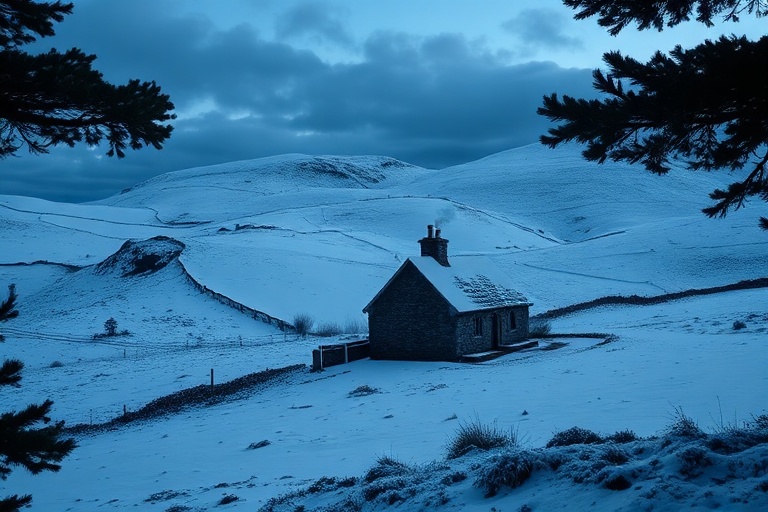
Scotland’s relationship with snow is as layered as its history, as unpredictable as its weather, and as deeply ingrained in its cultural identity as the tartan. While the country may not be the first to come to mind when envisioning snow-covered landscapes—unlike the Alps or the Rockies—its snowstorms have left an indelible mark on both local life and international perceptions of winter.
From the dramatic peaks of the Cairngorms to the rolling hills of the Highlands, Scotland’s snow is more than just a seasonal occurrence. It shapes ecosystems, disrupts economies, and inspires art, literature, and folklore. In a world where climate patterns are shifting, Scotland’s snowfall remains a critical subject of study, drawing attention from meteorologists, historians, and travelers alike.
The Science Behind Scotland’s Snowfall
Scotland’s snow is not a uniform phenomenon. Its distribution, frequency, and intensity vary dramatically across the country, influenced by geography, altitude, and maritime conditions. The Scottish Highlands, for example, receive significantly more snow than the Lowlands, with some areas like Aviemore and Glenshee becoming winter sports hubs that rival established destinations.
Meteorologically, Scotland’s snowfall is driven by several key factors:
- Latitude and Altitude: Scotland’s northerly location means it is exposed to cold Arctic air masses, particularly during winter. The higher elevations of the Highlands and the Southern Uplands create ideal conditions for snow accumulation, often leading to prolonged snow cover.
- Maritime Influence: The Gulf Stream brings relatively warm air from the tropics, creating a juxtaposition with the cold air masses from the north. This clash often results in heavy precipitation, which can fall as snow when temperatures are low enough.
- Weather Systems: Scotland is frequently affected by Atlantic weather systems, including low-pressure fronts that bring moisture-laden air. When these systems collide with cold air, the result is often significant snowfall, particularly in the west and north.
These factors combine to make Scotland’s snowfall highly variable. In some years, the snow is light and fleeting, while in others—such as the winters of 2009-2010 and 2017-2018—Scotland experiences prolonged periods of heavy snow, disrupting transportation, closing schools, and even affecting sports events across the country.
Cultural and Historical Impact of Snow in Scotland
Snow in Scotland is not merely a weather event; it is woven into the nation’s cultural and historical fabric. From ancient folklore to modern-day traditions, snow has played a role in shaping Scotland’s identity.
In Scottish Gaelic folklore, snow is often associated with purity and transformation. Legends tell of the “Frost Giant,” a mythical figure said to control the winter winds and bring snow to the land. This connection between snow and myth persists in modern storytelling, where snowstorms are often depicted as moments of magic or danger in literature and film.
Historically, snow has been both a blessing and a curse. In the 18th and 19th centuries, heavy snowfall could isolate entire communities for weeks, cutting off vital supply routes. Yet, it also provided opportunities for trade and travel via sledges and skis, especially in the Highlands. The famous “Snow Roads” of the Cairngorms, for instance, were once vital trade routes during winter months.
Today, snow continues to influence Scottish culture. Winter festivals, such as the Cairngorms Winter Festival, celebrate the season with events like snowshoeing, ice climbing, and traditional music. Meanwhile, contemporary artists and musicians draw inspiration from the stark beauty of a snow-covered landscape, using it as a metaphor for resilience, isolation, and renewal.
The Economic and Environmental Role of Snow
Scotland’s snow is not just a cultural touchstone; it also plays a significant economic and environmental role. The winter tourism industry, particularly in the Highlands, relies heavily on snow for activities such as skiing, snowboarding, and snowmobiling. Resorts like Glenshee and the Nevis Range attract visitors from across the UK and Europe, contributing millions to the local economy.
However, the economic benefits of snow are balanced by its environmental impact. Heavy snowfall can strain infrastructure, leading to road closures, power outages, and disruptions in public services. In 2018, for example, the “Beast from the East” storm brought Scotland to a standstill, costing businesses an estimated £1 billion in lost revenue.
Environmentally, snow acts as a natural water reservoir, slowly melting and replenishing rivers and reservoirs during the spring and summer months. This is particularly important for Scotland’s hydroelectric power industry, which relies on consistent water flow. Additionally, snow-covered landscapes reflect sunlight, reducing heat absorption and helping to regulate local temperatures.
Yet, as global temperatures rise, Scotland’s snowfall patterns are changing. Research from the Met Office indicates that the number of days with lying snow in Scotland has decreased by around 20% since the 1960s. This trend poses challenges for winter sports enthusiasts and highlights the broader implications of climate change on Scotland’s ecosystems.
Scotland’s Snow in a Global Context
When viewed on a global scale, Scotland’s snow takes on new significance. While countries like Canada, Russia, and Norway are accustomed to heavy snowfall, Scotland’s snow is unique due to its unpredictability and the cultural narratives it inspires.
In an era where extreme weather events are becoming more frequent, Scotland’s snowstorms serve as a reminder of nature’s power. They challenge infrastructure, test emergency response systems, and force communities to adapt. Yet, they also offer moments of beauty and wonder, drawing photographers, artists, and tourists eager to witness the country draped in white.
Globally, Scotland’s snow has also become a symbol of resilience. In 2021, the country’s response to heavy snowfall during the COVID-19 pandemic showcased the ability of communities to come together in the face of adversity. From volunteers clearing roads to businesses offering shelter to stranded travelers, Scotland’s snowstorms highlighted the best of human cooperation.
Moreover, Scotland’s snow has found its way into popular culture, appearing in films, music, and literature. The 2019 film Fisherman’s Friends, set in Cornwall but filmed in Scotland, captures the stark beauty of a winter coastline. Meanwhile, Scottish musicians like Julie Fowlis have referenced snow in their songs, using it as a metaphor for both hardship and hope.
Conclusion: A Seasonal Phenomenon with Lasting Impact
Scotland’s snow is far more than a fleeting winter event. It is a dynamic force that shapes the country’s environment, economy, and culture. From the scientific intricacies of its formation to the historical and cultural narratives it inspires, snow in Scotland is a subject worthy of global attention.
As climate change continues to alter weather patterns, the future of Scotland’s snow remains uncertain. Yet, one thing is clear: as long as the winds howl and the temperatures drop, Scotland will continue to embrace its snow, finding beauty, challenge, and meaning in the white blanket that covers its hills and glens.
For those who have experienced a Scottish snowstorm—whether caught in a blizzard on the A9 or marveling at the aurora borealis over a snowy loch—the memory lingers long after the snow has melted.